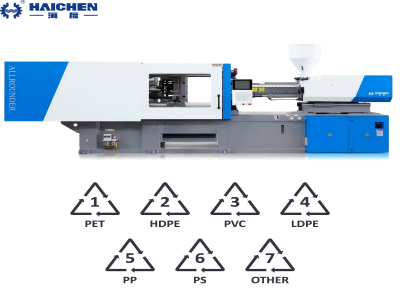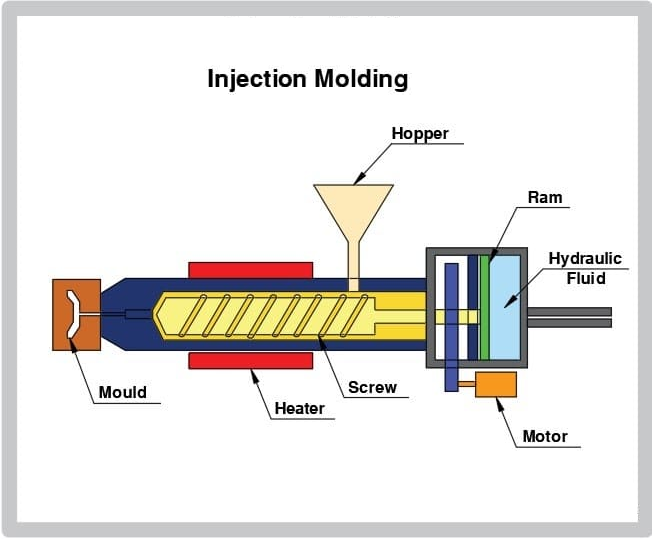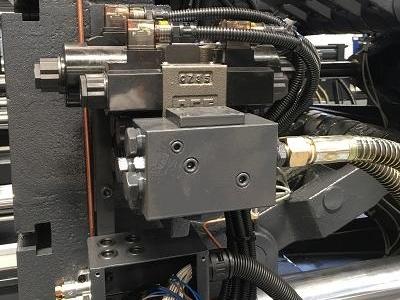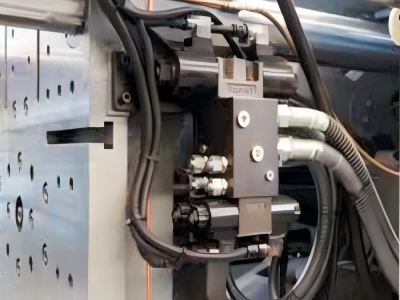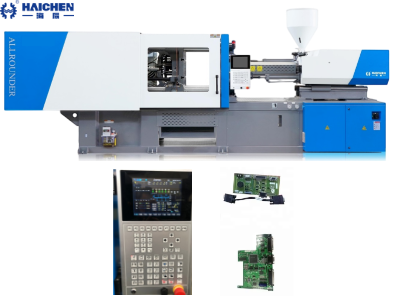
A platen for injection molding machine is an important part of the injection molding machine clamping unit.There are usually three types of mould platens: the fixed mould platen, the moving mould platen and the adjustable mould tail platen.These platens play a role in fixing the mould and providing motion guidance during the injection molding process.The design and manufacture of the templaten directly affects the productivity of the injection molding machine and the quality of the product.
In the injection molding machine, the structure and processing accuracy of the platen as well as its stiffness will affect the performance of the whole machine, and is directly related to the quality of the final product.For example, the design of T-slot platen can effectively reduce screw hole damage and extend the templaten service life, as well as improve the molding quality and mould life.Modern injection molding machines also use magnetic platen technology, which adsorbs the mould backing platen by magnetic force.
It avoids the interference problems of manual clamps or hydropneumatic clamps and improves mould design freedom and versatility, while improving product quality and consistency.The templaten of an injection molding machine is a key component that ensures the fixing and guiding of the mould, and the quality of its design and manufacture has a direct impact on the effectiveness and efficiency of injection molding.
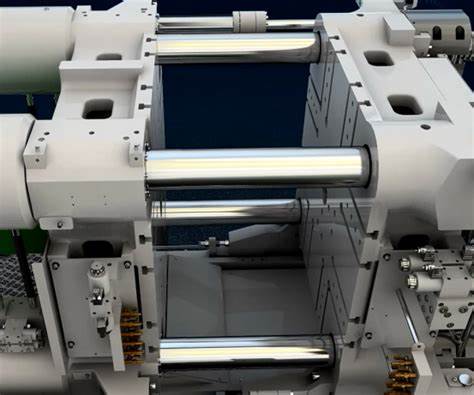
The performance of injection molding machines and the quality of products can be significantly improved through standardisation, design optimisation and the use of new technologies such as magnetic formwork.
Characteristics of injection molding machine fixed platens
The injection molding machine fixed platen is an important part of the injection molding system, with the following characteristics:
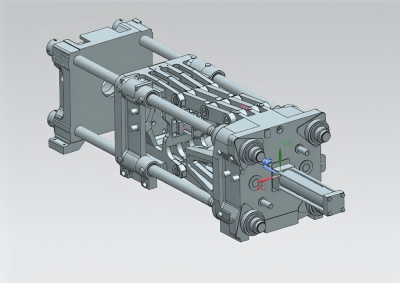
- Fixed and immovable
- Material selection and design requirements
- Function and structure
- Assembly and Manufacturing Standards
- Cooling systems
Fixed and immovable:
The fixed platen fixing and immovable in the injection molding machine, corresponding to the moving templaten, forming the opening and closing motion of the mould.
The fixed templaten is fixing directly to the bed of the injection molding machine, with openings in the middle position to allow the barrel to pass through and come into contact with the mould.
Material selection and design requirements:
The fixed platen is usually cast in ductile iron to improve strength.
However, its fatigue damage problem still needs to be solved by simulation analysis to ensure its durability and reliability.
Function and structure:
The fixed platen is responsible for the outer surface molding of the parts, mainly processing the outer surface.
During the machining process, better materials can be used to make the cavity part that contains the part.
Assembly and Manufacturing Standards:
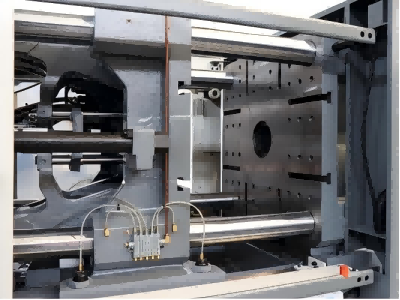
The assembly of the fixed templaten requires a high-precision positioning system.
Cooling systems:
In Haichen’s newest designs, fixed-platenn platens may be equiping with cooling control devices to improve productivity and product quality.
The stator platen plays a vital role in the injection molding machine, not only affecting the molding quality of the product, but also the efficiency and stability of the whole injection molding process.
Therefore, the technical requirements and details need to be strictly controlled during the design and manufacturing process to ensure the quality and performance of the final product.
Injection molding machine moving platen movement steps
The movement steps of the moving platen of the injection molding machine are driven by the hydraulic system and each production cycle follows the following pattern:
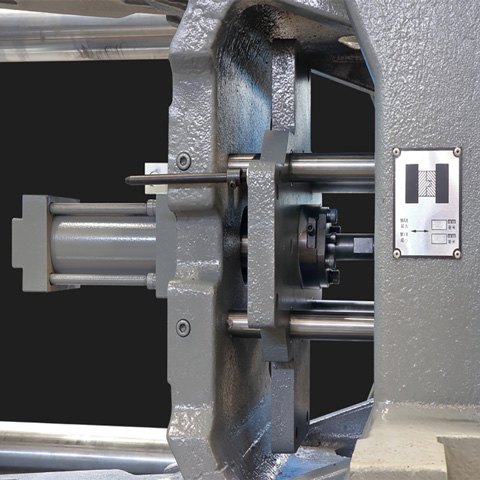
- Mould closing phase
- Mould opening phase
- Ejector stage
- Reset stage
Mould closing stage:
The moving platen moves slowly under the action of the mould closing mechanism to shorten the working cycle.
When the moving templaten approaches the fixed platen, the hydraulic system turns to low pressure and slow speed control to prevent violent collision.
After confirming that there is no foreign matter in the mould, the system turns to high pressure to close the mould.
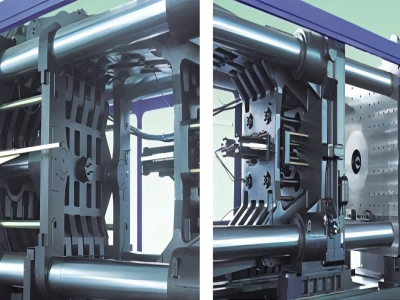
Mould opening stage:
After the injection is completed, the moving platen backs up and the mould opens at the PL opening surface.
The moving platen continues to retreat, and the slide realises lateral core extraction under the action of oblique guide pillar.
Under the action of pulling rod, the plastic part stays on the side of the moving mould.
And the residual material in the main casting channel is slowly pulled out.
Ejecting stage:
The moving mould platen stops retreating, and the top bar of the injection molding machine pushes the push platen to move upwards.
The slanting top bar moves upward with the push platen and at the same time moves left and right along with the slanting hole in the moving mould platen.
Achieve the separation of the slanting top bar and the plastic parts, and at the same time, make the plastic parts ejected from the moving mould.
Reset stage:
When the mould is reset, the pulling rod is reset first, and then the first cylinder and the second cylinder drive the side core removal mechanism to reset.
Finally, the mould completely closing at the PL opening surface, waiting for the next injection cycle.
These steps demonstrate the key actions of the injection molding machine’s moving templaten throughout the entire injection process, from closing, opening, ejecting and resetting the mould, each step of which is critical to ensuring product quality and productivity.
The role of the tail platen of the injection molding machine
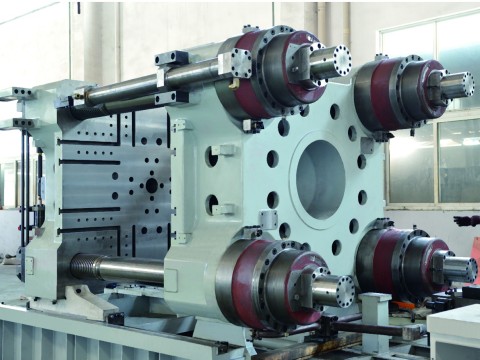
The injection molding machine tail platen plays an important role in the injection molding machine.
It is the basis of the whole mould closing system
Its main role includes the following aspects:
- Installation of hydraulic cylinder
- Connecting tie rods
- Forming the clamping force
- Withstand stress and wear
- Improve the force balance and service life
- Guiding and positioning role
Installation of hydraulic cylinder:
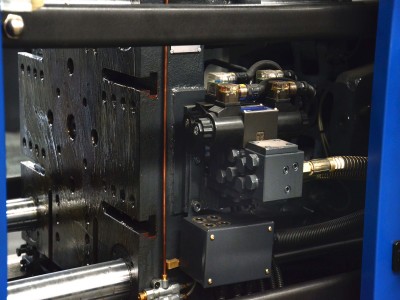
The tail platen is one of the important parts of the injection molding machine used to mount the hydraulic cylinder.
The hydraulic cylinder is connecting to the rest of the injection molding machine through the tail platen.
Thus, it can achieve the closing and opening operation of the mould.
Connecting tie rods:
The tail platen fits into the four tie rods of the injection molding machine and can slide in the direction of the tie rods.
This design enables the tail platen to effectively transfer and withstand the force from the hydraulic cylinder.
This ensures the stability and safety of the mould.
Forming the closing force of the mould:
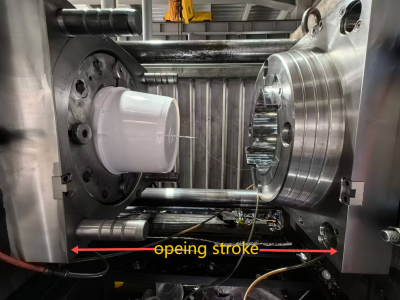
The tail platen plays a key role in the injection molding process.
It forms the clamping force on the mould by cooperating with the hydraulic cylinder and other mechanical structures.
It ensures that the mould can closing tightly during the injection process to ensure the quality and precision of the moulded products.
Withstand stress and wear:
As the tail platen needs to withstand greater stress and friction.
Therefore, the material selection requires high wear resistance and hardness.
This helps to extend the service life of the tail platen and reduce maintenance costs due to wear and tear.
Improvement of force balance and service life:
Some improving designs are mentioned by optimising the structure of the tail platen.
For example, by adding reinforcement or changing the casting structure, the stress can be effectively dispersed and the risk of fatigue fracture can be reduced.
Thus, the service life of the tail platen can be improved.
Guiding and positioning role:
The tail platen is usually used in conjunction with the guide pillar and guide sleeve.
To ensure the linear movement and positional accuracy of the mould in the process of opening and closing the mould.
This guiding function is essential to prevent mould damage and improve product quality.
The tail platen of the injection molding machine not only plays a supporting and connecting role in the mechanical structure.
But also plays an important function in the whole injection molding process.
This includes transmitting forces, creating clamping forces and ensuring the stability and accuracy of the mould.
These characteristics make the tail platen one of the key components of the injection molding machine.
Injection molding platen
An injection molding platen is a critical component of an injection molding machine, serving as the mounting surface for the mold halves. Below is a detailed breakdown of its role, types, and key considerations:
- What is a Platen
- Key Functions
- Types of Platens
- Design Considerations
- Common Issues & Solutions
- Maintenance Best Practices
- Example Specifications
- Innovations
What is a Platen?
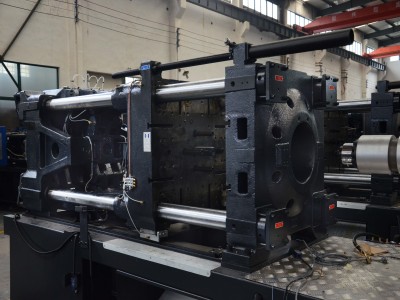
- Definition: A thick, flat metal plate (typically steel or cast iron) that holds the mold in place during the injection molding process.
- Location: Part of the clamping unit, which includes:
- Fixed platen: Attached to the machine frame, holds the stationary mold half.
- Moving platen: Connected to the clamping mechanism, moves to open/close the mold.
Key Functions
- Mold Support: Provides a rigid, flat surface to secure the mold halves.
- Force Distribution: Evenly distributes clamping force (up to thousands of tons) to prevent mold deflection.
- Alignment: Ensures precise alignment between mold halves for consistent part quality.
- Heat Management: Some platens include channels for heating/cooling to control mold temperature.
Types of Platens
| Type | Description |
|---|---|
| Standard Platens | Flat surfaces with T-slots or bolt holes for mold mounting. |
| Tie-Bar Platens | Designed to work with tie-bar systems for clamping force distribution. |
| Heated Platens | Integrated heating elements for temperature-sensitive materials (e.g., LSR). |
| Quick-Change | Modular designs for fast mold swaps (common in high-mix production). |
Design Considerations
- Material:
- Cast steel: High strength and durability for heavy-duty applications.
- Ductile iron: Cost-effective for smaller machines.
- Size: Matches the mold dimensions and machine clamping force (e.g., 500×500 mm for small machines, up to 2,000×2,000 mm for large presses).
- Surface Finish: Precision-machined to ensure flatness (tolerance ~0.02–0.05 mm).
- Mounting Features:
- T-slots, bolt holes, or hydraulic clamps for mold attachment.
Common Issues & Solutions
| Issue | Cause | Solution |
|---|---|---|
| Mold Misalignment | Warped or worn platen surface. | Re-machine or replace the platen. |
| Uneven Clamping | Poor force distribution. | Check tie-bar tension or platen flatness. |
| Heat Transfer Issues | Blocked/corroded channels. | Clean or replace cooling/heating lines. |
Maintenance Best Practices
- Regular Inspection: Check for flatness, cracks, or corrosion.
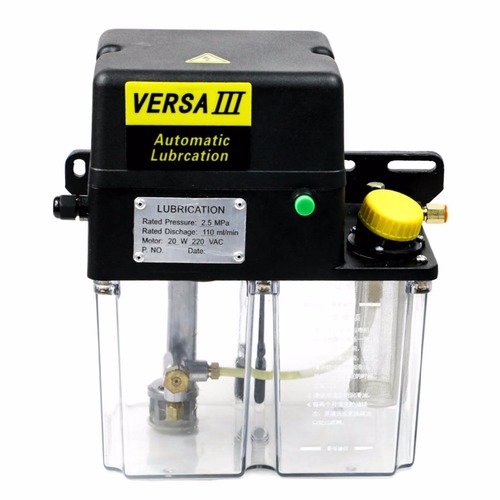
- Lubrication: Apply anti-seize compounds to mounting surfaces.
- Alignment Checks: Use dial indicators to ensure parallelism between platens.
Example Specifications
| Parameter | Typical Range |
|---|---|
| Clamping Force | 50–6,000+ tons |
| Platen Size | 300×300 mm to 2,500×2,500 mm |
| Flatness Tolerance | ≤0.05 mm/m² |
8. Innovations
- Hydraulic Clamping Systems: Eliminate tie-bars for easier mold access.
- Smart Platens: IoT-enabled sensors monitor temperature and stress in real time.
Why It Matters
A well-designed platen ensures:
- Consistent part quality by maintaining mold alignment.
- Reduced downtime through reliable mold mounting.
- Extended mold life by minimizing wear from uneven force.
For optimal performance, match the platen specifications to your mold size, material, and machine tonnage. Always prioritize manufacturers that adhere to ISO standards (e.g., ISO 12100 for machinery safety).
Haichen clamping unit toggle platen design
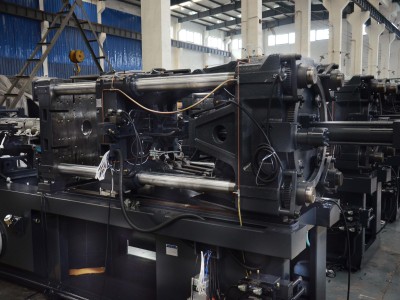
In injection molding machines, the “toggle platen” is the core component of the toggle clamping system.
Haichen’s design and working mechanism involve the following key points:
- Basic structure and function
- Optimize the design to reduce deformation
- Dynamic performance and safety features
- Comparison with other clamping systems
- Potential defects and improvements
Basic structure and function
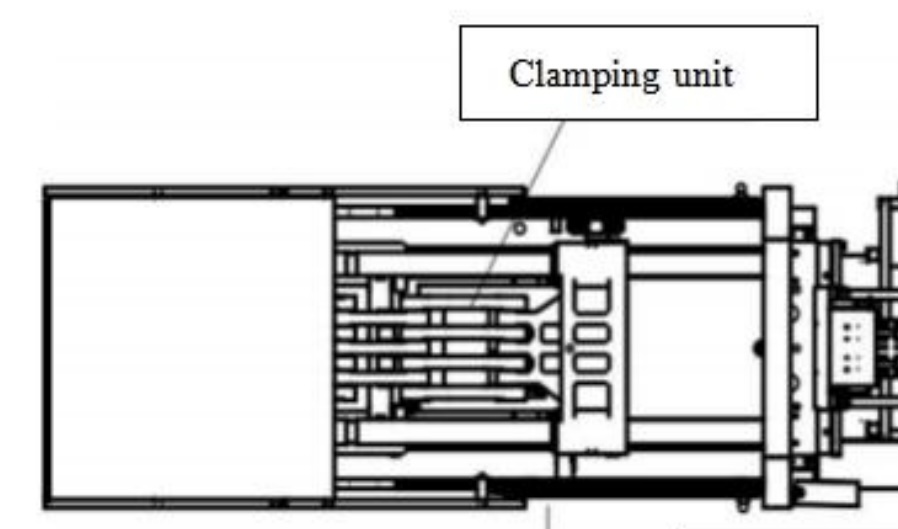
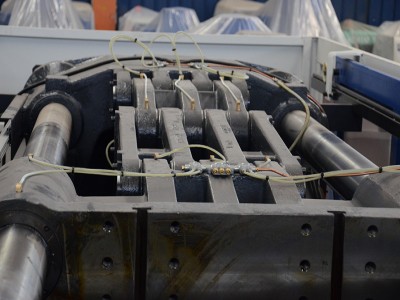
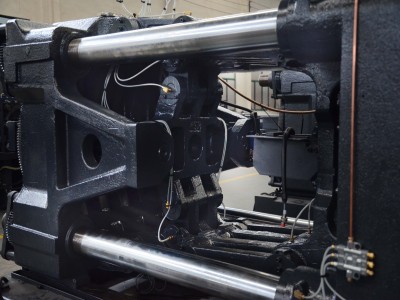
The toggle clamping system consists of a fixed platen, a moving platen, a toggle linkage mechanism and a hydraulic cylinder.
The hydraulic cylinder drives the toggle linkage to expand, pushing the moving platen to quickly close or open the mold.
This mechanical structure amplifies the clamping force through the lever principle at the end of the closing period to ensure the stability of the mold under high pressure.
Optimize the design to reduce deformation
Box structure:
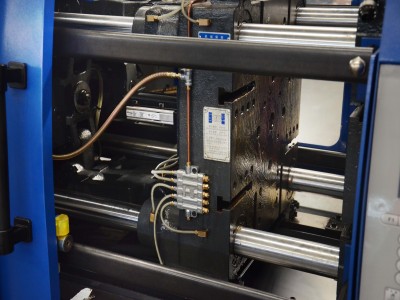
The fixed platen adopts a box-shaped design with evenly distributed internal reinforcement ribs, which significantly reduces platen deflection and optimizes the positioning accuracy of the tie rod.
Wide slide support:
The moving platen is connected to the machine base through a wide wear-resistant slide (such as a stainless steel support rail) to further reduce deformation during high-speed movement.
Five-point double toggle mechanism:
Through symmetrical force transmission paths and multi-point support, the mold is ensured to be evenly stressed and its service life is extended.
Dynamic performance and safety features
Rapid movement and deceleration protection:
The toggle mechanism automatically decelerates before the mold closes to avoid high-speed impact damage to the mold.
At the same time, its mechanical advantage gradually increases during the closing stage to achieve efficient clamping.
Mold height adjustment:
The entire toggle mechanism and the moving plate assembly are moved by adjusting the nut to adapt to different mold thicknesses, ensuring that the toggle connecting rod is fully extended when closing to exert maximum clamping force.
Comparison with other clamping systems
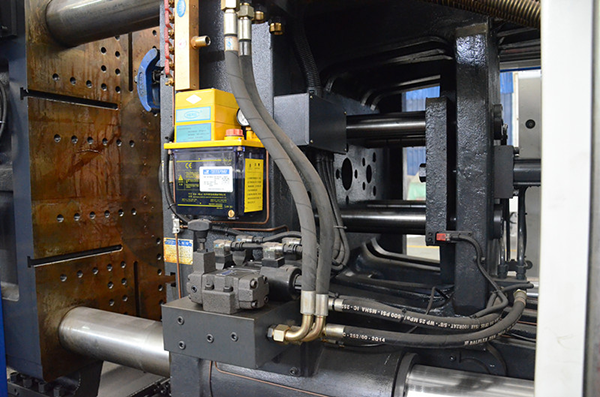
Compared with the two-plate hydraulic system, the stroke of the toggle platen is limited by the range of motion of the connecting rod, and the machine is longer overall, but its closing speed is faster (0.6 seconds faster under the same specifications), which is suitable for efficient production of small and medium-sized products.
In addition, the energy consumption of the toggle system is lower, and the heating is easier to control due to the small amount of hydraulic oil used.
Potential defects and improvements
The clamping force efficiency of the traditional toggle platen is about 80-85%. If the design is not appropriate, it may cause flash at the gate (due to insufficient center support).
New designs (such as EKS structures) reduce deformation and reduce mold maintenance costs by enhancing rigidity.
Through the efficient transmission and structural optimization of the mechanical link, the elbow joint template performs outstandingly in fast cycle, low energy consumption and stability, and is an ideal choice for small and medium-sized injection molding machines.
Welcome to contact Haichen to learn more about the technical information of injection molding machines.