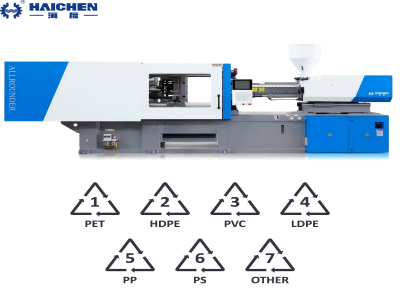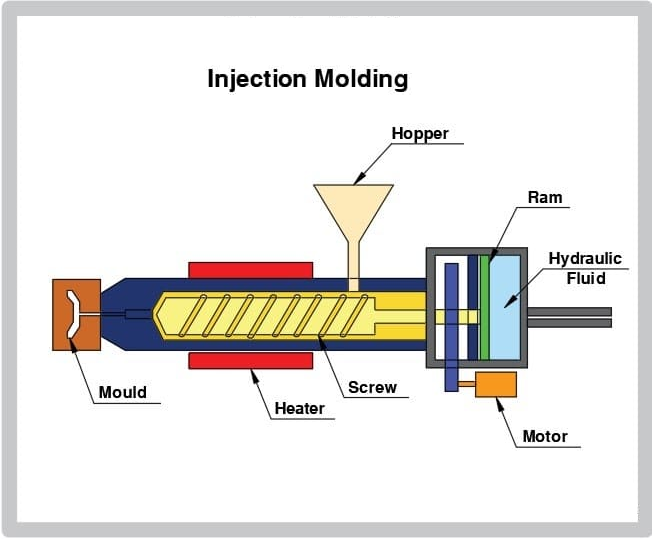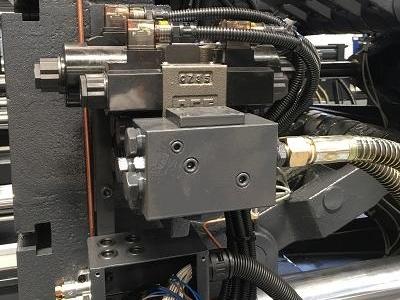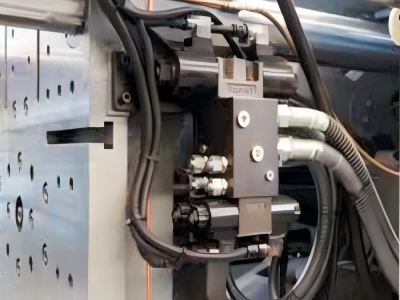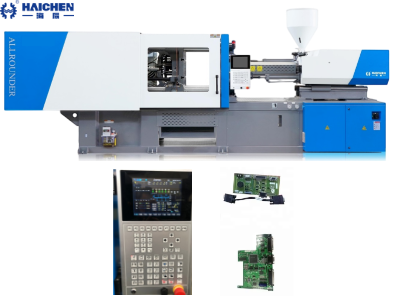
Types of clamping unit for injection molding machines include mechanical manual clamping systems, hydraulic clamping systems, electromagnetic clamping systems, electric direct pressure clamping, hydraulic direct pressure clamping, hybrid direct pressure clamping, and special two-plate clamping structures.
Different injection molding machine clamping types have their own special design structures and functions.Used to produce matching molds, such as barrel products with higher heights, which require a larger mold transfer stroke, so the two-plate structure is more advantageous
For all manufacturers, the shape of your own main products and the corresponding mold design are the technical basis for selecting different clamping components.
Let us introduce the characteristics of each structure in detail below.
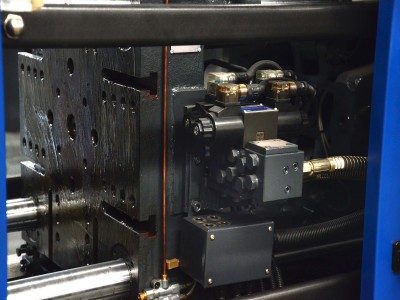
Features of various types clamping units
- Mechanical manual clamping system
- Hydraulic clamping system
- Electromagnetic clamping system
- Electric direct pressure clamping
- Hydraulic direct pressure clamping
- Hybrid direct pressure clamping
- Two-plate clamping structure
- Mechanical manual clamping system:
- This system fixes the mold position through manual latches and is suitable for some simple mold structures.
- Hydraulic clamping system:
- The pressure used to clamping force to close and lock the mold procide by hydraulic cylinder.
- This system is usually using on occasions that require a large clamping force.

- Electromagnetic clamping system:
- Use the electromagnetic force to achieve rapid clamping and opening of the mold.
- Which is suitable for occasions that require rapid mold change.
- Electric direct pressure clamping:
- The electric device is used to directly apply the clamping force.
- Which has a fast response speed and low energy consumption, and is suitable for occasions with high energy requirements.
- Hydraulic direct pressure clamping:
- The hydraulic cylinder is using to directly apply the clamping force, which has high linearity of mold opening and closing and uniform clamping force.
- Hybrid direct pressure clamping:
- Combining the advantages of electric and hydraulic, using multiple hydraulic cylinders for highly linear mold opening and closing operations, with advantages such as low tabletop, small upper mold weight limit, and stable and powerful mold opening and closing force.
- Two-plate clamping structure:
- The new clamping component is usually composed of two plates, front and back, which is more compact and space-saving than the traditional three-plate structure.
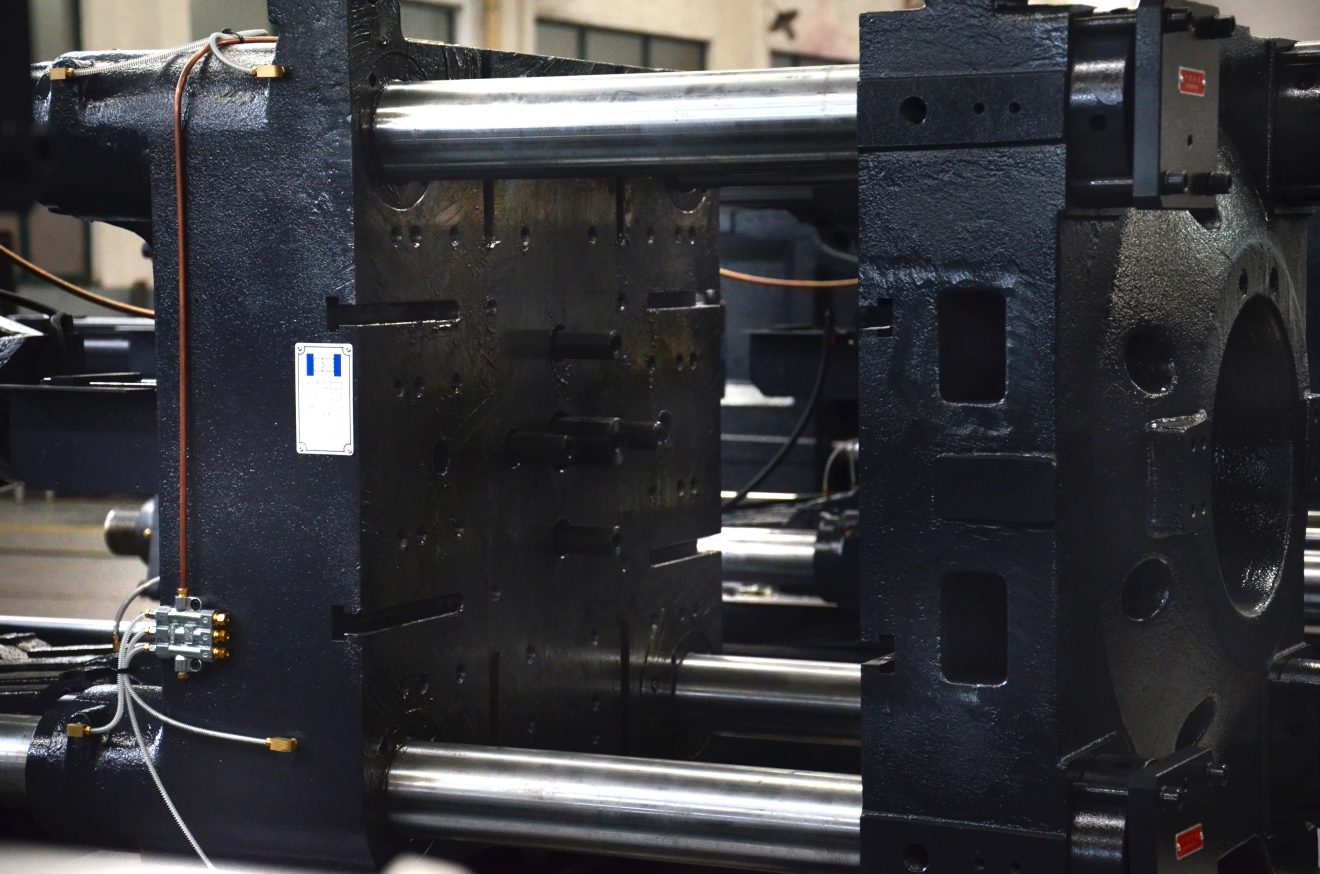
These types of clamping components have their characteristics and are suitable for different injection molding needs and application scenarios.
How does the hydraulic clamping system work?
The types of clamping units for injection molding machines are very important, we introduce them in detail.
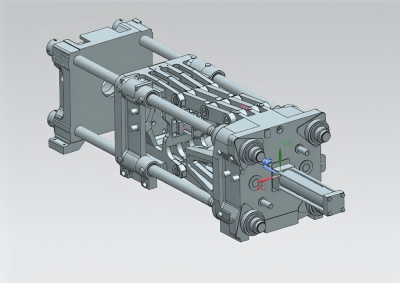
- Hydraulic clamping system for types of clamping unit for injection molding machines
- Hydraulic system oil supply
- Mold closing action
- Clamping force adjustment for Types of clamping unit for injection molding machines
- Clamiping Speed control
- High-pressure clamping
- Safety and stability
Hydraulic clamping system for types of clamping unit for injection molding machines
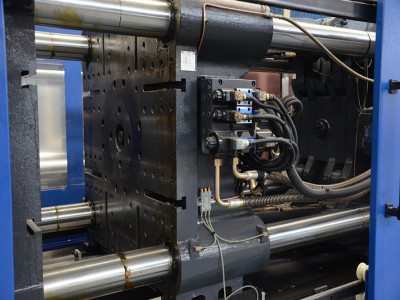
The hydraulic clamping system is one of the important items for Types of clamping unit for injection molding machines.
As the working principle of the hydraulic clamping system mainly involves the synergy of the oil supply, control, and actuator of the hydraulic system.
The following is its detailed working process:
Hydraulic system oil supply
The hydraulic clamping device requires the hydraulic system to provide a pressure oil source.
Then the hydraulic system extracts the hydraulic oil from the oil tank through a pump and delivers it to the hydraulic clamping device through a pipeline.
Mold closing action
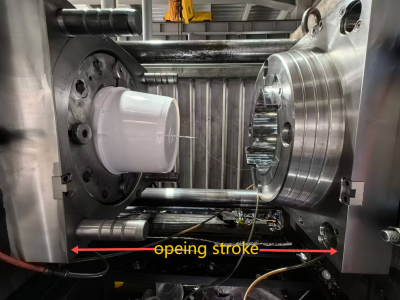
When the hydraulic clamping system is started, the electromagnet is energized. And the hydraulic pump sends the oil into the rodless chamber of the main cylinder, causing the piston rod to start moving forward.
Driving the slider and the upper mold to move down quickly.
At this time, the hydraulic cylinder generates hydraulic pressure to tightly lock the movable part of the mold. It ensure stability during the injection molding process with the fixed part.
Clamping force adjustment for Types of clamping unit for injection molding machines
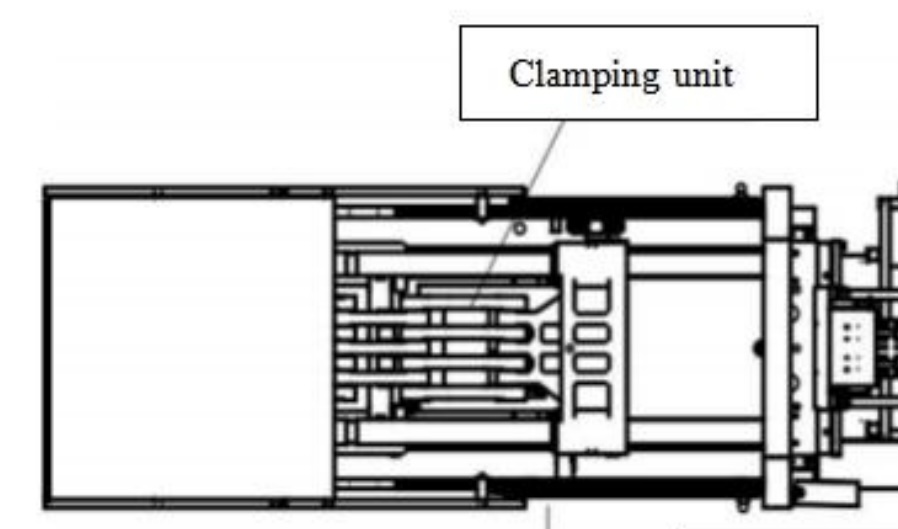
The clamping force size can be achieved by adjusting the oil pressure.
When the mold is close to closing, the system will gradually increase the pressure until the set clamping force requirement is reached.
In addition, the hydraulic system’s proportional pressure valve can control the clamping force’s accuracy to reduce friction’s influence on the clamping force.
Clamping Speed control
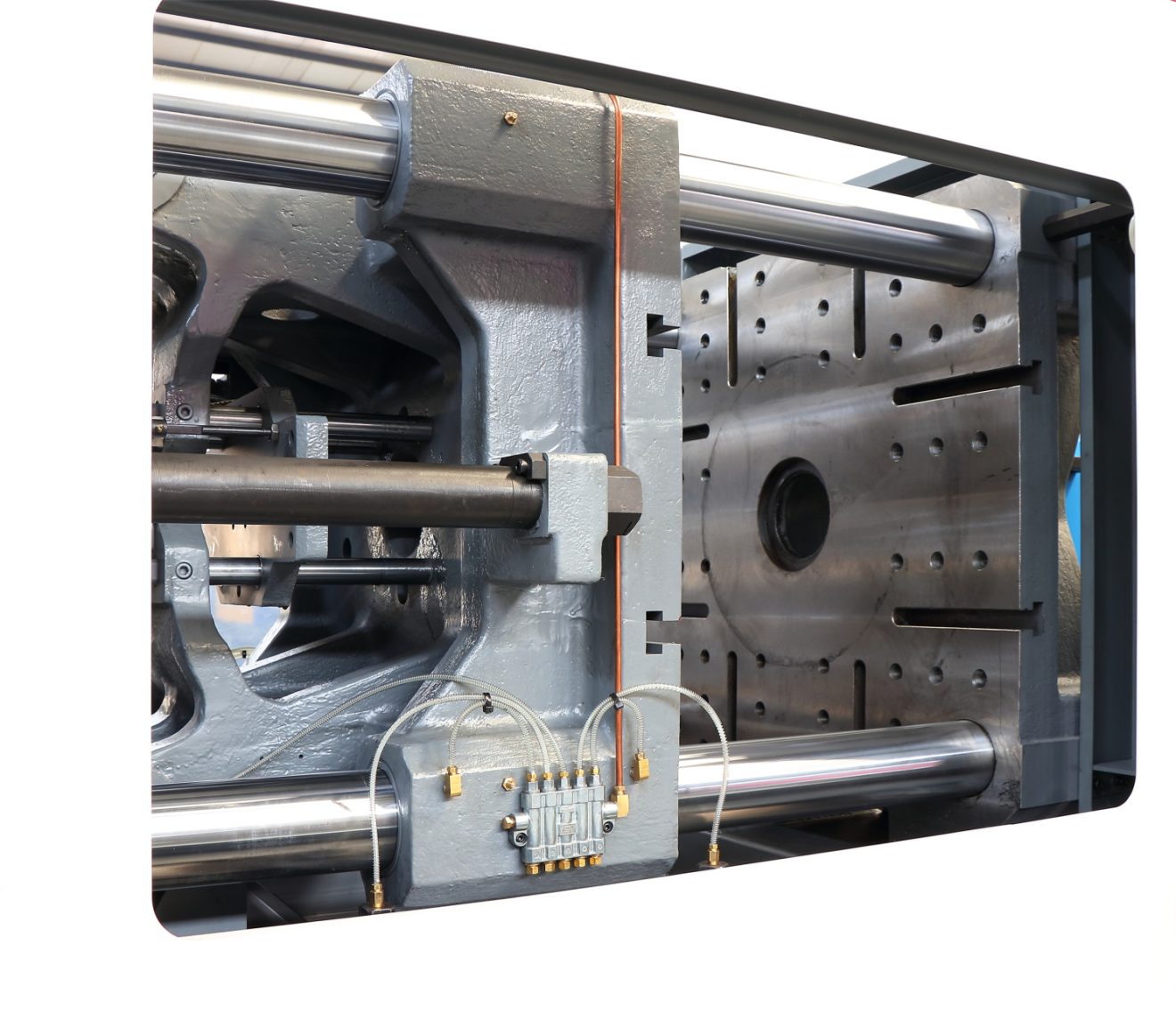
During the mold closing process, in order to reduce the impact force, the system will first quickly close the mold.
And then gradually slow down until it the closing is completely .
This speed control can be achieved by adjusting the opening amount of the cartridge valve.
High-pressure clamping
After the mold is completely closed, the hydraulic system will continue to increase the pressure to keep the mold in a high-pressure locking state to ensure stability and accuracy during the plastic injection process.
Safety and stability
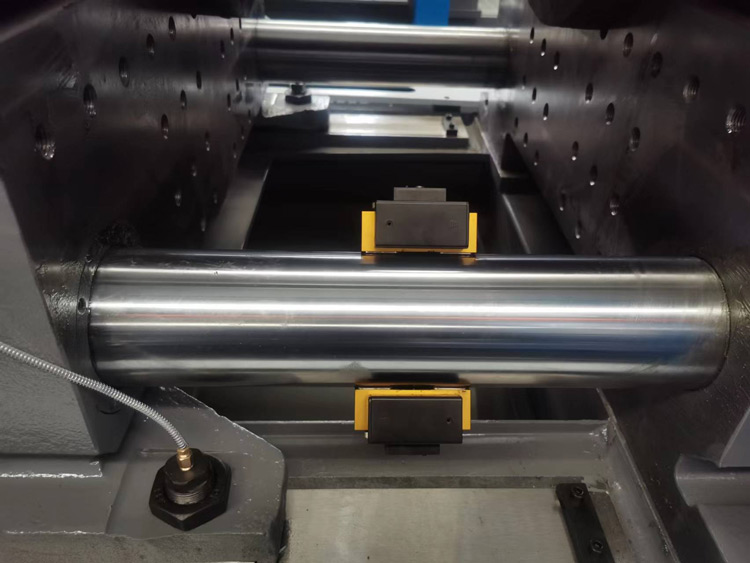
The hydraulic clamping system is usually equipping with safety devices and control systems. Those parts ensure the safety of operation and the stability of the system.
For example, a proximity switch using for indicate whether the system is in the locked position.
And whether the system is precisely controlled by the electronic control unit.
The hydraulic clamping system achieves rapid, stable, and safe locking of the mold through the coordinated action of the hydraulic system’s oil supply, pressure regulation, speed control, and safety devices.
It ensure the efficiency and quality of the injection molding process.
Features of two-platen clamping unit of injection molding machine
The “two-plate clamping unit” (also called direct pressure clamping structure or tie-rod-free clamping structure) of the injection molding machine is a modern design relative to the traditional “three-plate clamping structure” (consisting of the front platen, rear platen and movable platen, connected by four tie rods).
>Its core feature is that the tie rods throughout the entire template system are removed, and the clamping force is directly applied by the large clamping cylinder located on both sides or the rear of the movable template (moving template).
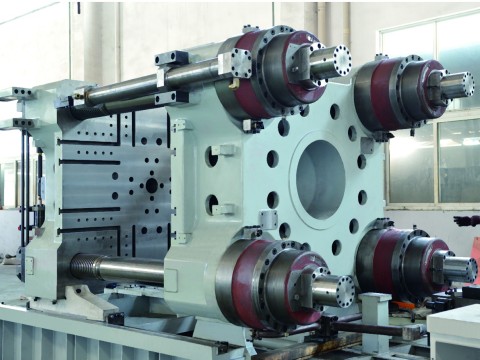
The following are the main features of the two-plate clamping structure of the injection molding machine:
Simplified structure and enhanced rigidity
Large mold opening stroke and flexible mold space
- Different ways of applying clamping force
- High speed and high efficiency
- Convenient maintenance
- Energy saving potential of two-platen clamping unit
- Cost considerations
- Potential challenges
Simplified structure and enhanced rigidity:
Tie rod removal:
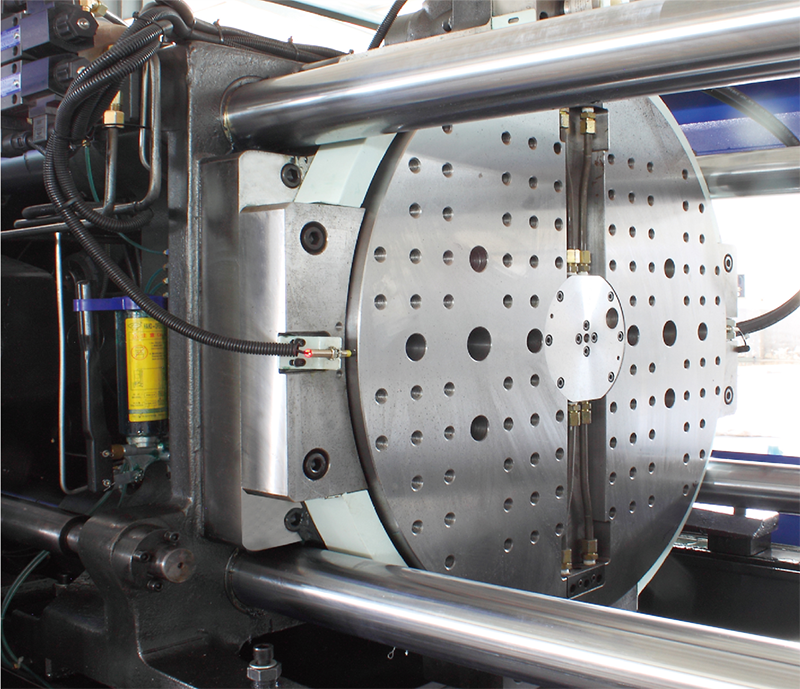
This is the most significant feature. Without the tie rods running through the front and back, the structure is greatly simplified and the number of parts is reduced.
Overall frame:
The movable template and the fixed template (front template) are usually directly mounted on a sturdy C-frame or box frame. This frame requires extremely high overall rigidity and deformation resistance to withstand the huge clamping force.
Improved rigidity:
Optimized frame design (such as box-type structure, thickened steel plate, and reasonable rib plate layout) can provide higher overall rigidity and stability after removing the tie rod, reduce the deformation of the template under high pressure, and improve the precision of the product.
Large mold opening stroke and flexible mold space:
Not limited by tie rods:
Since there is no tie rod, the mold opening stroke of the movable template is theoretically only limited by the frame length and can be made very large. This is very beneficial for the production of deep-cavity products (such as barrels, boxes, and automotive interior parts).
Strong mold thickness adaptability:
The mold space (mold thickness range) is usually larger than that of three-platen machines of the same specification. Adjusting the mold capacity mainly depends on the position of the piston rod of the moving clamping cylinder (by adjusting the nut or hydraulic drive), and the operation is relatively simple and fast.
Different ways of applying clamping force:
Direct pressure type:
The clamping force is directly generated by a large cylinder installed at the rear or both sides of the movable template and acts on the movable template, pushing the movable template to press against the fixed template to lock the mold. The force flow path is short and direct.
Uniformity of clamping force:
Usually multiple clamping cylinders (usually 4 or 2) are arranged symmetrically, and a precise synchronous control system is used to ensure that the clamping force is evenly distributed on the template, reducing the risk of mold overload.
High speed and high efficiency:
Reduced mass of the moving template:
Due to the removal of tie rods, tie rod nuts and related transmission mechanisms, the mass of the moving template is usually lighter than that of the three-platen machine.
Fast acceleration:
The reduced mass and optimized guide system (such as linear guides) make the start-stop and acceleration and deceleration performance of the moving template better, which is conducive to shortening the opening and closing time and improving the cycle efficiency.
Fast opening and closing speed:
Faster opening and closing speed is one of the important advantages of the two-platen machine.
Convenient maintenance:
Easy access to the mold:
Without the obstruction of the tie rod, it is easier for operators to approach the mold area for mold loading, debugging, maintenance and automation integration (such as installing a robot).
Reduced maintenance points:
Mechanical components such as tie rods, tie rod nuts, mold adjustment motors/gears are eliminated, reducing potential maintenance points and sources of failure.
The maintenance of the main hydraulic system (clamping cylinder, oil circuit) is relatively centralized.
Energy saving potential of two-platen clamping unit:
Lightweighting of the moving platen:
The mass of the moving parts is reduced, and the energy required to drive the opening and closing of the mold is reduced.
Efficient hydraulic system:
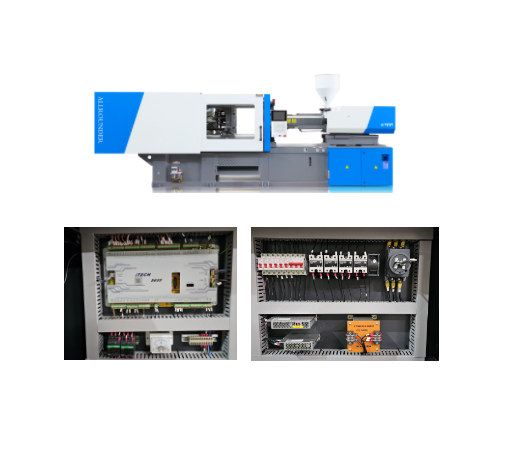
Modern two-platen machines are usually equipped with more advanced and efficient hydraulic systems (such as variable pumps, servo control systems).
Which only provide maximum pressure and flow when needed, and are more energy-efficient than the continuous high-pressure mold adjustment mechanism (worm gear) in three-platen chines.
Cost considerations:
Manufacturing cost:
The rigidity and material requirements of the overall frame are extremely high, and the cost of large clamping cylinders is also high, which makes the initial manufacturing cost of large two-platen machines higher than that of three-platen machines with the same clamping force.
Operating cost:
The potential energy-saving advantages, higher production efficiency and lower maintenance costs can offset or even exceed the initial investment in long-term operation.
Potential challenges:
Frame deformation control:
How to accurately control the elastic deformation of the entire frame (especially the C-shaped opening) under high clamping force to ensure parallelism is the core difficulty of the design.
Cylinder synchronization:
The synchronization accuracy of multiple clamping cylinders is extremely high, otherwise it will cause the template to tilt, the mold can be overloador even damage. That will need precision hydraulic synchronization control or mechanical synchronization mechanism.
High flow hydraulic demand:
Direct pressure mold opening and closing requires a large flow of hydraulic oil to drive the large diameter cylinder to move quickly, and the instantaneous flow of the hydraulic system is high.
The two-plate clamping structure injection molding machine has its main advantages of simplified structure, high rigidity, large mold opening stroke, flexible mold space, fast speed (especially mold opening and closing), easy access to the mold and convenient maintenance.
It is particularly suitable for application scenarios that require large stroke, deep cavity products, frequent mold changes or the pursuit of high production efficiency. The core is to remove the tie rod, adopt an integral rigid frame and direct pressure clamping cylinder, but it also puts forward higher requirements for frame design, deformation control, cylinder synchronization and hydraulic system. In the field of small and medium-tonnage injection molding machines, the two-plate type has become the mainstream; in the field of large machines, its advantages (especially large stroke) are also very prominent and its application is becoming more and more extensive.
Haichen types of clamping unit for injection molding machines
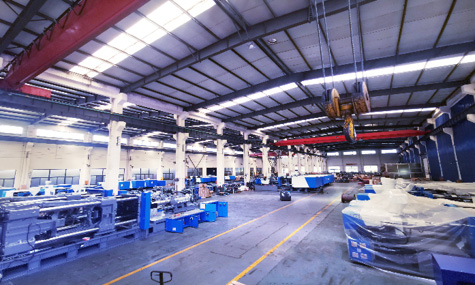
Haichen machine use hydralic types of clamping unit. It controlled by servo system and hydrcalic unit.
The clamping unit use small diameter positioning hole, enhance clamping force of die cavity.
Types of clamping unit for injection molding machines have their own characteristics and applicable scopes. Choosing a suitable clamping device is crucial to improving the efficiency of injection molding equipment.