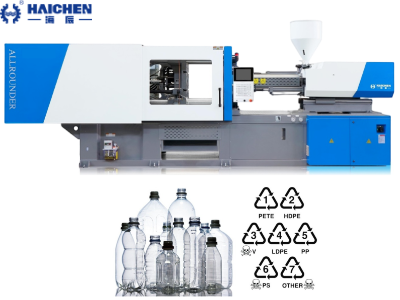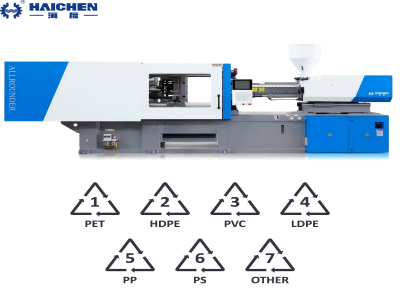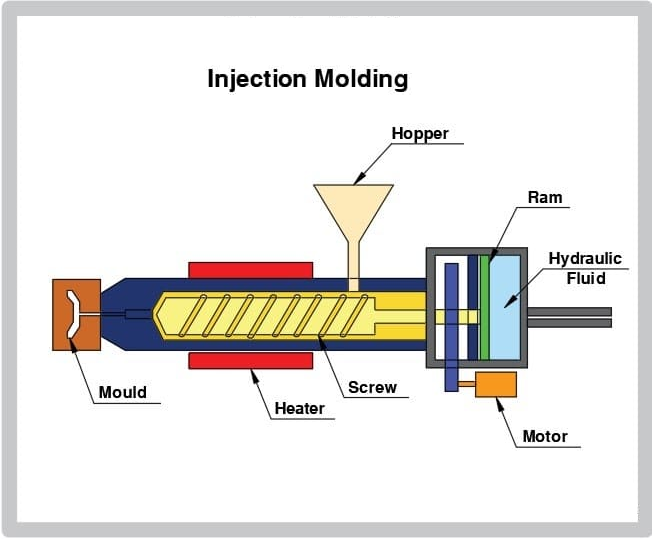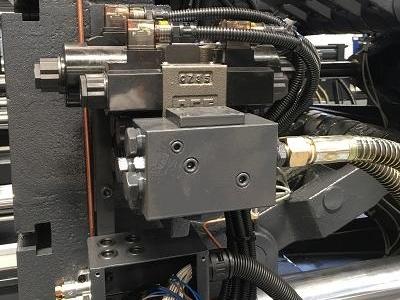
Injection molding technology is a highly flexible and widely applied manufacturing method:
- Conventional Injection Molding
- Gas-Assisted Injection Molding
- Microinjection Molding
- Reaction Injection Molding
- Multicomponent Injection Molding
- Thin Wall Molding
- Secondary Injection Molding
- Foam Injection Molding
- Liquid Silicone Rubber Injection Molding
- 3D Printing and Injection Molding
It can achieve the manufacturing of parts with different requirements.
With the continuous development of technology, injection molding technology is constantly innovating in materials, processes and equipment to meet the manufacturing demands of higher precision, higher efficiency and more complex structures.
It is a plastic processing process widely used in the manufacturing industry, and there are many types of it.
Each with its own unique characteristics and application scenarios.
Conventional Injection Molding
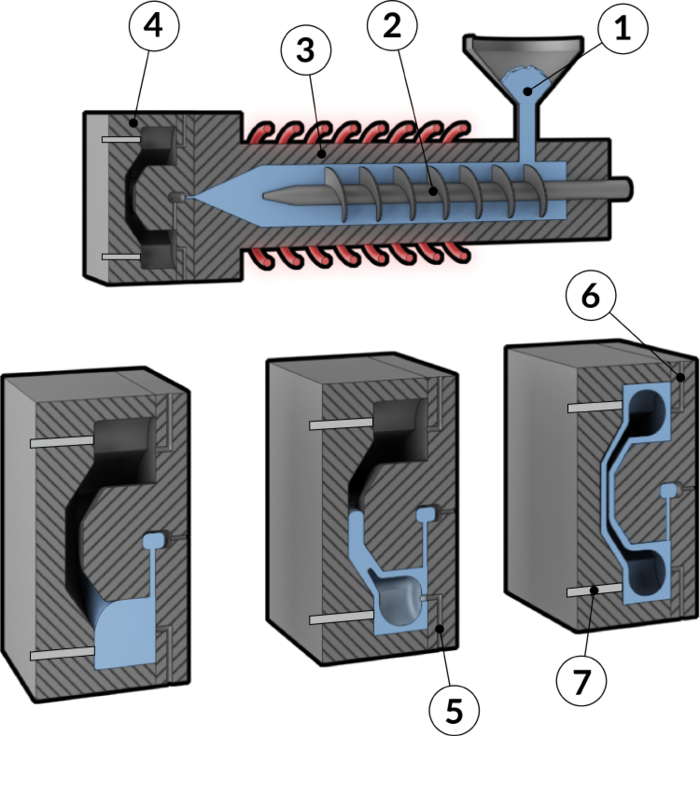
This is the most common type of injection molding, in which molten plastic is injected into the mold cavity and cooled and cured to form the desired shape.
This method is suitable for the production of plastic products of various specifications, shapes and materials, such as plastic tableware, home appliance shells, etc.
Gas-Assisted Injection Molding
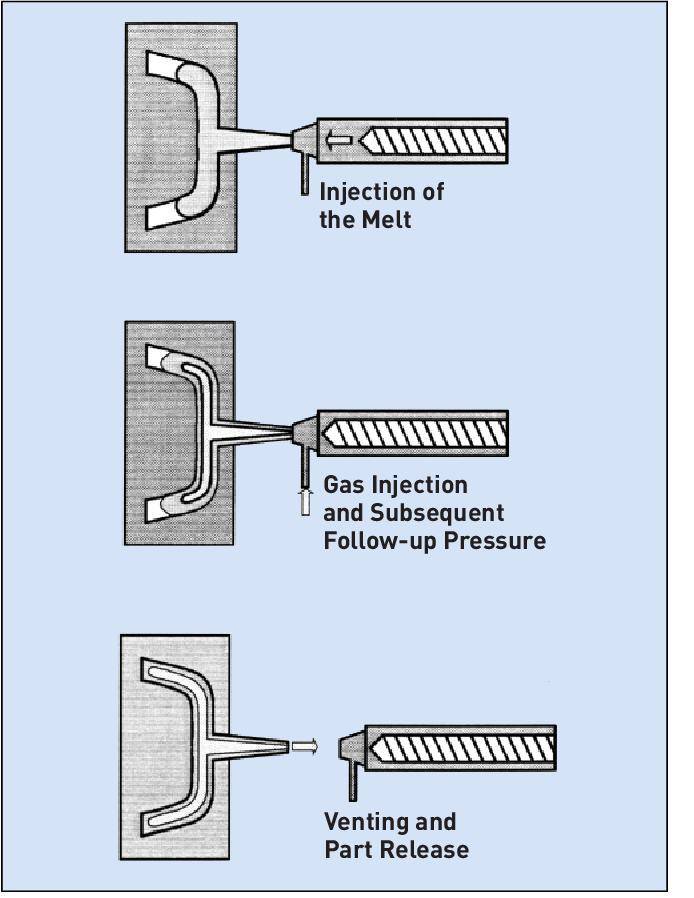
After the mold is partially cured, an inert gas, such as nitrogen, is injected to create a hollow structure or reduce the weight of the finished product.
This approach increases production efficiency while reducing energy consumption.
Melt injection stage
First, a portion of the plastic melt is injected into the mold cavity, which typically accounts for 60%-97% of the cavity capacity.
Gas injection stage
Secondly, high-pressure nitrogen is injected into the mold cavity through a special device,
Which pushes the melt to expand towards the edge of the mold and forms a hollow structure at the same time.
Gas holding stage
Finally, the high-pressure gas is maintained in the mold to complete the cooling and shaping of the product.
Microinjection Molding
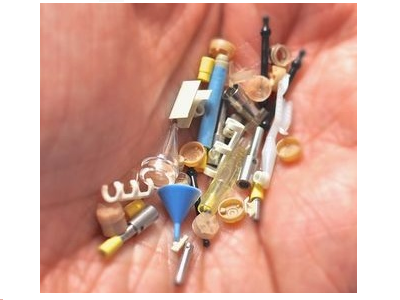
Manufacturers employ small parts machining to produce small, precision parts that serve in electronic equipment, medical devices and other fields.
This technology enables the manufacture of highly accurate and complex geometries.
High precision
Micro injection molding can achieve sub-micron or even nanometer precision, and is suitable for the production of parts with complex structures.
Such as micro gears, micro sensors, and microfluidic chips.
Material diversity
Commonly used materials include polycarbonate (PC), polyamide (PA), polymethyl methacrylate (PMMA), and liquid crystal polymer (LCP),
which have good mechanical properties and temperature resistance.
Cost-effective
Compared with traditional manufacturing methods, micro-injection molding has lower production costs and higher efficiency, making it suitable for high-volume production.
High degree of automation
The process usually adopts a computerized process, which can realize automated production and reduce manual intervention.
Multicomponent Injection Molding
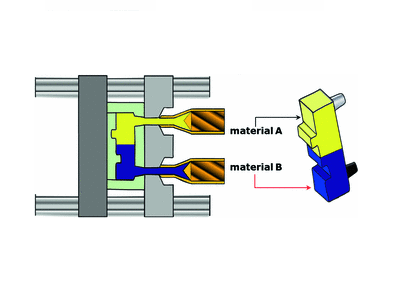
Two or more different materials are injected into the same mold to form a single finished product.
This approach enables the manufacture of composite materials and improves the performance and functionality of the product.
Versatility
Multi-component injection molding can combine multiple materials or colors in the same product,
making it have a variety of functions, such as pressure resistance, heat resistance, chemical resistance, etc.
For example, it is possible to manufacture hard-and-soft keys, seals, automotive parts, etc.
High productivity
This technology allows multiple materials to be injected in a single molding cycle, eliminating the need for subsequent assembly or post-processing steps,
increasing productivity and reducing costs.
Flexibility & Automation
Multi-component injection molding technology combines modular design, automation control.
And precision tooling technology to meet the needs of complex product customization.
For example, fully automated production is achieved through turntables, rotary stacks, core removal technology and multi-station systems.
Reaction Injection Molding
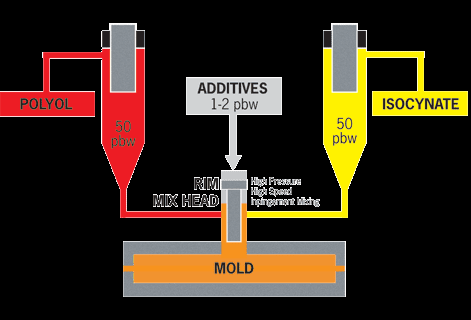
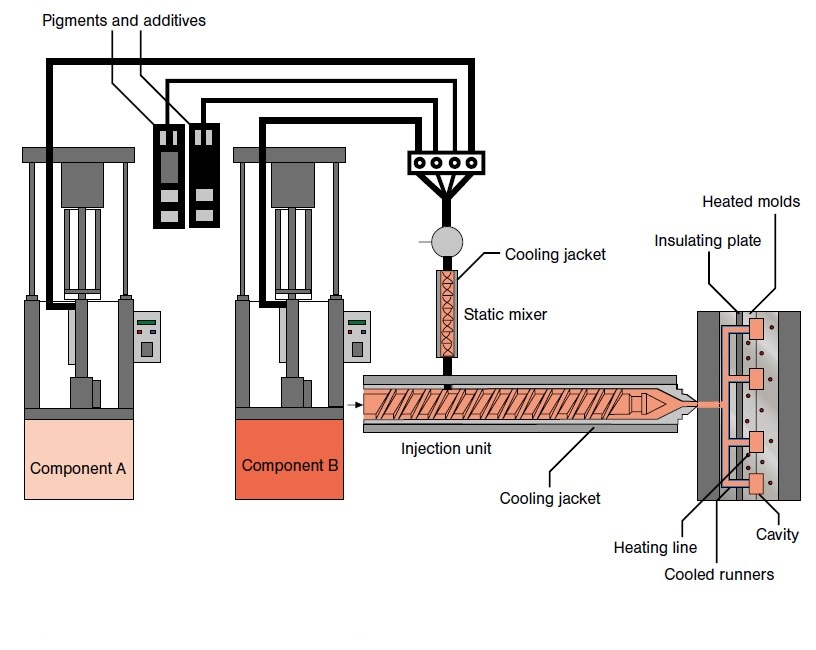
At the heart of reaction injection molding is the mixing of two or more low-viscosity, chemically reactive liquid feedstocks.
Such as polyols and isocyanates, under high pressure and injected into a mold.
These raw materials undergo a chemical reaction within the mold to form a solid product.
The heat released during the reaction helps to cure the mold while improving the mechanical properties and durability of the product.
High efficiency and energy saving
Reaction injection molding does not require high temperature and high pressure,
And the energy consumption is low, which is suitable for large-scale production.
Strong material adaptability
Suitable for a variety of thermosetting plastics, such as polyurethane (PU), epoxy resin (EP), etc.,
Especially suitable for the production of complex shape products.
High dimensional stability
Because the chemical reaction is completed in the mold, the product has high dimensional accuracy and good surface quality.
Thin Wall Molding
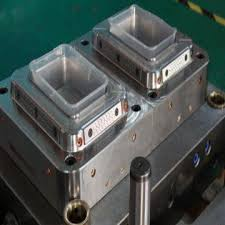
Thin-wall injection molding is an advanced plastic molding technology that aims to produce thin-walled plastic products with wall thicknesses of less than 1 mm through a high-speed, high-pressure, and high-precision process.
The ratio of flow length to wall thickness (L/T) is greater than 100 or 150.
The thickness of the plastic part is less than 1 mm and the projection area is more than 50 square centimeters.
The wall thickness is less than 1 mm or the ratio of wall thickness to diameter (t/d) is less than 0.05.
Secondary Injection Molding
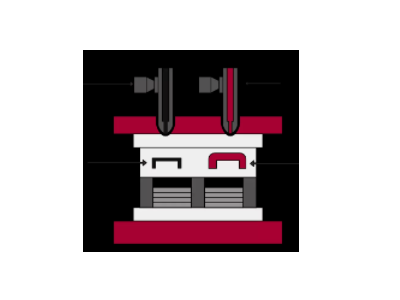
Overmolding also known as two-shot injection molding, overmolding, or overmolding is a multi-material injection molding technology.
Which focuses on injecting two or more materials into the same mold to form a product with complex structures and functions.
These include sandwich molding, overmolding and two-component injection molding,
Which create complex multi-layer structures by injecting different materials multiple times.
Initial molding
Using standard injection molding techniques, an injection molding machine injects a first material, usually a rigid plastic or metal, into a mold to form a substrate or base part.
Insert molding
The formed substrate is placed in another mold, fixed by a robot or by hand, and then injected into a second material (e.g., TPE).
Cooling & Demolding
The two materials are cooled and cured in the mold, and then the finished product is removed from the mold.
This process requires tight temperature and time control to avoid material deformation or poor bonding.
Foam Injection Molding
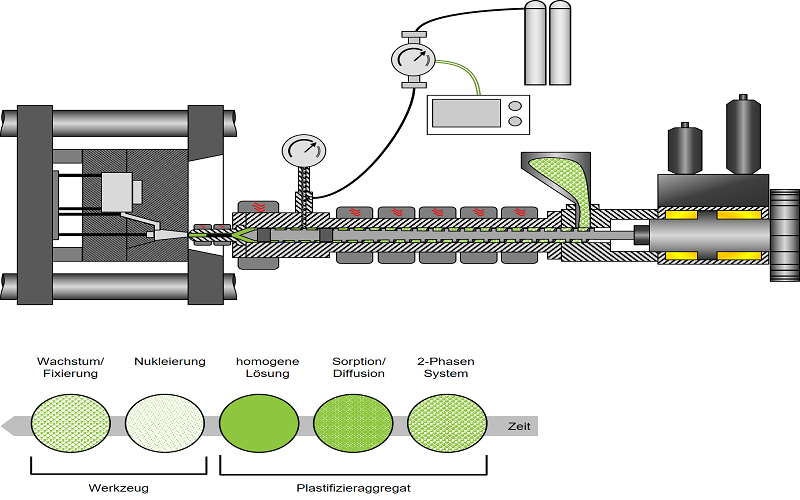
This is an innovative plastic processing technology that expands in a mold to form a foam structure by adding a blowing agent or blow agent to a polymer melt.
Physical foaming
Using a physical blowing agent (such as nitrogen or carbon dioxide),
it dissolves in molten plastic under high pressure and rapidly expands to form a foam structure when the pressure drops.
Chemical foaming
The use of chemical blowing agents (such as sodium percarbonate) to decompose during heating to produce gases that swell plastics.
Structural foam injection molding
Combining the characteristics of physical foaming and chemical foaming, by adding a foaming agent to the mold cavity,
the plastic forms a honeycomb structure during the cooling process.
Liquid Silicone Rubber Injection Molding
It is mainly used in the production of silicone products, such as medical equipment, seals, etc., with good elasticity and high temperature resistance.
High safety
liquid silicone material is non-toxic, heat-resistant, environmentally friendly, and will not produce harmful substances when burned.
Flexibility
Mold design and process parameters can be adjusted according to different size, shape, color and hardness requirements.
High efficiency
Injection molding is fast, suitable for high-volume production, and does not require complex post-processing processes.
High quality of the finished product
The mold is in close contact with the silicone, which allows for a smooth surface and a rich product with rich details.
3D Printing and Injection Molding
The combination of 3D printing and injection molding is a manufacturing method that complements the advantages of the two technologies.
And by combining the flexibility of 3D printing with the efficiency of injection molding.
It is possible to achieve the manufacturing goals of complex structures, high precision, and mass production.
Overmolding
3D printed parts are placed directly on the injection mold for overmolding, thus achieving the combination of two materials.
This approach makes it possible to utilize 3D printed parts as functional components while enabling mass production through injection molding.
Over printing
Secondary processing, such as coating or surface treatment, is performed on a 3D printed piece to improve its performance and appearance.
Hybrid manufacturing technology
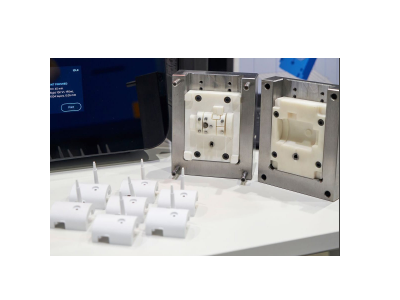
3D printing is used to manufacture injection molds, which reduces tooling costs and shortens development cycles.
For example, molds printed by digital light processing (DLP) technology can be used directly for injection molding.
Injection Printing
Combines the advantages of 3D printing and injection molding to achieve integrated manufacturing of complex parts through high-flow rates and high-resolution materials.