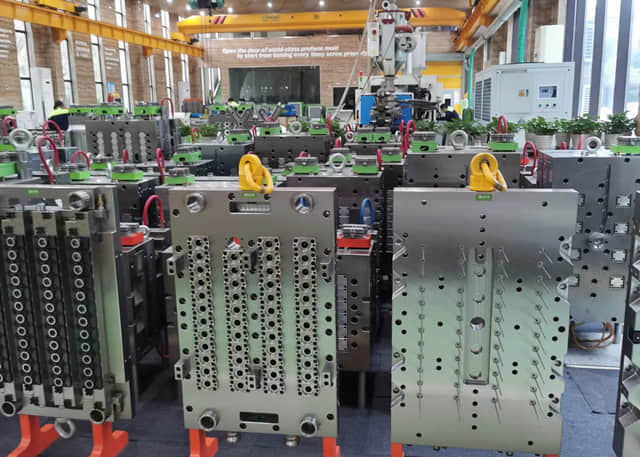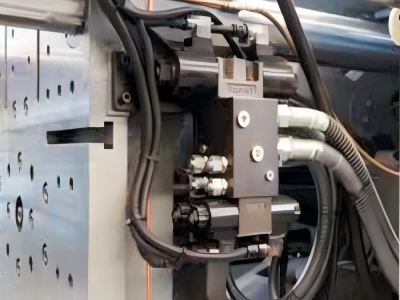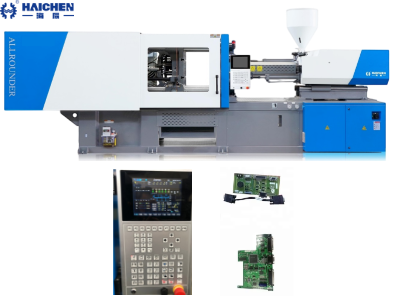
Injection Molding Molds Types is complex,classified by:
- Structural characteristics
- The number of cavities
- Molding technology
- Industry application
- Mold material
According to material characteristics, production requirements, structural complexity and industry standards.
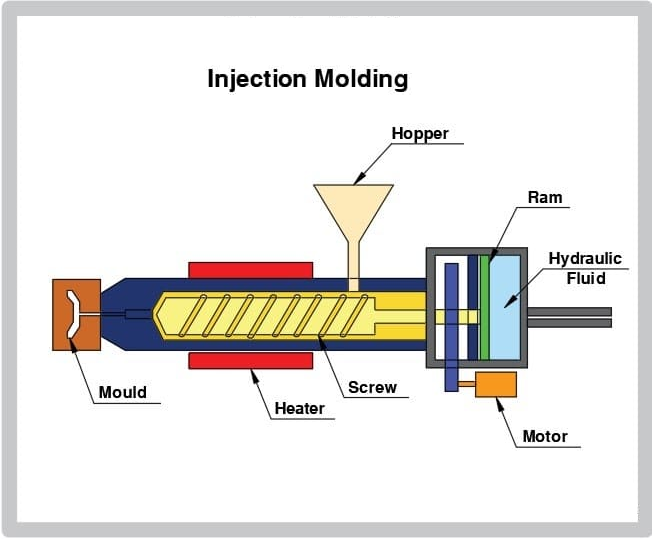
An injection mold is a tool used for plastic injection molding.
Which is used to create the desired product shape by injecting molten plastic into the mold cavity and cooling and curing.
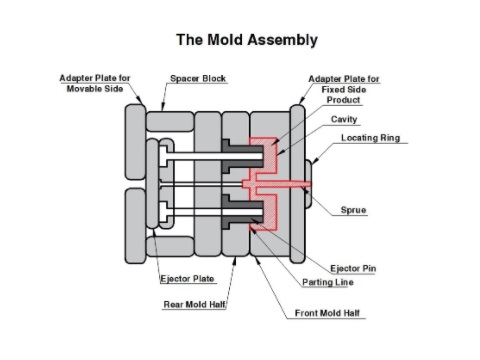
Its basic composition includes two parts: moving mold and fixed mold.
Wherein the moving mold is installed on the moving template of the injection molding machine, and the fixed mold is installed on the fixed template.
Classified by structural characteristics
- Two-plate mould and three-plate mould
- Multi-plate molds and special structural molds
- Runner System
Two-plate mould and three-plate mould
Two-plate mold (single-parting surface mold)
Simple structure, only one parting surface, suitable for plastic parts with sprue straight gate.
The advantages are low manufacturing cost, easy maintenance, and suitable for large quantities of simple products (such as daily necessities).
Three-plate mold (double-parting surface mold)
Add intermediate plate, suitable for point gate feeding.
It can separate the runner from the product and reduce manual pruning gates, but the structure is complex and the cost is high.
And it is often used for precision electronic parts or small multi-cavity molds.
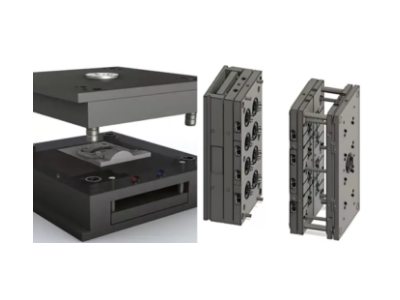
Multi-plate molds and special structural molds
Multi-plate molds: more than two parting surfaces, used for complex structural plastic parts (e.g. multi-layer insert kits).
Lateral parting and core-pulling molds
Forming side holes/side concaves by sliders or inclined top mechanisms, which are widely used in automotive parts.
Such as lamp housings and home appliance housings.
Molds for movable molded parts
Containing detachable inserts or movable cores, suitable for plastic parts with internal threads or shaped cavities (e.g. bottle caps, toy components).
Automatic thread removal mold
Built-in rotation mechanism to realize automatic demoulding of threaded plastic parts, suitable for medical equipment or fasteners.
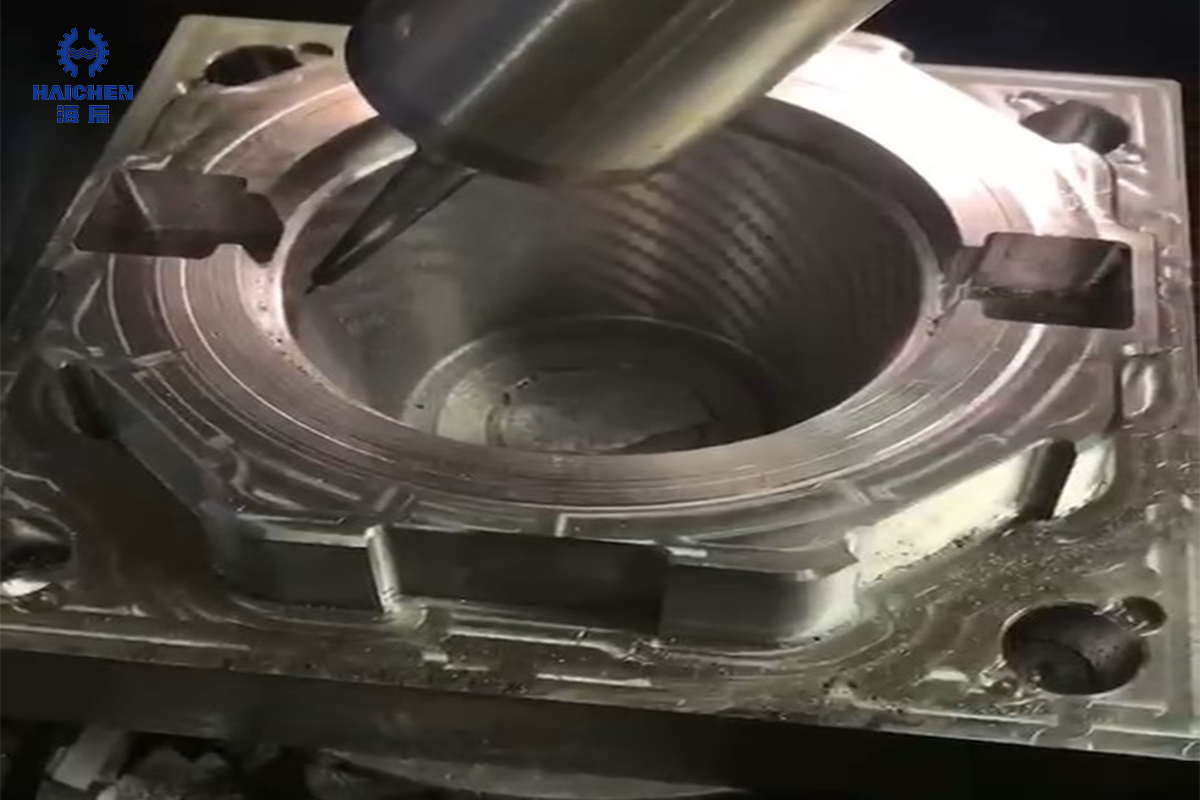
Runner System
Type Cold Runner Mold
Traditional design, the runner and the product are cooled at the same time, resulting in gate waste.
which is suitable for low-cost, low-complexity production.
Hot Runner Mold
Heats to keep the runner melting, reducing material waste and improving efficiency.
It is suitable for products with high precision and high surface quality requirements (e.g. optical lenses, medical devices).
But with high initial investment and maintenance costs.
Injection Molding Molds Types Classified by the number of cavities
- Single-cavity mould
- Multi-cavity mould
Single-cavity mould
Advantages: simple structure, low manufacturing cost, easy control of process parameters.
Suitable for high-precision or large-size plastic parts such as automotive dashboard prototypes.
Disadvantages: low production efficiency and high cost per piece.
Applicable scenarios: small batch production, trial production stage or high value-added products.
Multi-cavity mould
Advantages: Molding multiple identical parts at one time, significantly reducing the cost of a single piece.
Suitable for large-scale production such as mobile phone cases, bottle caps.
Disadvantages: The design is complex, and it is difficult to balance the filling between cavities, which is easy to lead to quality fluctuations.
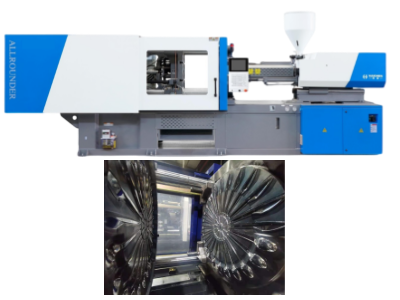
Injection Molding Molds Types Classified by molding technology
- Precision injection molds
- Gas-assisted molding molds
- Two-color injection mold
- Low foaming molds
Precision injection molds
It is used for optical components, micro electronic parts, etc., and the tolerance requirements can reach ±0.001mm.
And it needs to be matched with high-precision injection molding machines and temperature control systems.
Gas-assisted molding molds
Nitrogen injection reduces shrinkage and warpage, making it suitable for thick-walled parts (e.g. automotive interiors) to improve surface quality and material utilization.
Two-color injection mold
Manufacturers can produce two-color/dual-material products (e.g., toothbrush handles, buttons) using a special turntable or slider structure designed for compatibility with multiple injection machines.
Low foaming molds
Manufacturers use blowing agent control in the production of lightweight insulating materials (e.g., packaging fillers) to achieve a microporous structure.
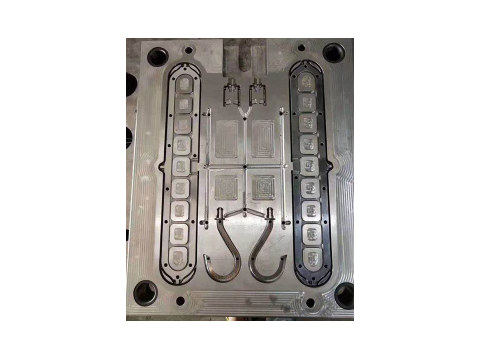
Injection Molding Molds Types Categorized by industry application
- Automotive molds
- Medical molds
- Electronic molds
- Packaging molds
Automotive molds
Features: Large-scale, complex, high-pressure and wear-resistant materials (such as H13 steel) are required.
Typical products include instrument panels, bumpers, and lights.
Challenge: Stringent dimensional stability and weathering requirements need to be met.
Medical molds
Features: High cleanliness, no dead angle design, materials need to meet biocompatibility standards (such as medical grade PEEK).
Products such as syringes, infusion connectors.
Special requirements: The surface of the mold is polished to mirror level (Ra<0.1μm) to avoid bacterial residue.
Electronic molds
Features: miniaturization, high precision, often using hot runner and stacking die technology.
Products such as connectors, chip package housings.
Material selection: High thermal conductivity copper alloy or beryllium copper for rapid heat dissipation.
Packaging molds
Features: Multi-cavity design, focusing on production efficiency.
Products such as bottle caps and food containers must comply with FDA certification.
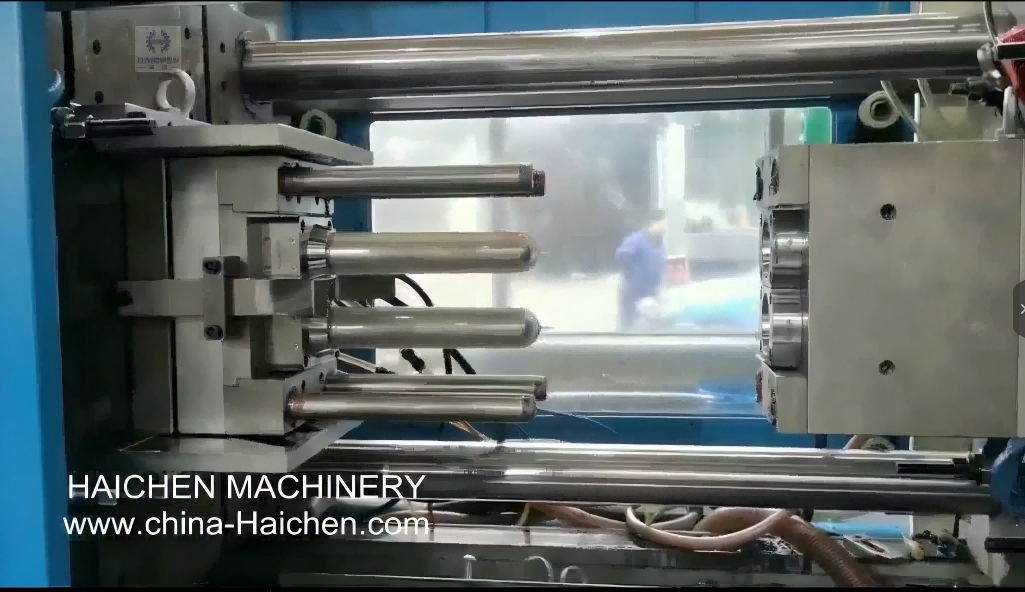
Injection Molding Molds Types Classified by mold material
- Mould steel
- Aluminum alloy mold
- Beryllium copper alloy mold
- Composite molds
Mould steel
P20/H13 steel: high hardness, strong wear resistance, suitable for long-term mass production (such as automotive parts).
S136 Stainless Steel: Corrosion-resistant, suitable for medical or food grade molds.
Aluminum alloy mold
Advantages: Fast thermal conduction, light weight, suitable for trial production or short-term production (e.g. thin-walled packs).
Disadvantages: poor wear resistance, life is only 10%-20% of the steel mold.
Beryllium copper alloy mold
Advantages: excellent thermal conductivity, 3-5 times higher cooling efficiency than steel molds.
Suitable for high-gloss surface parts (such as lenses).
Disadvantages: high cost and difficult processing.
Composite molds
Carbon Fiber Reinforced Plastics (CFRP): Lightweight and low coefficient of thermal expansion, used in large aerospace components with limited temperature resistance.