Avoid jetting in injection molding including:
- Optimizing gate design
- Adjusting injection speed
- Control pressure
- Temperature control
Jetting is one of the common defects in the injection molding process.
Which can lead to wavy marks on the molded part’s surface, affecting the product’s appearance and quality.
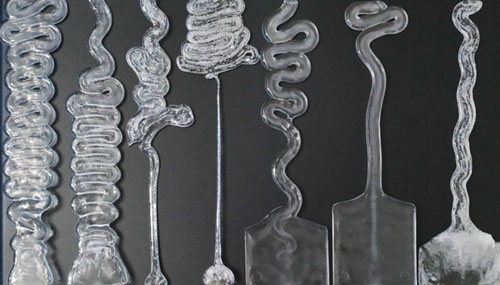
Avoid jetting in injection molding–Optimize gate design
Designing the location and type of gate is key to avoiding jetting.
For example, special types of gates, such as fan gates, membrane gates, and ear protection gates, can effectively reduce the occurrence of jetting.
In addition, increasing gate size and runner size can also help improve melt flow, resulting in less jetting.
Avoid jetting in injection molding–Adjust the injection speed
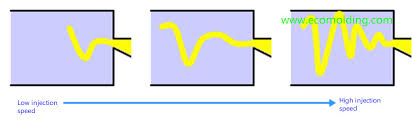
Control of the injection speed is essential to prevent jetting.
The low-speed injection prevents the melt from solidifying at the gate, thus avoiding the occurrence of jetting.
At the same time, the use of stepped injection speed, first low-speed glue and then increasing the speed to fill the cavity, can also effectively prevent jetting.
Avoid jetting in injection molding–Control pressure
Excessive injection pressure can cause excessive shear heat in the melt, which can trigger jetting.
Therefore, the injection pressure should be reduced appropriately and the back pressure should be moderate to avoid the melt being encapsulated in air.
Avoid jetting in injection molding–Temperature control
Increasing the barrel temperature or mould temperature can improve the flow of the material.
Thereby reducing the occurrence of jetting phenomena.
At the same time, ensure that the mould temperature is higher than the glass transition temperature (Tg) of the polymer to reduce its viscosity and promote melt flow.
Through the above measures, the injection phenomenon in the injection molding process can be effectively avoided, and the quality and appearance of the moulded parts can be improved.
What is jetting in injection molding?
Injection molding is a complex process that can be prone to issues, from jetting and radiation to watermarks.
Being aware of these potential problems allows for proactive steps toward quality assurance in the manufacturing sequence.
What causes jetting in plastic injection molding?
The main reason for this is that the molten polymer passes through the nozzle, runner or gate.
And other flow-restricted areas at high injection speed and then enters the open area, without achieving a close fit with the mold wall thickness.
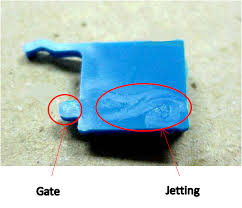
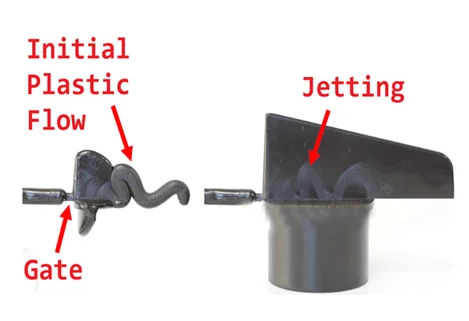
After the plastic flows into the injection mold, it will show a serpentine arrangement to form weld lines.
What Leads to Injection Molding Jetting Defects?
In a proper mold design and controlled material flow, the molten material enters the mold and contact with the mold cavity walls.
As it fills the mold, this molten material in contact with the walls begins to cool, while simultaneously more material flows in.
This mold filling ensures a consistent and even formation of the product.
In contrast, jetting defects occur when the material does not follow this ideal flow pattern.
There are different factors that lead to the event of this jetting defect occurring.
Jetting Due to Mold Design
- Small Gate Size: When the gate size is too small, it restricts the flow of molten material into the mold cavity, leading to jetting defects.
- Improper Gate Location: The placement of the gate is critical. An improper gate location can result in uncontrolled material flow, causing turbulence and jetting.
- Small Runner Diameter: A narrow runner diameter can hinder the smooth flow of material, increasing the likelihood of jetting.
- Small Nozzle Size: The nozzle through which the material is injected into the mold should be appropriately sized. If it’s too small, it may cause injection molding jetting.
Jetting Due to Molding Process
- Fast Injection Speed: High injection speeds can cause turbulence and air entrapment in the mold cavity, resulting in jetting defects.
- Low Holding Pressure: Inadequate holding pressure may not properly compress the material in the mold, leading to jetting issues.
Jetting Due to Material Selection
- High Material Viscosity: Materials with high viscosity do not flow smoothly, increasing the risk of jetting defects.