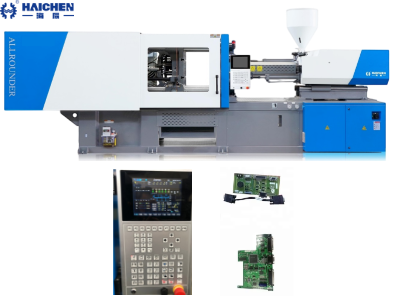
Mould in the manufacturing process is the method used to conceive, craft, and assemble the devices. That shape and solidify materials, such as plastic, metal, glass, or ceramic into prescribed geometries.
It encompasses technologies such as injection moulding, die casting, blow moulding, and compression moulding.
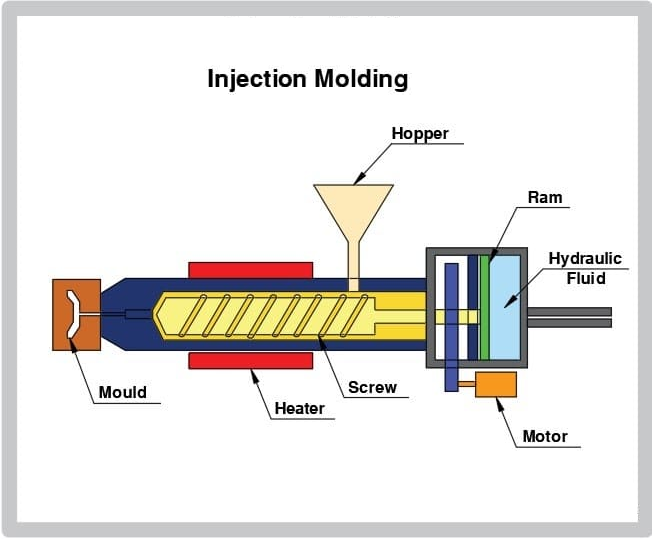
Moulds serve as the keystones of high-volume production, enabling critical levels of dimensional accuracy, consistent output characterisation, and rapid cycle times. Within a manufacturing cell, the injection mould is regarded as a central apparatus that precisely fashions a broad array of engineered components.
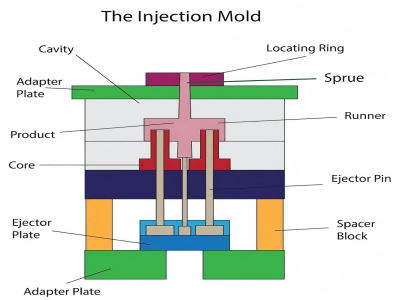
Moulds operate by confining a heated or softened edible mass, permitting the engulfing medium to conform to a pre-fabricated, stationary negative form. The mould cavity is the imposing cavity or ensemble of cavities that dictate the contour, mass distribution, and functional surface of the part. These sophisticated instruments, therefore, require a methodical design maturation and production pathway detailed enough to safeguard the accuracy of fine tolerances. The pathway includes computer-aided geometrical pre-design, metal machining, heat treatment for wear resistance, and surface refinement, ensuring reliability and longevity in repetitive operations.
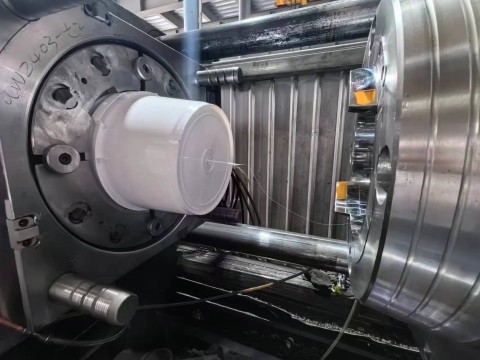
Manufacturing process of an injection mold
The manufacturing process of a mold usually includes the following stages:
Design stage of mould in manufacturing process
- Design the shape and structure of the mold according to the product requirements.
Material Selection of mould in manufacturing process
- Selecting suitable materials, such as steel, aluminum alloy, etc., to ensure the durability and precision of the molds.
Processing stage of mould in manufacturing process
- Precision machining of the mold using CNC machine tools, electric discharge machining (EDM) and other technologies.
Heat treatment of mould in manufacturing process
- Heat treatment is performed on the mold to improve its hardness and wear resistance.
Assembly and commissioning of mould in manufacturing process
- Assembling the processed mold components into a complete mold, and carrying out commissioning and testing.
Mold trial and evaluation of mould in manufacturing process
- A mold trial is conducted to verify the quality and performance of the mold and to make necessary adjustments.
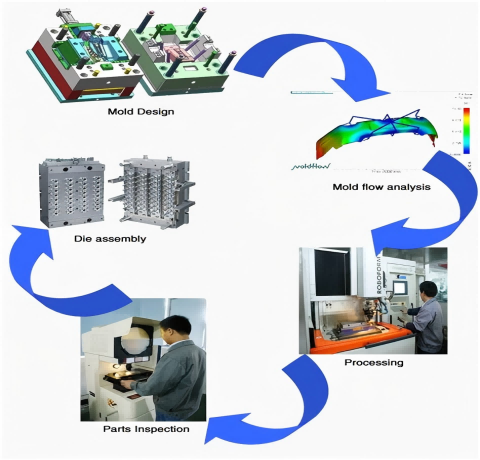
What is mould assembly process
The mould assembly process involves putting together all the machined and fabricated components of a mould to create a functional tool capable of producing parts (e.g., plastic injection moulding, die casting). Proper assembly ensures precision, durability, and efficient production.
Preparation phase of mould manufacturing process
- Document Familiarization: Study the assembly drawings and process specifications to clarify the technical requirements and sequence.
- Part Preparation: Clean all parts (especially waterways and screw holes), remove burrs, hardened layers, and any magnetism, and wipe the surface with ethyl acetate.
- Tool Preparation: Prepare all Allen wrenches, copper/aluminum hammers, crowbars, and other tools, ensuring they are in good condition.
Component assembly of mould manufacturing process
- Core Component Installation: First, assemble the guide pins and sleeves, then install the mold base, the punch (core), and the cavity.
- Clearance Adjustment: Focus on adjusting the clearance between the punch and cavity to ensure mold closing accuracy.
Final assembly of mould manufacturing process
- Assemble other components (such as ejector pins, gating system, cooling system, etc.) in sequence.
- Verify the sealing of the parting surface using the “bedding down” method: Apply blue oil, close the mold, and scrape off high spots to ensure a good fit.
Inspection and Commissioning
Mold Testing: Prepare a report after the mold trial, noting any issues (such as flash and dimensional deviation).
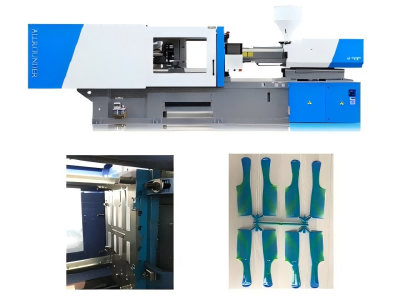
Materials Used for an injection mold
Moulds are typically made from durable materials that can withstand high temperatures, pressures, and wear. Common materials include:
Tool steel of mould in manufacturing process
High-strength steel used for high-volume production.
Aluminum
Lightweight and cost-effective, suitable for low-volume production or prototyping.
Beryllium Copper
Used for areas requiring high thermal conductivity.
Stainless Steel
Used for moulds requiring corrosion resistance
Hardened Steel
Used for moulds that need to withstand high wear and tear.
Applications of an injection mold in Manufacturing
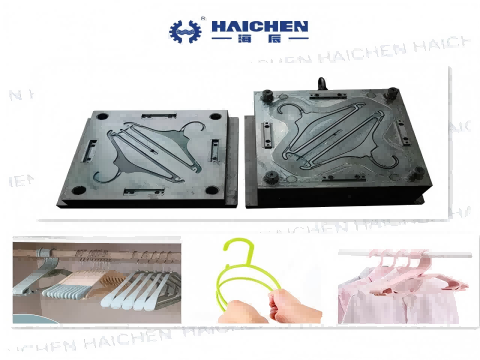
Automotive Parts
Dashboards, bumpers, and engine components.
Consumer Goods
Bottles, containers, and toys.
Electronics
Housings, connectors, and heat sinks.
Medical Devices
Syringes, implants, and surgical tools.
Industrial Components
Pipes, fittings, and machinery parts.
Advantages of an injection mold
High precision
The mold can produce high precision products to meet the requirements of complex shapes and sizes.
Consistency
Products produced through molds are highly consistent and suitable for mass production.
High efficiency
Molds can significantly improve production efficiency and shorten the production cycle.
Cost-effective
Although the initial cost of the mold is high, its long-term use can reduce the production cost per unit of product.
Haichen injection molding machine mold
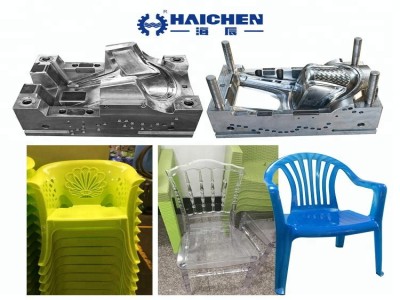
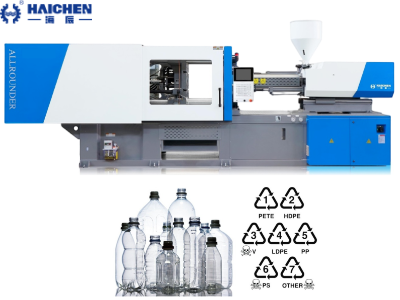
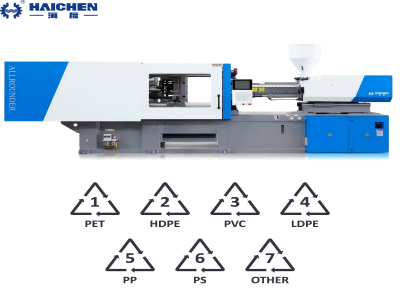
Haichen is a manufacturer of injection molds for a wide range of applications.We have a wide range of injection molds, including molds for PET preforms, plastic trays, plastic helmets, and many other products. For example, 3-plate molds are one of its common mold types, which are designed to achieve more efficient pouring systems and product demolding.
And our injection molding machine molds focus on precision and durability.
If there is any demand, welcome to consult us.