A 3-plate plastic mold is a specialized type of injection molding mold used in plastic manufacturing. It is designed to separate the molded part, runner system (the channels that deliver molten plastic), and sprue (the main feed channel) into three distinct plates during the ejection phase.
This mold design inserts the regular runner stripper plate between the top clamping plate and the cavity plate to create a three-piece mold structure. Engineers use three-piece molds when the part size exceeds the capacity of a two-piece mold or when the design requires multiple injection points. The three-plate configuration improves gate positioning accuracy. This design suits products with sidewalls that cannot accommodate gates or those with large projection areas requiring multiple spot gates.
This structure allows for greater flexibility in gating (where the molten plastic enters the plastic injection mold cavity) and is ideal for complex parts or multi-cavity molds. Here’s a breakdown of its components and functionality:
Structure of a 3-Plate Mold
- Stationary (Clamping) Plate
- Middle Plate (Runner Plate)
- Moving Plate (Ejector Plate)
- Stationary (Clamping) Plate
- Attached to the injection molding machine’s fixed platen.
- Contains the sprue bushing (entry point for molten plastic).
- Middle Plate (Runner Plate)
- Houses the runner system (channels that guide plastic to the cavities).
- Separates from the stationary plate during ejection to remove the runner.
- Moving Plate (Ejector Plate)
- Attached to the machine’s moving platen.
- Contains the mold cavities, cores, and ejector system to push out the finished part.
How It Works
- Injection Phase
- Cooling Phase
- Ejection Phase
They working like these:
- Injection Phase
- Molten plastic is injected through the sprue into the runner system, which distributes it to the cavities.
- Cooling Phase
- The plastic solidifies in the cavities and runner.
- Ejection Phase
- The mold opens in two stages:
- First Opening: The middle plate separates from the stationary plate, breaking the sprue and runner from the part.
- Second Opening: The moving plate separates from the middle plate, allowing the ejector system to push out the finished part.
- The runner system is ejected separately from the part, often automatically.
- The mold opens in two stages:
Key Advantages
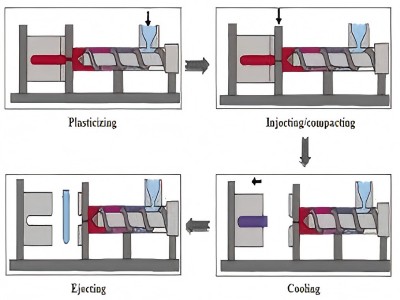
- Flexible Gating
- Gates (entry points) can be located anywhere on the part, not just at the parting line (unlike 2-plate molds). This is ideal for parts requiring center gating or complex geometries.
- Automatic Degating
- The runner system separates from the part during ejection, reducing post-processing labor.
- Multi-Cavity Molds
- Efficiently produces multiple parts in a single cycle with balanced filling.
- Reduced Gate Marks
- Gates can be placed in non-visible areas, improving aesthetics.
Common Applications
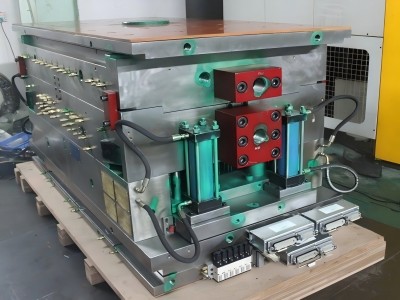
- Parts requiring center gating (e.g., gears, cylindrical components).
- High-volume production of small, intricate parts (e.g., electronic connectors, medical devices).
- Multi-cavity molds where balanced plastic flow is critical.
Disadvantages
- Higher Cost: More complex design and additional plates increase manufacturing costs.
- Longer Cycle Time: Two-stage ejection adds time compared to 2-plate molds.
- Maintenance: More components (e.g., additional springs, guide pins) require careful upkeep.
Comparison to 2-Plate Molds
| Feature | 3-Plate Mold | 2-Plate Mold |
|---|---|---|
| Gating Flexibility | Gates can be placed anywhere. | Gates limited to the parting line. |
| Runner Separation | Runner and part eject separately. | Runner and part eject together. |
| Complexity | More plates and components. | Simpler design. |
| Cost | Higher initial cost. | Lower cost. |
When to Use a 3-Plate Mold?
- For parts needing non-edge gating (e.g., center-gated round parts).
- When automatic runner removal is required for efficiency.
- For complex geometries or multi-cavity setups where flow balance is critical.
Which gate is used in a 3 plate mould?
In a 3 plate mould, a pin-point gate is the most commion type.
- Definition and characteristics of pin-point gate
- Structural support of 3 plate mold
- Application advantages
- Exceptions to other gate types
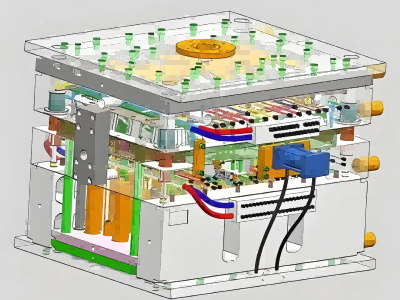
This design allows the gate to be located at any position of the part, and the runner system and the molded part are automatically off through multi-stage separation when the mold opening, thereby reducing gate marks and improving the degree of automation.
Haichen mold pin-point gate design features:
Definition and characteristics of pin-point gate
Pin-point gate is a small type of gate with a small cross-sectional area, which can automatically cut off the gate and the part through the automatic separation mechanism of the mold structure (such as the movement of the middle plate of the 3 plate mold) when the mold is opened.
This design avoids the need for manual trimming of the gate and is particularly suitable for parts with high appearance requirements or complex structures.

Structural support of 3 plate mold
The 3 plate mold contains three main plates (A plate, B plate, runner plate), of which the runner plate is responsible for accommodating the runner system.
When opening the mold, the mold is opened in two stages: first, the runner plate and the fixed plate are separated to cut off the gate, and then the movable mold is separated to eject the part.
This structure enables pin gates to be flexibly arranged at any position in the cavity.
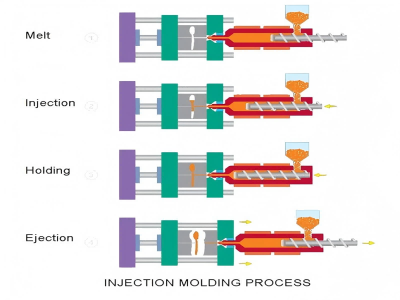
Application advantages
Reduce gate marks:
The tiny size and automatic cut-off characteristics of the pin gate make the surface of the part almost free of visible gate marks, which is suitable for products with sensitive appearance.
Support for multiple cavities and complex structures:
Three-plate molds can fill multiple cavities at the same time through pin gates, which is especially suitable for parts with center holes or parts that need to be filling evenly (such as cup-shaped parts).
Fully automated production:
The automatic separation of runners and parts reduces manual intervention and improves production efficiency.
Exceptions to other gate types
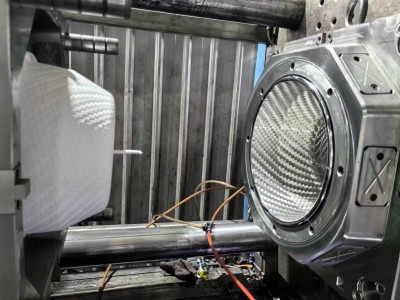
Although pin gates are a typical design of three-plate molds, some are using edge gates or sub-gates.
However, these situations usually require specific mold structures or process adjustments, rather than the mainstream solution of three-plate molds.
In summary, pin-point gates are the core gate type of three-plate molds.
Their design fully meets the multi-plate separation mechanism and automation requirements of three-plate molds, and is the preferred solution for complex injection molding.
How to use 3-Plate Mold injection mold?
The use of three-plate injection molds is mainly based on their structural characteristics and working principles.
- Mold preparation and mold closing
- Injection molding and cooling
- Open the mold in stages
- Automated demolding
- Reset and cycle
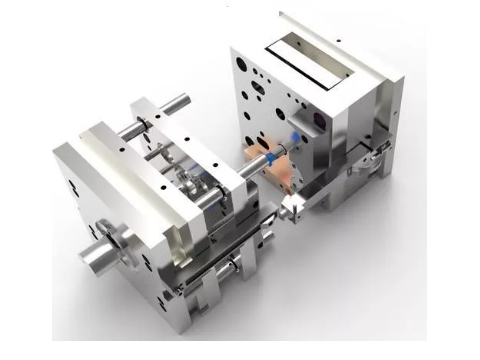
The specific operation process as follows:
Mold preparation and mold closing
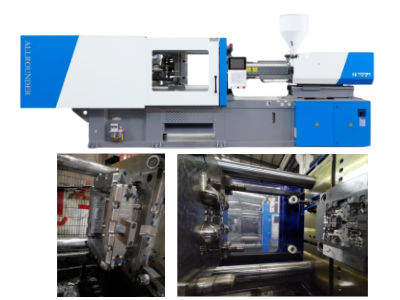
Structural assembly: The three-plate mold consists of a fixed mold (including a fixed mold bottom plate, a fixed mold fixed plate and a middle plate), a movable mold (a movable mold fixed plate and a bottom plate) and a gating system.
The middle plate is a key component to separate the gating system from the product.
Mold closing stage:
The movable mold and the fixed mold are closed to form an injection cavity.
At this time, the gating system (main channel, branch channel, gate)through the middle plate to ensure that the molten plastic can be evenly injected into the cavity.
Injection molding and cooling
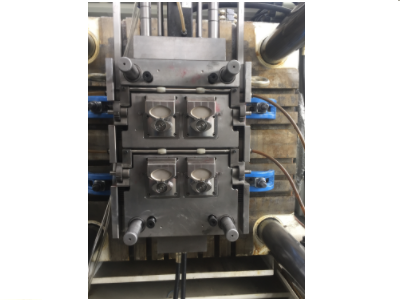
Injection molding stage:
The molten plastic is injected into the mold cavity through the injection molding machine to fill the product cavity and the gating system.
Pressure holding and cooling:
The plastic is cooled and solidified under pressure holding to ensure that the product size is stable.
The cooling system (such as deep well pipes or optimized water channels) can accelerate solidification, especially for complex parts (such as bottle blanks and thin-walled parts).
Open the mold in stages
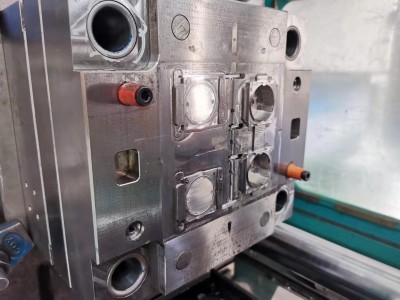
First step of mold opening (separation of pouring system):
The plastic injection mold is first opened from the parting surface I (between the middle plate and the fixed mold), and the pouring system (runner and gate) is separated from the product by a pull rod or a water ejection mechanism.
This process is controlled by a nylon shutter, a spring or a limit pull rod.
For example, the PET preform mold breaks the point gate by pulling the pull rod, so that the runner condensate remains on the push plate.
Second step of mold opening (separation of product and movable mold):
The movable mold continues to retreat and separates from the parting surface II (between the movable mold and the middle plate), and the product is separated from the cavity.
At this time, the product may be attached to the movable mold side due to shrinkage, and it needs to be demolded by the ejection system.
Automated demolding
Ejection mechanism action:
The push rod, push plate or slider mechanism (such as the side core pulling of the bent pin) pushes the product out.
For example, the push plate in the preform mold pushes the preform out of the core, and the half slider completes the side core pulling action.
Gating system processing:
Use elastic pins or manipulators to automatically remove condensate from the flow channel to achieve fully automated production and reduce manual intervention.
Reset and cycle
Reset stage:
The ejector mechanism returns to its original position under the action of the reset rod and the spring, and the mold is closed to prepare for the next cycle.
Cycle optimization:
Shorten the production cycle and improve efficiency through multi-cavity design (such as one mold with two cavities) and rapid cooling technology.
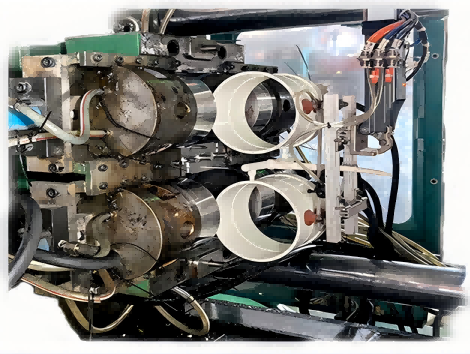
Key application features
Gate flexibility:
Supports point gate, edge gate or multi-point glue injection, suitable for high-quality products such as transparent parts and thin-walled parts.
Complex structure processing:
The side core pulling mechanism (such as bending pin + slider) can form complex features such as external threads and deep grooves.
Automation adaptation:
Cooperate with the manipulator to achieve fully automatic production, especially suitable for high-precision batch parts such as automobiles and medical.
Notes
Mold maintenance:
It is necessary to calibrate the alignment components such as guide pins and guide sleeves regularly to prevent wear caused by complex structures in plastic injection mold.
Cost control:
Balance long-term benefits by reducing scrap rates and increasing automation of the mould.
The three-plate injection mold achieves efficient production of complex parts through staged mold opening and automated demoulding mechanism, which is especially suitable for scenes with precision, multiple cavities and high appearance requirements.
If you need further details on design considerations or specific use cases, contact Haichen for more details!