Cool a Hot Runner System in Injection Molding:
- Water cooling system
- Oil cooling system
- Air cooling system
- Heat exchange cooling system
- Passive Cooling: Thermal Insulation & Heat Dissipation
- Active Cooling: Targeted Thermal Control
- Material-Driven Solutions
The core of the cooling hot runner system lies in precise temperature gradient control and efficient heat dissipation.
Thermal balance is maintained through methods such as water circulation cooling, air plate insulation.
And temperature control, and efficiency is optimized by means of conformal cooling technology.
The effective cooling of hot runner systems in injection molding is critical for maintaining process stability, reducing defects, and extending equipment lifespan.
Water cooling system
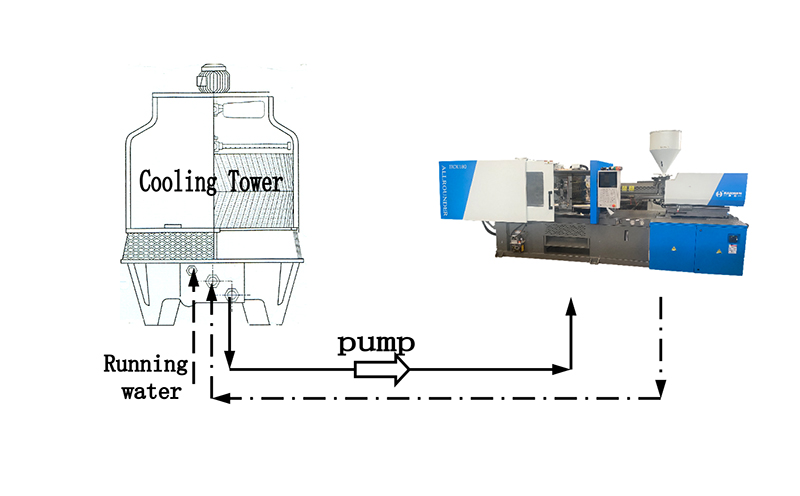
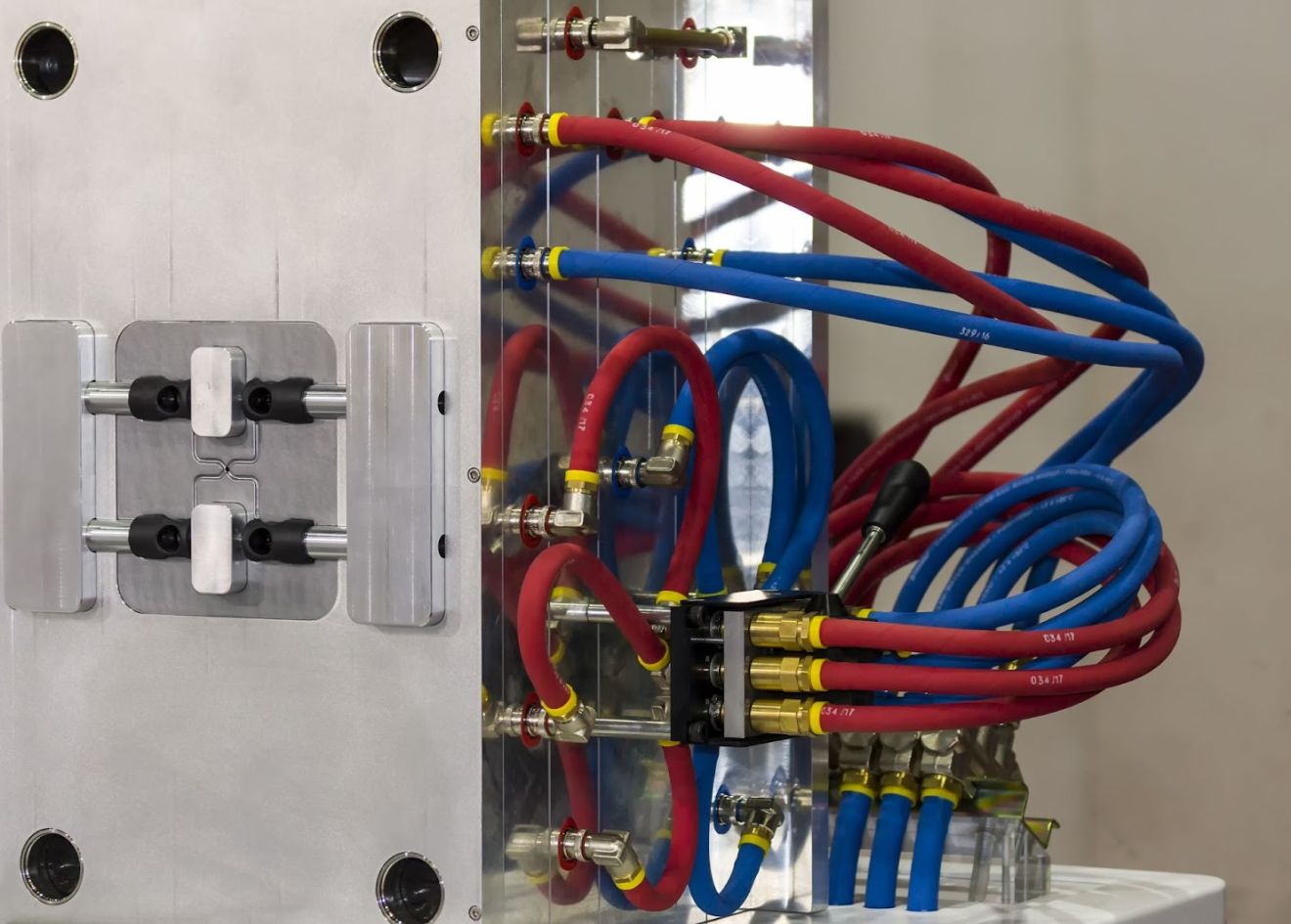
Circulating cooling water absorbs heat from hot runner plates, nozzles.
And gate areas through cooling channels designed inside the mold, such as serpentine or annular channels.
The specific heat capacity of water is large, which can take away heat efficiently and at a low cost.
The cooling channel should be close to the surface of the cavity no more than 1/2 times the diameter of the channel to ensure uniform heat dissipation.
Avoid cooling dead spots, and thick-walled areas need to be cooled more intensively e.g., increasing the density of the waterway.
Air cooling system
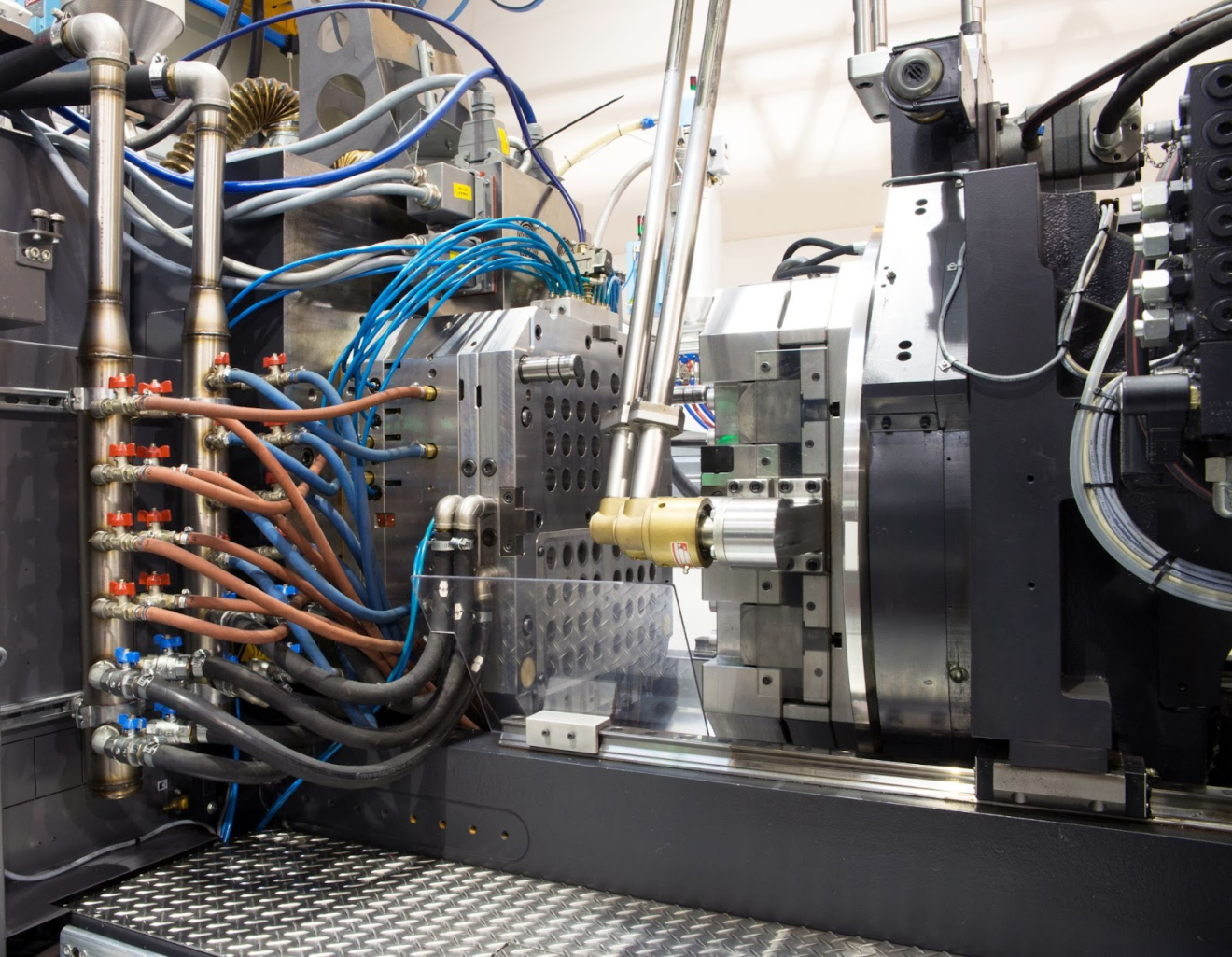
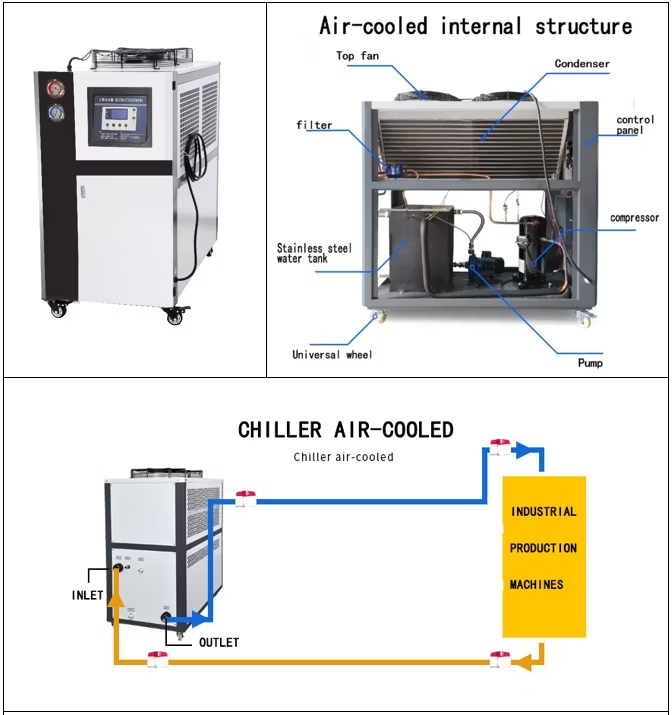
Forced heat dissipation through fans or compressed air.
Suitable for low-temperature molding or scenarios with low cooling requirements.
No corrosion risk but low efficiency.
Add turbulence structures (such as heat sinks) to enhance the turbulence effect and improve the heat exchange efficiency.
Oil cooling system
Applicable scenario: It is used in applications that require precise temperature control such as optical or medical device production.
Oil is thermally stable better than water, reduces temperature fluctuations, and is less corrosive.
Typical application: Combined with the mold temperature machine to achieve closed-loop temperature control.
Suitable for the molding of high-temperature plastics (such as engineering plastics).
Heat exchange cooling system
Rapid adjustment of the temperature of the cooling medium by means of an external heat exchanger (e.g. plate heat exchanger) for high-precision production (e.g. automotive components).
Synventive’s SynCool technology uses indirect cooling to reduce the number of cooling plates and simplify tubing for improved cooling uniformity.
Passive Cooling: Thermal Insulation & Heat Dissipation
- Insulating Pillars/Support Columns
- Heat-Dissipating Covers
- Air Gaps
Insulating Pillars/Support Columns
Thermally resistant materials (e.g., titanium alloys) minimize heat transfer from the hot runner manifold to surrounding plates.
Insulating pillars with minimal contact surfaces reduce conductive heat ingress by 60–70% .
Heat-Dissipating Covers
Thermally conductive covers (e.g., copper alloys) mounted on actuator housings dissipate residual heat to the cold platen via telescopic designs, replacing active cooling components.
Air Gaps
Strategic air gaps between manifold and mold plates act as thermal barriers, reducing heat propagation to critical zones like ejection systems.
Active Cooling: Targeted Thermal Control
- Conformal Cooling Channels
- Gate Insert Cooling
- Thermoelectric Modules (TEMs)
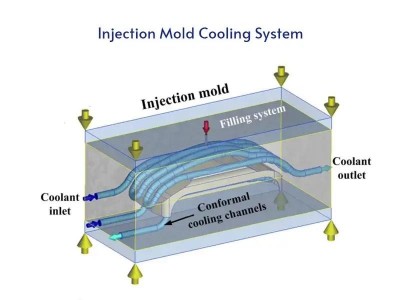
Conformal Cooling Channels
Curved waterways follow the contour of gate areas, maintaining temperatures at <60°C near nozzles.
This prevents premature resin solidification and reduces cycle times by 25%.
Gate Insert Cooling
Dedicated cooling circuits around gate inserts (e.g., beryllium copper) rapidly extract heat, preventing drooling and stringing.
Flow rates of ≥10 L/min ensure ΔT ≤5°C.
Thermoelectric Modules (TEMs)
Peltier elements provide dynamic cooling/heating at valve pins, enabling ±1°C precision for shear-sensitive resins like PC.
Material-Driven Solutions
- High-Conductivity Nozzle Tips
- Nano-Porous Insulation Boards
High-Conductivity Nozzle Tips
Beryllium copper or tungsten carbide tips accelerate heat transfer from molten plastic, reducing gate freeze-off time by 40%.
Nano-Porous Insulation Boards
Ceramic-based boards (e.g., ZrO₂-stabilized) isolate manifolds while withstanding 800°C, extending service life to 500k+ cycles.