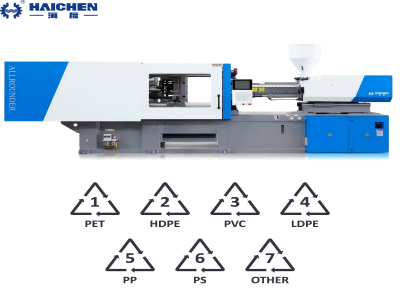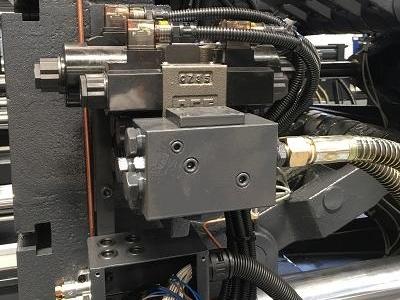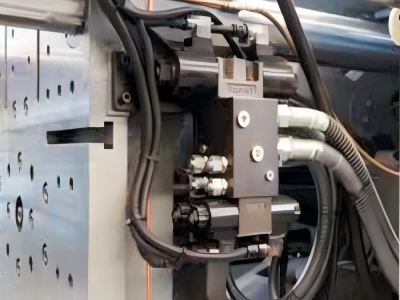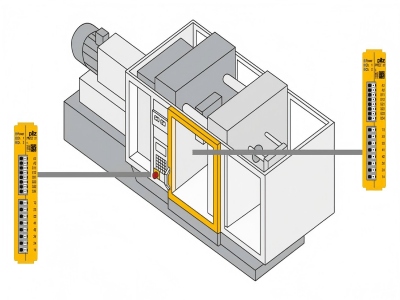
Pvc pipe fittings are produced by pvc injection molding machine. A PVC pipe fitting injection molding machine is a kind of professional plastic processing equipment used to manufacture PVC pipe materials. It is made into pipe joints by heating and melting PVC raw materials through the process of injection molding. This machine is specially designed with chrome-plated screws and barrels for PVC, UPVC, CPVC as well as powder PVC. In the production process, the temperature needs to be strictly controlled, and a temperature control system and fan are installed to ensure product quality.
In practice, the pipe fitting injection molding machine can be used to produce many types of pipe fittings, such as 90° elbows, T-fittings, pressure-reducing fittings, sleeve fittings, and so on. These fittings are widely used in drainage systems, water supply systems, and other piping systems. For example, HDPE fittings are typically manufactured using the injection molding process for fittings less than 12 inches in diameter.
In this article, we’ll introduce a PVC pipe plumbing fittings-making machine, including Five types of PVC pipe fittings, PVC pipe fitting material, 5 steps of making PVC pipe fittings, how to choose the machine and mold, and PVC pipe fittings injection molding machine and mold price.
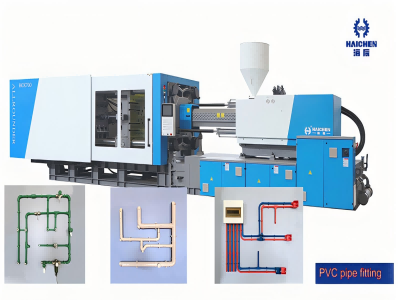
What is PVC molding?
PVC molding is a process of manufacturing various products through different processes using Polyvinyl Chloride (PVC) material.PVC is a thermoplastic polymer with good chemical stability, corrosion resistance and insulating properties and hence is widely used in several industries.
Four types of PVC pipe fitting
- Water supply Pipe Fitting
- Electrical Pipe Fitting
- Drainage Pipe Fitting
- PPR/PE Pipe Fitting
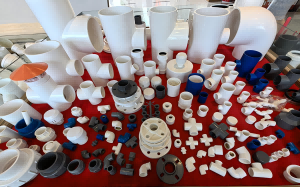
Water supply Pipe Fitting
PVC water supply pipe fitting includes direct joints, three-way joints, four-way joints, elbows, flange joints, clamp joints, etc. These joints are suitable for PVC pipes and have good chemical stability and corrosion resistance.
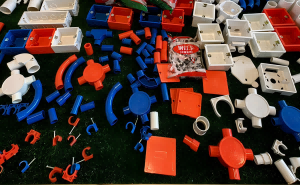
Electrical Pipe Fitting
It is used to connect PVC conduit, mainly used for buried wires in walls or other pipeline systems. This type of joint can help wires or pipes pass smoothly through walls or other structures, and ensure the sealing and stability of the connection.
Drainage Pipe Fitting
Common methods for connecting PVC drainage pipes include using sealing gaskets, bonding, and flange connections.PVC pipe coupling, for water drainage. There are many PVC pipe sizes, so the PVC pipe fittings.
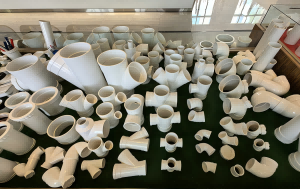
PPR/PE Pipe Fitting
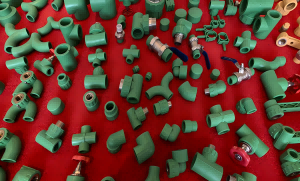
PPR and PE pipes are two commonly used water supply pipeline materials, which have significant differences in structure and performance. Has high plasticity and heat resistance, commonly used in water supply pipelines in home decoration projects.
What is PVC Pipe Fitting material?
The material of PVC pipe fittings is mainly polyvinyl chloride (Polyvinyl Chloride, referred to as PVC). This material has excellent chemical and corrosion resistance and is harmless to humans. PVC pipe fittings also have good mechanical properties and impact strength and can self-extinguish, showing excellent internal pressure resistance in long-term use. These characteristics make PVC pipe fittings widely used in various industrial fields and daily life.
There are two forms of PVC (polyvinyl chloride): rigid polyvinyl chloride and flexible polyvinyl chloride. Sometimes we also name it “soft PVC” and “hard PVC”.
The difference between a flexible and rigid PVC
The content of plasticizers is different
Flexible PVC with added plasticizers is relatively softer and has the characteristic of being “rubber”. For example: garden hoses, medical blood bags.
However, rigid PVC compounds hardly add plasticizers, which maintains the hardness of PVC.
Different physical properties
Hard PVC compounds are usually denser and harder, making them sturdy and durable; Flexible PVC compounds are flexible, making their applications more diverse.
Advantages and disadvantages: Hard PVC may be stronger and more durable, while flexible PVC can be made into materials that are resistant to chemical and liquid damage.
Different uses
Rigid PVC is more suitable for external protective purposes, such as wall cladding, eaves, and drainage pipes. Flexible compounds can provide different applications, such as being used as materials for manufacturing medical blood bags, rubber boots, and even summer beverage coasters.
Characteristics of PVC pipe connectors fittings material
Chemical resistance: PVC fittings are resistant to a wide range of acids, alkalis, salts, and other chemicals, which makes them widely used in the field of chemical drainage and sewage.
Flame-retardant: As the oxygen index of PVC is between 40 and 45, it has good flame-retardant properties, which is an important advantage as a plastic material.
Lightweight and easy to install: PVC fittings are lightweight, easy to construct, and easy to handle and install, which greatly reduces construction costs and time.
High compressive strength: PVC industrial pipe has good compressive strength characteristics, able to maintain stability in a variety of pressure environments.
Good aging resistance: PVC pipe fittings have excellent aging resistance, can be used in the temperature range of -15 ° C to 80 ° C, and will not cause significant aging phenomena.
Excellent electrical insulation properties: PVC has good electrical insulation properties and is suitable for applications requiring electrical safety.
Various specifications and connection methods: PVC fittings are available in a wide range of sizes, including straights, tees, elbows, hoops, plugs, etc., which are suitable for different installation needs. In addition, there are various connection methods such as “accords à bague” (with ring joints) to ensure the tightness and safety of the connection.
Environmental protection and health: in line with the drinking water health indicators, has been able to meet the strict requirements of tap water drinking, and is therefore widely used in civil building water supply and drainage systems.
It should be noted that in the injection heating of PVC materials, temperature control is required. Due to internal shear heat, the temperature can be too high, leading to degradation and release of harmful gases. The color of the finished product turns yellow, reducing its service life.
Can PVC be injection molded?
Yes. Polyvinyl chloride can be liquefied and is easily used in the injection molding process. Like other thermoplastics, PVC can be heated to a liquid state and will not degrade when cooled and heated again. Polyvinyl chloride has excellent durability and resistance to chemicals, fire, and abrasion.
Five Steps For Pvc pipe fittings injection molding machine Production
- Step 1 Material charging
- Step 2 Injection
- Step 3 Pressure hold
- Step 4 Cooling
- Step 5 Demold & ejection
What is the process of PVC injection?
PVC injection molding is a process of manufacturing plastic products that involves heating a PVC (polyvinyl chloride) material to a molten state and then injecting it into a mold, where it cools to form a product of the desired shape. The following are the main steps involved in PVC injection molding.
Step 1: Material charging
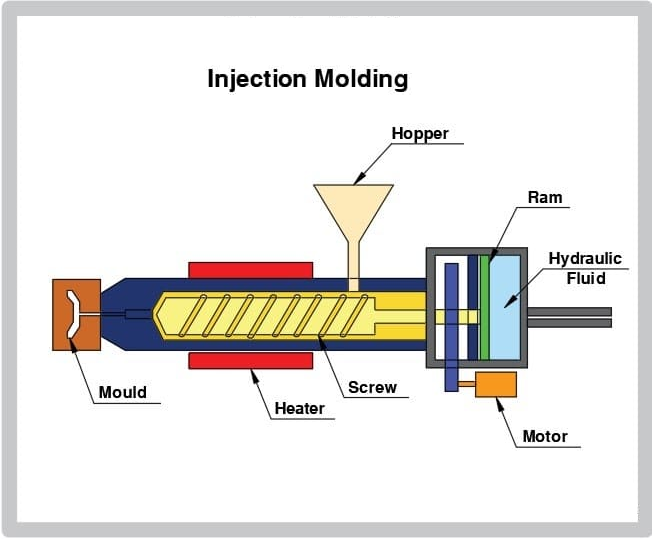
At first, PVC raw materials enter the heating unit of the machine through the hopper: screw and barrel. In the middle of the barrel is a rotating screw. The rotation of the screw will push the material forward. And the screw moves backward while rotating. The screw gradually rotates backward to push the PVC material forward. During the process of advancement, PVC particles are melted and finally pushed into the front end of the material barrel.
Step 2: Injection
Once the front end of the material barrel is filled with enough PVC raw material, the screw stops pre-molding and is pushed forward by the hydraulic cylinder at the back to quickly squeeze the melted raw material at the front end, forcing the melted PVC to enter the mold through the nozzle, gate, and runner. The screw must be pushed with sufficient pressure to allow the melt to enter the mold from the nozzle. The raw materials must be filled with sufficient pressure to fill every gap in the mold.
Step 3: Pressure hold
This pressure can be maintained to ensure shape retention during PVC cooling.
Step 4:Cooling
Cooling is achieved by passing the cooling fluid through the channels around the mold. This can be water or other coolant. Once cooled, the product will spray out. During cooling, the machine will use the cooling time to charge the material, so that we can shorten the cycle time.
Step 5: Demold & ejection
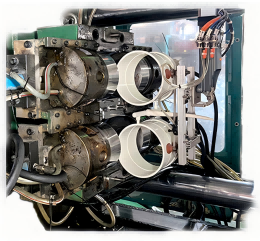
The mold opens and the core puller begins to work. Because PVC pipe joint molds often have multiple sets of core pulling. Therefore, demolding takes time.
About Haichen PVC injection molding machine
Excellent screw and barrel
Excellent screw with good plasticizing and mixing properties. Professional design, good wear resistance, and fast plasticizing speed. Suit for toy materials like PVC, PPR, U-PVC, C-PVC, PE…
Smart controller
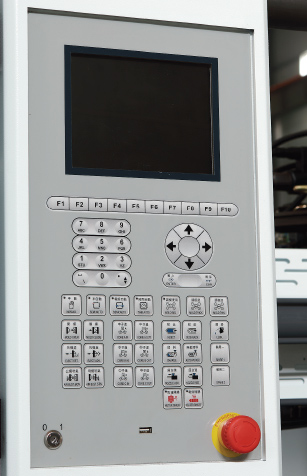
The new generation computer control system touch screen responds faster, is more convenient, and has high scalability, ensuring that the machine operates more stably and with higher precision.
Excellent clamping unit
The template feet are enlarged and the large-area contact ensures smooth operation.
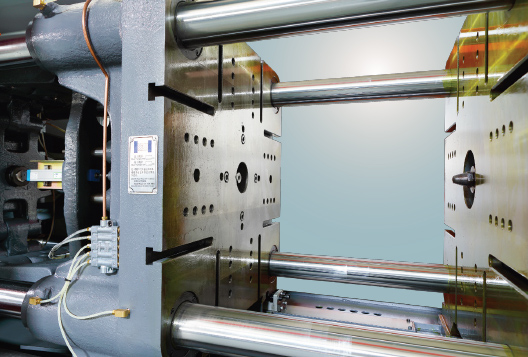
Advanced injection system
Perfect injection speed, faster response, and low friction during injection, ensuring energy saving. Linear guide features.
How to choose PVC injection molding machine to produce PVC pipe fittings
At first,Selecting the right injection molding machine for the production of PVC pipe fittings requires comprehensive consideration of a number of factors, including the technical parameters of the equipment, mold design, material properties, etc.
PVC has a certain degree of corrosiveness, so when choosing an injection molding machine, make sure that its screw and nozzle are specially manufactured for PVC injection molding and have a chrome-plated surface.
Analyze PVC pipe fittings drawings or send samples
We will analyze the products according to the product information (including weight, size, and production of PVC pipe fittings) or drawings sent by the customers. In addition, customers can also send samples of PVC pipe fittings, which we will split and analyze, in order to prepare for the design of molds.
Designing PVC pipe fittings mould
In addition, after analyzing the customer’s PVC pipe fittings drawings or samples, our designers start to design the molds, and after the PVC pipe fittings molds are completely designed, we will confirm with the customer and then prepare for production.
Choosing an adapted machine according to PVC pipe fittings mold size
At this point, PVC pipe fittings injection molding machine depends on the size of the mold. Therefore, after designing the molds of PVC pipe fittings chart, we will choose the right machine according to the size of the molds.
How much does Pvc Pipe Fitting Machinery cost?
All in all, PVC pipe & fittings machines depend on the size of the mold. In that case, the plastic injection molding machine price for making plastic plant is according to the client’s request. We will choose a suitable machine model for clients.
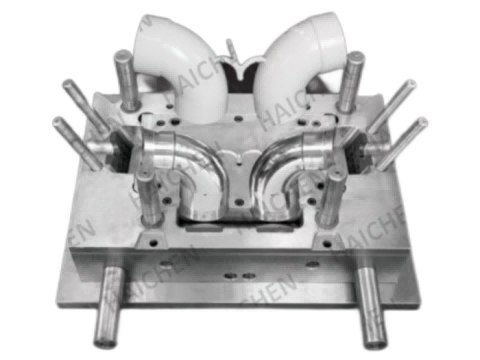
We supply Haichen plastic injection molding machines (E series and K series) molds, and auxiliary equipment according to our customer’s requirements and offer customized and innovative solutions to meet their needs while providing excellent customer service and support. Welcome to visit our website for more information: haichen-machine.com