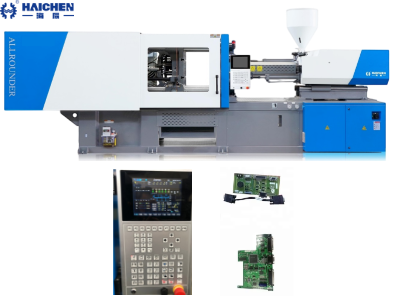
The design and manufacture of plastic broom brush head injection mold is a systematic project, involving material selection, mould structure design, moulding process optimization, mould manufacturing and maintenance. Through reasonable mould design and precise moulding process, we can produce high quality and high efficiency plastic broom brush head to meet the market demand.
Plastic broom brush head injection mold injection molding machine comes together to produce plastic broom brush head.Its design involves a number of steps and considerations.
Plastic broom head mould design is mainly based on the shape and function of the product, using CAD software to draw the structure of the mould, including cavities, gates, cooling system, etc., to ensure that the plastic can be formed and demoulded smoothly. Material selection, mould parting, pouring method are also considered in the design, and finally drawings are generated with tools such as UG to guide manufacturing.
Product analysis of plastic broom brush head injection molds

- Mold design and manufacture
- Plastic broom brush head mold structure
- Production efficiency and quality control
- Material selection and process parameters
- Application of mold design software
Mold design and manufacture:
Plastic broom brush heads manufacture with injection molding process.
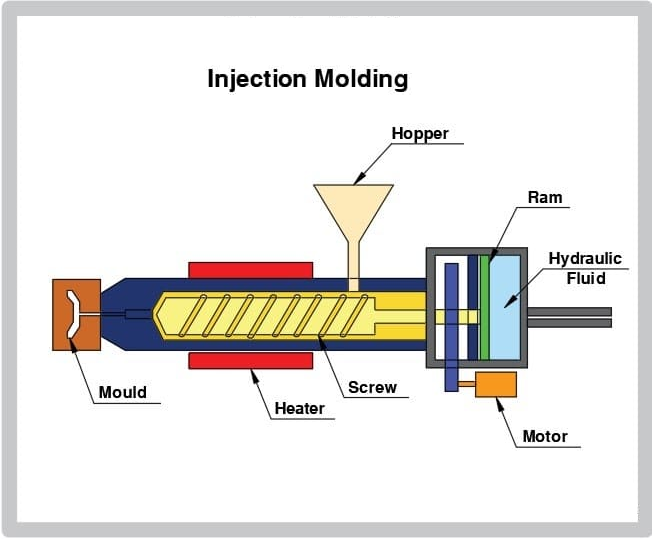
Injection molding is a method in which plastic is melted and injected into a mold cavity and cooled to form the desired shape.
When designing the mold, it is necessary to consider the structure of the mold, the location of the gate and the cooling system.
Plastic broom brush head mold structure:
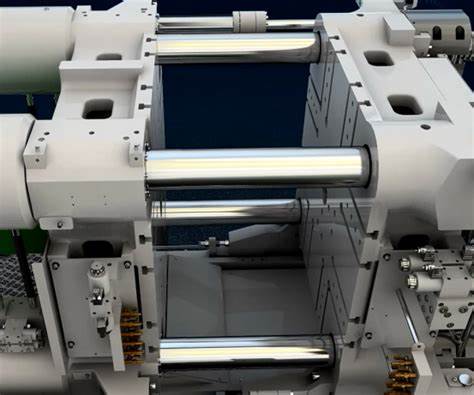
The injection mold for plastic broom brush head may adopt a three-plate mold structure, which is a form of structure that helps to achieve automated demolding.
The mold usually consists of a moving core and a fixed core.
These parts are controlled in the mold opening sequence by means of mold opening hooks, sprue pullers and limit screws.
This ensures the automatic release of the sprue gel.
Production efficiency and quality control:
Through the mass production test, the injection mold can ensure high production efficiency, reliable demolding action.
And product quality is good.
In addition, the use of mold flow analysis software (e.g. MoldFlow) allows the quality of the part to be predicted at the design stage, optimising gate locations and filling reliability.
Material selection and process parameters:
During the injection molding process, the selection of the right plastic material and the control of process parameters (e.g. pressure, temperature and time) are crucial to ensure the quality of the final product.
For example, the use of elastomer materials can enhance the elasticity and durability of brush heads.
Application of mold design software:
Computer-aided design (CAD) software such as AutoCAD and CATIA are widely using in modern mold design.
These software can help designers carry out detailed mold design and simulation.
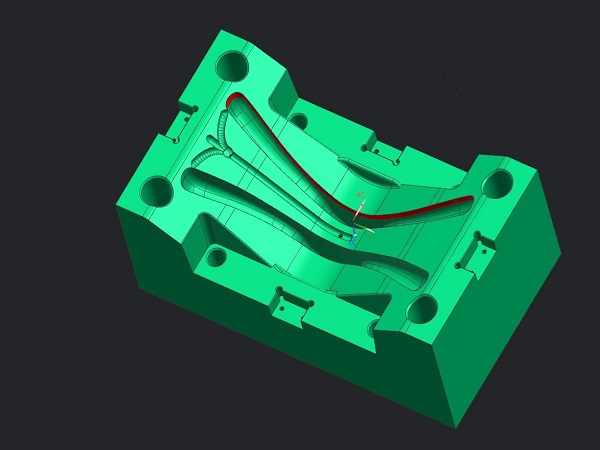
The injection mold design of plastic broom brush head requires comprehensive consideration of many aspects such as mold structure, material selection, process parameters and production efficiency.
Through reasonable design and optimisation, efficient and high quality production can be achieved.
Different types of plastic broom head injection molds
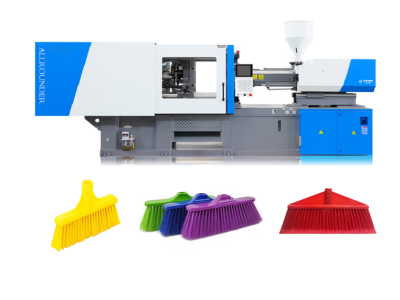
Different types of plastic broomstick head product characteristics and design requirements cause plastic broomstick head molds also need to make changes.
Injection mold design involves a variety of processes and structural features.
Below are several common types of plastic broomstick head injection molds and their features:
- Double cavity injection mold
- Three-plate mold injection mold
- D design molds based on UG and CAD
- Side-gating two-plate mold injection mold
- Hot runner mold
- Multi-cavity injection molds
- Special function molds
Double cavity injection mold:
This type of mold is usually used where mass production is required with high productivity.
Its design includes a side core-extraction mechanism and symmetrical cooling waterway arrangement to ensure the ease of installation and overall force uniformity of the mold.
Three-plate mold injection mold:
This kind of mold adopts the mold frame structure of point gate three-plate mold, and the mold opening sequence needs to be controlled in a specific order.
It ensures the correct separation of the gate from the molded part.
The mold contains inclined guide bar slide assembly for lateral core extraction function.
D design molds based on UG and CAD:
This type of mold design usually uses UG and CAD software for 3D modelling and assembly part drawing.
The design process includes process feasibility analysis, selection of injection molding machine and mold holder.
And then determine the size of the parts, design cavities, pouring system and demolding system.
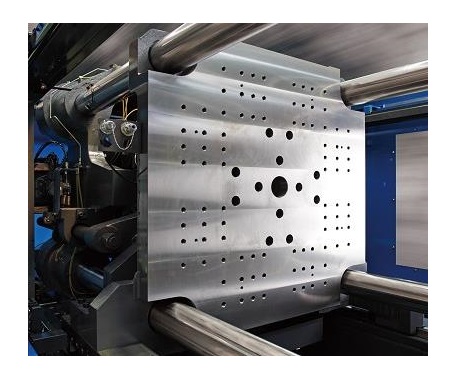
Side-gating two-plate mold injection mold:
In this kind of mold design, the gating system adopts side gate design, which is suitable for the production of small plastic parts.
The structure of the mold is relatively simple, but it can meet the injection demand of small broom head and other products.
Hot runner mold:
This kind of mold improves the injection efficiency through hot runner system and is suitable for small plastic broomstick head products which need rapid molding.
Hot runner molds usually have a higher cost, but higher production efficiency.
Multi-cavity injection molds:
In order to improve production efficiency, sometimes we will design multi-cavity molds , such as a mold with four or more cavities.
This type of mold can significantly increase the output per unit of time.
Special function molds:
Special features may including in some mold designs, such as those with movable inserts or rack and pinion lateral core extraction.
These are designed to solve specific molding challenges or to improve product quality.
These are a few common types of plastic broom head injection molds and their features.
Each type of mold design and application has its unique advantages and scope of application.
It is crucial to choose the right type of mold based on specific plastic broomstick product requirements and production conditions.
Structural characteristics of three-plate plastic broom head injection molds
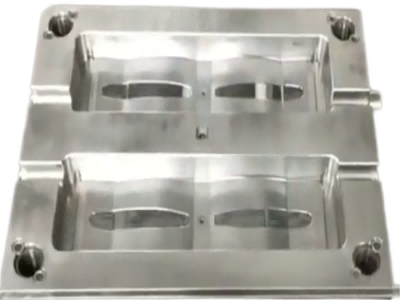
The three-plate plastic broom head injection mold has a complex and delicate structure, which needs to match up with the injection molding machine to set reasonable parameters for production.
Its structural characteristics are mainly reflected in the following six aspects:
- Parting surface and gate arrangement
- Mold opening sequence control
- Use of auxiliary mechanisms
- High degree of automation
- Cooling system optimisation
- Mold structure complexity
Parting surface and gate arrangement:
Three-platen molds usually have three parting surfaces, and this design makes it possible to achieve complex gate arrangement.
It is suitable for the demand of multi-point glue feeding or edge feeding.
This not only improves the molding quality of the product, but also enhances the molding capability of complex parts.
Mold opening sequence control:
The mold opening process of three-plate mold needs to carry out in a certain order.
It usually includes the opening of the fixed and intermediate mold plates first, followed by the opening of the moving mold plate.
This sequential control ensures that the gel from the casting system can be detached from the mold without any problems.
Use of auxiliary mechanisms:
In order to achieve accurate mold opening and demolding, three-plate molds are often equipping with some auxiliary mechanisms.
Such as pulling rod, slider, fixed-pitch tie rod and so on.
These mechanisms help to control the opening stroke of the mold and the separation of the parting surfaces to ensure the stability of the mold and the precision of the products.
High degree of automation:
Three-plate molds are usually able to achieve a high degree of automation due to their complex structural design.
For example, through the use of ejector mechanism and stripper plate, automatic mold release can achieved.
Reduce manual operation and improve production efficiency.
Cooling system optimisation:
Three-platen molds are usually equipping with sophisticated cooling systems, including deep-well cooling pipes and waterway layout optimisation designs.
These designs help to improve the cooling efficiency of the mold, thus shortening the molding cycle and improving product quality.
Mold structure complexity:
Although the advantages of three-platen molds are significant, their structure is relatively complex, which increases the difficulty and cost of manufacturing.
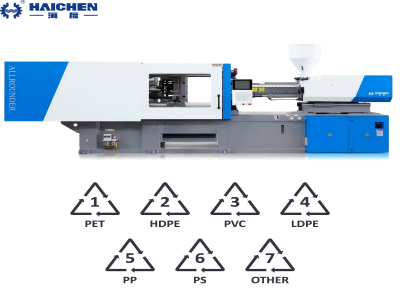
High quality Haichen servo injection molding machine will help to ensure product quality.
Three-platen plastic broomstick head injection mold has significant advantages in injection molding with its complex gate arrangement, precise mold opening control, efficient automated demolding and optimized cooling system.