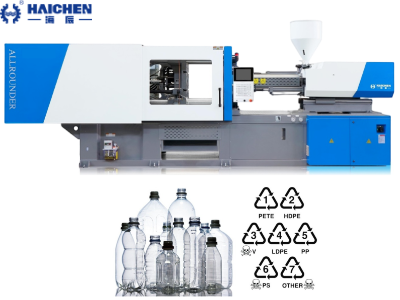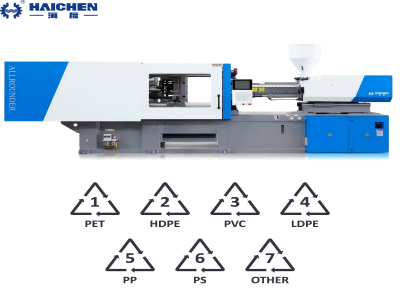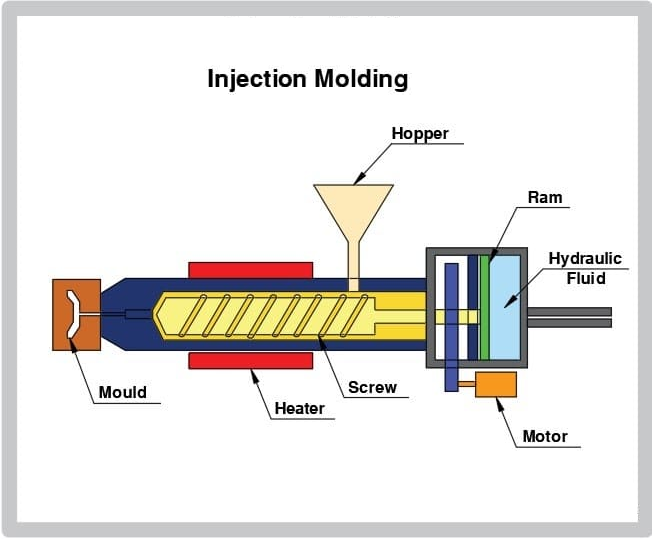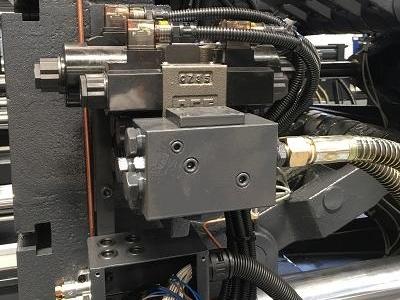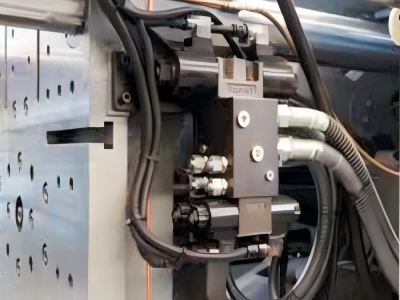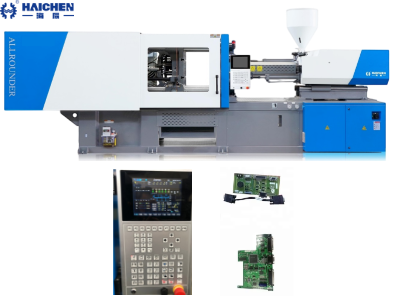
To create a hard plastic mould, you can either create a mold from a master part or design and build the mold from scratch.
For simple shapes, you can use materials like silicone or plaster to create a mold around a master part.
For more complex or high-volume production, you might need to use materials like aluminum or steel and potentially enlist professional mold makers.
Hard plastic mould is a mould with high hardness and wear resistance.
Which is usually used to manufacture thermosetting plastic moulds and injection moulds with large loads.
This type of mould needs to have high strength, hardness and toughness to avoid collapse, deformation and cracking during use.
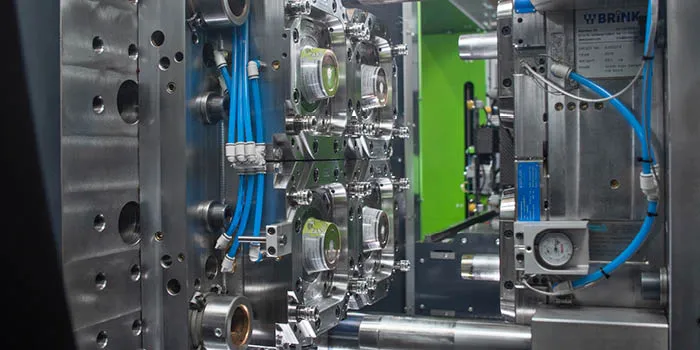
Hard plastic mould
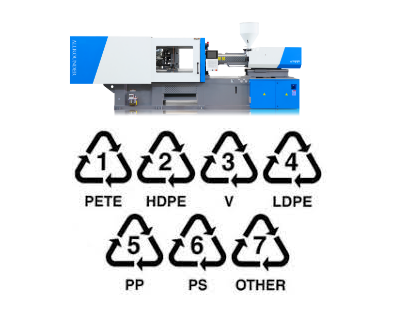
Hard plastic molds represent an essential component in modern manufacturing, serving as precision tools for creating consistent, high quality plastic products.
Manufacturers engineer these durable molds from high grade steel or aluminum to withstand the intense pressures and temperatures of industrial plastic production processes.
The molds feature intricate cavity systems that determine the final shape and characteristics of the molded products, complete with cooling channels that regulate temperature distribution and ejector mechanisms that facilitate smooth product removal.
Manufacturers extensively use these molds in automotive parts manufacturing, consumer electronics, medical devices.
And household products, as they offer exceptional reliability and repeatability in high-volume production scenarios.
They are precision engineered to maintain tight tolerances and dimensional stability, ensuring each produced part meets exact specifications.
The technology incorporates advanced features such as interchangeable inserts, multiple cavity configurations, and sophisticated venting systems to prevent defects.
The design process involves sophisticated CAD/CAM systems, allowing for complex geometries and precise control over wall thickness, surface finish, and other critical parameters.
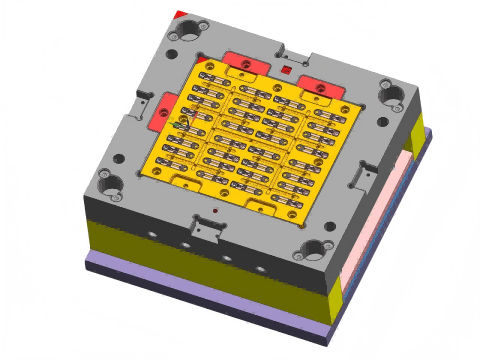
The method of making hard injection moulds
- CNC Machining
- Electrical Discharge Machining (EDM) principle
- Auxiliary process
CNC Machining
Steps: First, CAD 3D modeling → CAM generates toolpaths→ roughing (0.5-1mm allowance) → semi-finishing → finishing (tolerance ± 0.01mm).
Equipment: Secondly, the five-axis linkage machining center can complete the milling of complex surfaces.
And the turning and milling compound machine tool can process the rotary body parts.
Example: Cavity mirror machining requires the use of diamond tools, and the surface roughness Ra≤0.1μm.
Electrical Discharge Machining (EDM) principle
The use of pulse discharge to corrode conductive materials, processing accuracy up to ±0.005mm.
Application: deep groove, micro-hole (diameter <0.2mm), hardened steel precision machining.
Classification: Molding EDM (electrode loss needs to be compensated), wire cutting (no electrode loss, processing straight wall structure).
Auxiliary process
Laser welding: microcracks on the surface of the mold can be repaired.
Electrochemical polishing: It is used to improve the surface finish of the runner and reduce the flow resistance.
Vacuum heat treatment: prevent the oxidation of the mold and ensure the uniform hardness of the material.
The mould making process of Haichen
Determine the mould type and design
First of all, we need to determine the type of mould, according to the plastic parts drawing and process data, and analyze the use of the parts, process, dimensional accuracy and other technical requirements.
Select the right material
For the manufacture of complex, precision and corrosion-resistant plastic moulds, you can choose pre-hard steel (such as PMS).
corrosion-resistant steel (such as PCR) and low carbon maraging steel (such as 18Ni-250), these materials have better cutting, heat treatment and polishing properties and high strength.
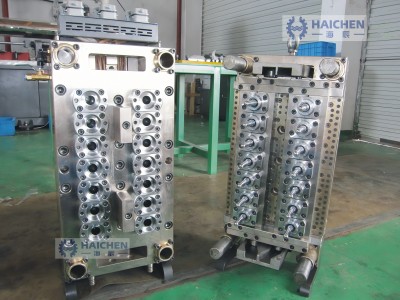
The mould manufacturing process of Haichen
- Blanking and changing forging
- Machining
- Surface treatment
- Assembly and debugging
- Mould trial and optimization
Blanking and changing forging
For the mould that needs to be changed into a billet and then processed, the process route is: blanking → changing forging → annealing → planing or milling six sides → pre-hardening treatment (34 ~ 42HRC) → mechanical roughing → stress relief annealing → mechanical finishing → polishing → assembly.
Machining
The base of the mould is easy to install the mould, and plays the role of supporting, protecting and connecting the key components of the mould (mould core).
The mould should be made of pre-hardened steel with a hardness of 30-45 HRC.
Surface treatment
The inner surface of the mould often needs to be heat-resistant and corrosion-resistant surface treatment to improve the service life and reliability of the mould.
Assembly and debugging
Haichen will assemble all the processed parts to ensure that the parts are closely matched without gaps.
Then debugging is carried out to ensure that the mould can work normally in actual production.
Mould trial and optimization
Before the formal production, Haichen will test the mould to check the moulding effect and product quality.
According to the test results, the mould is adjusted and optimized to achieve the best production results.
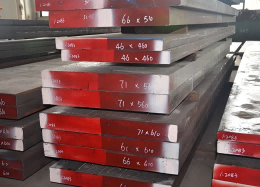
Haichen used steel material
- Prehardening steel
- Corrosion-resistant steel
- Low carbon maraging steel
Prehardening steel
Pre-hardened steel has high hardness and good polishing properties through pre-hardening treatment.
For example, 718h steel is a pre-hardened mirror-like acid-proof plastic die steel with excellent polishing properties and photoengraving properties.
As well as high hardenability and good electrical machining properties.
Pre-hardened steels such as 3Cr2Mo steel and 3Cr2MnNiMo steel also have good comprehensive mechanical properties and uniform hardness distribution.
Corrosion-resistant steel
Corrosion-resistant steel is mainly used in mould manufacturing where high corrosion resistance is required.
For example, T25444 steel (4Cr13NiVSi) belongs to Cr13 stainless steel, which has high hardness and ultra-mirror workability.
And is suitable for making plastic moulds requiring high precision, high wear resistance and high corrosion resistance.
In addition, T25303 steel (3Cr17Mo) and T25513 steel (3Cr17NiMoV) are Cr17 stainless steel, with excellent strength and toughness and high corrosion resistance.
Suitable for the production of various types of high precision, and high wear resistance, but also require corrosion resistance of plastic moulds.
Low carbon maraging steel
Low-carbon maraging steel obtains high strength and toughness through age hardening.
The steel has a high yield ratio, good cutting and welding performance, a simple heat treatment process, and almost no deformation during ageing.