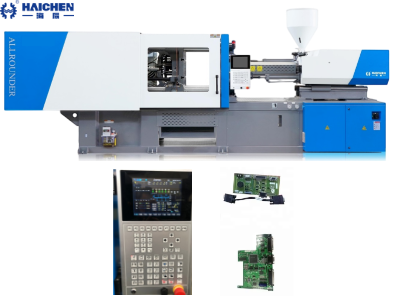
Features of Small Plastic Molding Machine with versatility and flexibility, high precision and quality, energy saving, etc.
The versatility of small injection molding machines is reflected in their wide range of adaptability to industries, materials and molds, while flexibility is achieved through modular design, intelligent operation and rapid response mechanisms. Its core value is to help manufacturers meet small-batch, multi-variety and customized production needs at a lower cost and higher efficiency, while taking into account precision quality and sustainability.
The small injection molding machine achieves precision and quality stability far exceeding that of traditional equipment through innovative screw design, all-electric servo control, high-rigidity structure and intelligent monitoring system. It is especially suitable for the manufacture of miniature, complex and high value-added parts.
The wide application of small injection molding machines stems from their material adaptability (from general plastics to special engineering materials), industry penetration (covering nine major fields such as medical and electronics) and technical flexibility. The trend of all-electric models and intelligence has further expanded their use in high-end manufacturing, while their cost advantages and sustainable characteristics have promoted their popularity in small and medium-sized enterprises and environmental protection needs.
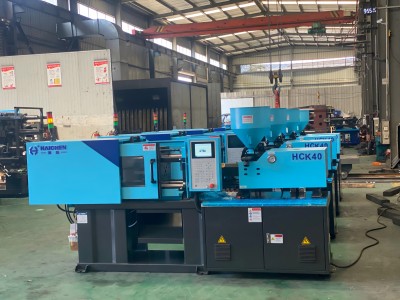
The characteristics of small plastic injection molding machine can be summarized from many aspects, including their functions, advantages and scope of application.
Versatility and flexibility
Small plastic injection molding machines are highly versatile. And they are able to produce a wide range of complex and customized small plastic parts. They are suitable for low-volume production while allowing for quick mold changes to accommodate different product design requirements.
In addition, these machines are typically compact in design and have a small footprint, making them ideal for production environments with limited space.
Wide range of application scenarios adaptability
Multi-field compatibility: can meet the diverse needs of medical technology (clean room production), electronic component coating, micro-precision parts (such as lenses, connectors, semiconductor packaging), etc.
Mold flexibility of small plastic molding machine features
Some models have the ability of “small machine and large mold” (such as e-mac has the largest tie rod spacing in the same class), can handle large molds but only require low clamping force, and optimize space utilization.
Material diversity
supports from general plastics (PE, PP) to special materials (LSR liquid silicone, ceramic particles, PEEK engineering plastics).
Modular upgrade
The plasticizing unit can adapt to different screw diameters (such as through optional adapters), and flexibly adjust the injection volume range (0.1g to hundreds of grams) to meet the production needs from micro parts to small and medium-sized parts.
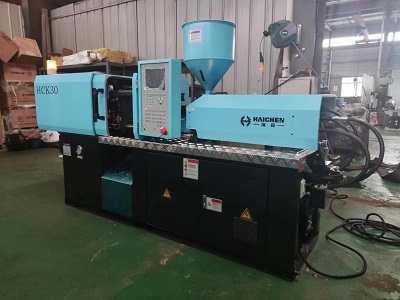
High Precision and Quality
Small injection molding machines are capable of producing complex parts with micron-level accuracy. Such as components with tiny features such as holes, ribs, inserts, etc.
This high precision makes it ideal for manufacturing precision components, such as medical devices, electronic components, and automotive parts.
Flat screw system
replaces the traditional feeding system to achieve more uniform molten plastic delivery, reduce material degradation and bubbles, and improve product density and surface quality.
Zero-Molding
Through MCM (mold pressure control), FFC (flow feedforward control) and SPS (surface pressure balance) technologies, optimize cavity pressure distribution and reduce defects such as flash and lack of material.
Real-time monitoring of injection pressure (5 key nodes) to automatically reject unqualified products.
Constant mold force control
The feedback system maintains stable clamping force to avoid dimensional fluctuations in mass production.
High rigidity frame
- Box-Shaped Platen and reinforced elbow design reduce clamping deformation and maintain mold parallelism.
- Bush-less Tie Bars technology avoids precision deviation caused by tie bar wear.
Short barrel design
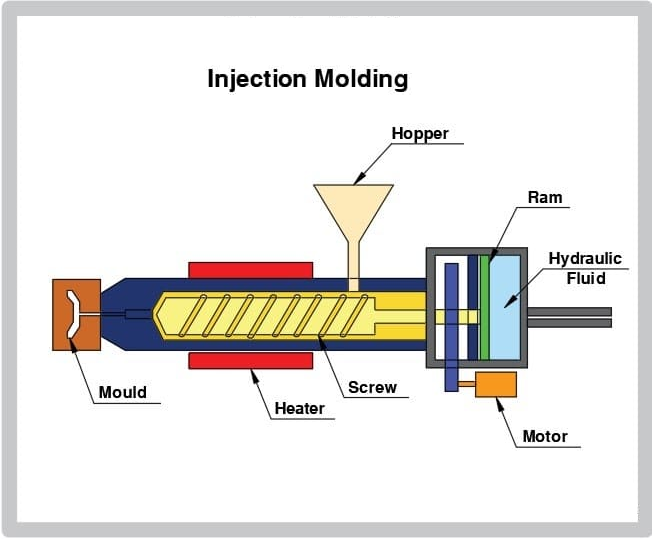
Micro injection molding machine uses short barrel to reduce material retention time, prevent degradation, and facilitate quick cleaning and material replacement.
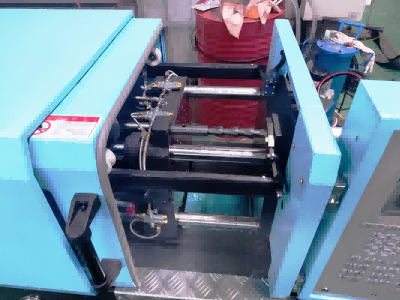
Energy saving and high efficiency
Modern small injection molding machines usually adopt energy-saving technologies, such as low clamping force design, which not only reduces energy consumption but also extends mold life.
In addition, fast cycle time and optimized cooling system further improve production efficiency.
Injection molding machines driven by servo motors
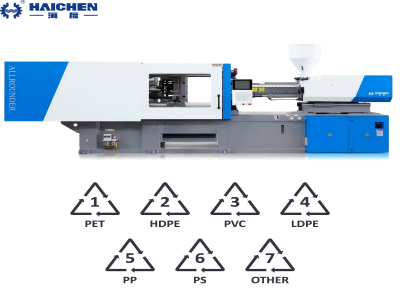
- Such as the Haichen HCK series have outstanding energy-saving effects compared to traditional models.
- 70-80% energy saving compared to fixed-displacement pump hydraulic presses, and more than 40% energy saving compared to variable-displacement pump hydraulic presses.
Core mechanism
The servo system dynamically adjusts the motor speed according to the production stage requirements (such as pressure holding and cooling) to avoid no-load losses. “Zero power consumption” can be achieved during the cooling stage
Production cycle is greatly shortened
- The servo system response speed reaches 0.05 seconds (50 rpm), and it quickly enters the high output state.
- The all-electric model optimizes the opening and closing acceleration of the mold through S-MOVE technology to shorten the cycle time.
- The typical cycle of a small injection molding machine is only a few seconds to tens of minutes, which significantly increases the output per unit time.
Precision control improves the yield rate
The high-rigidity body and closed-loop pressure/flow control ensure repeatability and reduce the defective rate.
Sumitomo Heavy Industries FFC automatic filling technology ensures that the mold cavity is completely filled to avoid short shot defects.
Modular design accelerates mold change and maintenance
The graphical operation interface, guides fast mold change and supports one-click energy-saving settings.
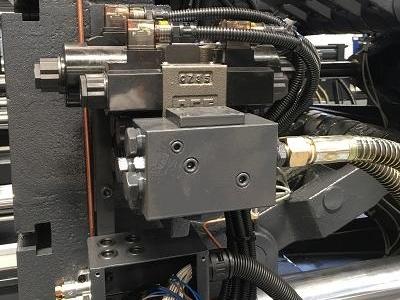
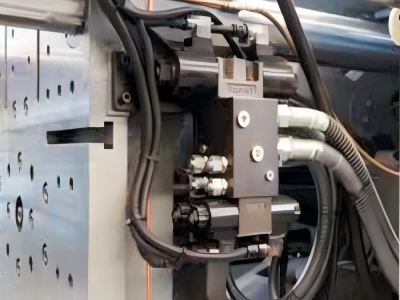
The centralized lubrication system and modular hydraulic components simplify maintenance and reduce downtime.
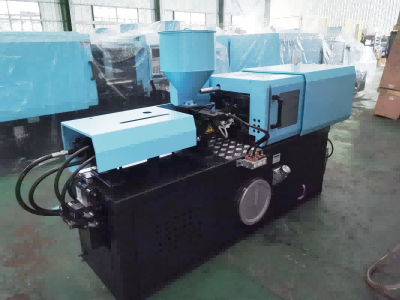
Automation and user-friendliness
Small injection molding machines are often equipped with advanced control systems, such as touch screen interfaces and automatic cleaning functions, making operation easier and reducing the possibility of human error.
In addition, many models support automatic mold opening and closing and cooling systems, further improving operating efficiency.
Fully integrated automation solution
- The small injection molding machine supports integrated automation from simple gate pickers to complex production units, realizing unmanned operation.
- Emphasis on automation through robot handling of tasks such as picking and assembly, reducing manual intervention and improving efficiency (such as real-time monitoring and predictive maintenance).
- Automatic injection molding machines can achieve continuous and efficient production and reduce human errors.
Efficiency and cost
Automation reduces manual reliance, and the user-friendly interface further shortens training time, reducing production costs overall.
Quality consistency
Automation ensures accurate parameters (such as constant pressure filling), and the user interface monitors data in real time to ensure product consistency.
Flexible adaptation
such as clean room compatible design and modular options, automation and easy operation make it suitable for high-standard industries such as medical and electronics.
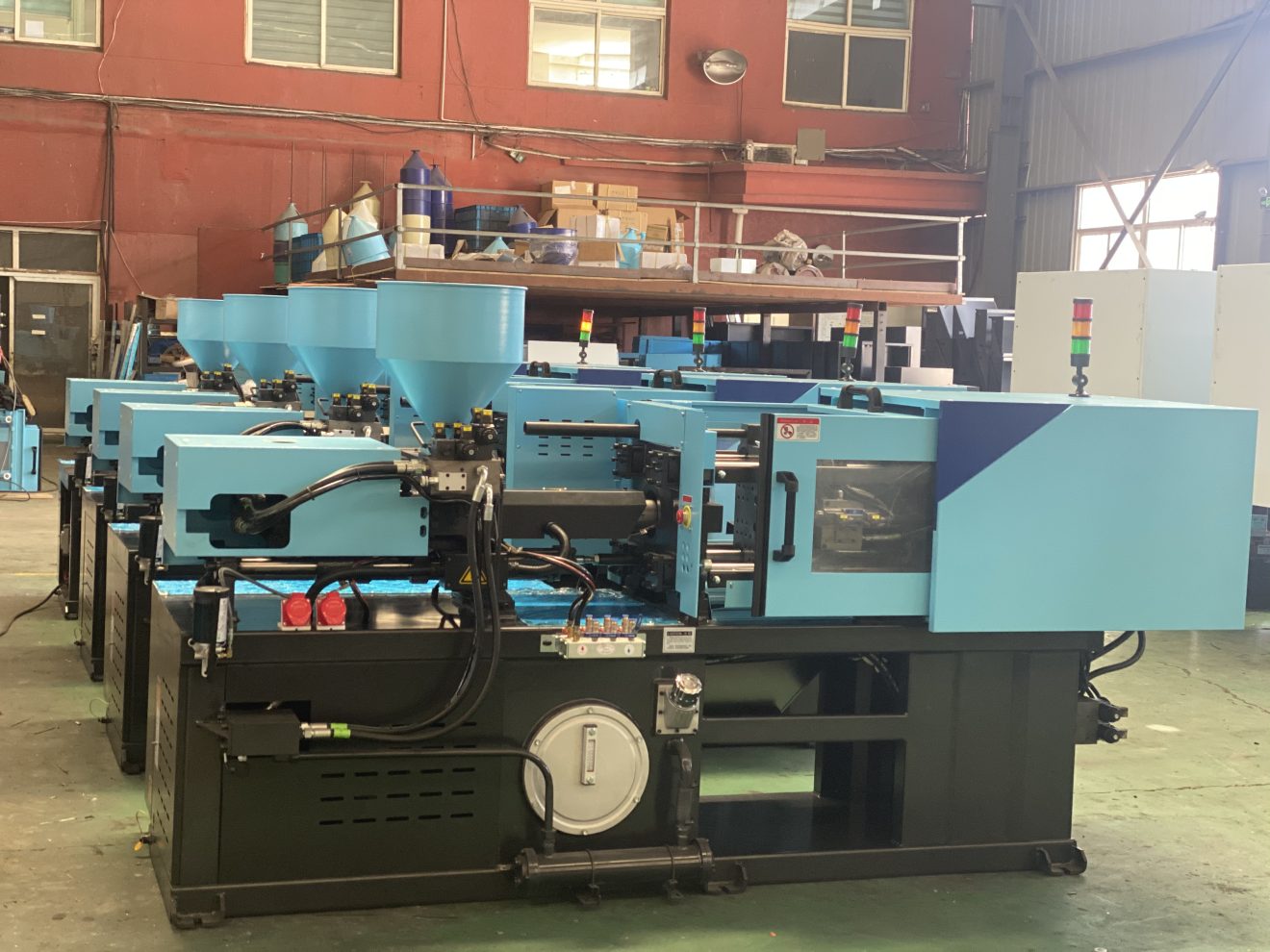
Material saving and cost-effectiveness
Small injection molding machines can reduce material waste during production. Such as reducing resin consumption through short cycle times and optimized shot size control. In addition, lower mold costs make small injection molding machines more economically attractive.
Low initial investment and operating costs
The purchase cost of small equipment is much lower than that of large machines, suitable for small and medium-sized enterprises and start-ups.
The unit cost is significantly reduced with the output
The small injection molding machine’s mold costs are about 40% lower than standard molds because mold size is smaller and processing is faster
Efficient use of raw materials in micro injection molding
Micro injection molding consumes less raw materials, which not only reduces the material used for parts, but also reduces the amount of residual resin in the runner.
The compact barrel and smaller runner design further reduce material loss.
Waste control and cycle optimization
The injection molding process itself has a low waste rate (compared to CNC processing, etc.), and waste can be reduced by optimizing the part layout.
Automated systems (such as water jet deburring and tail material cutting) accurately remove excess material and reduce secondary processing losses
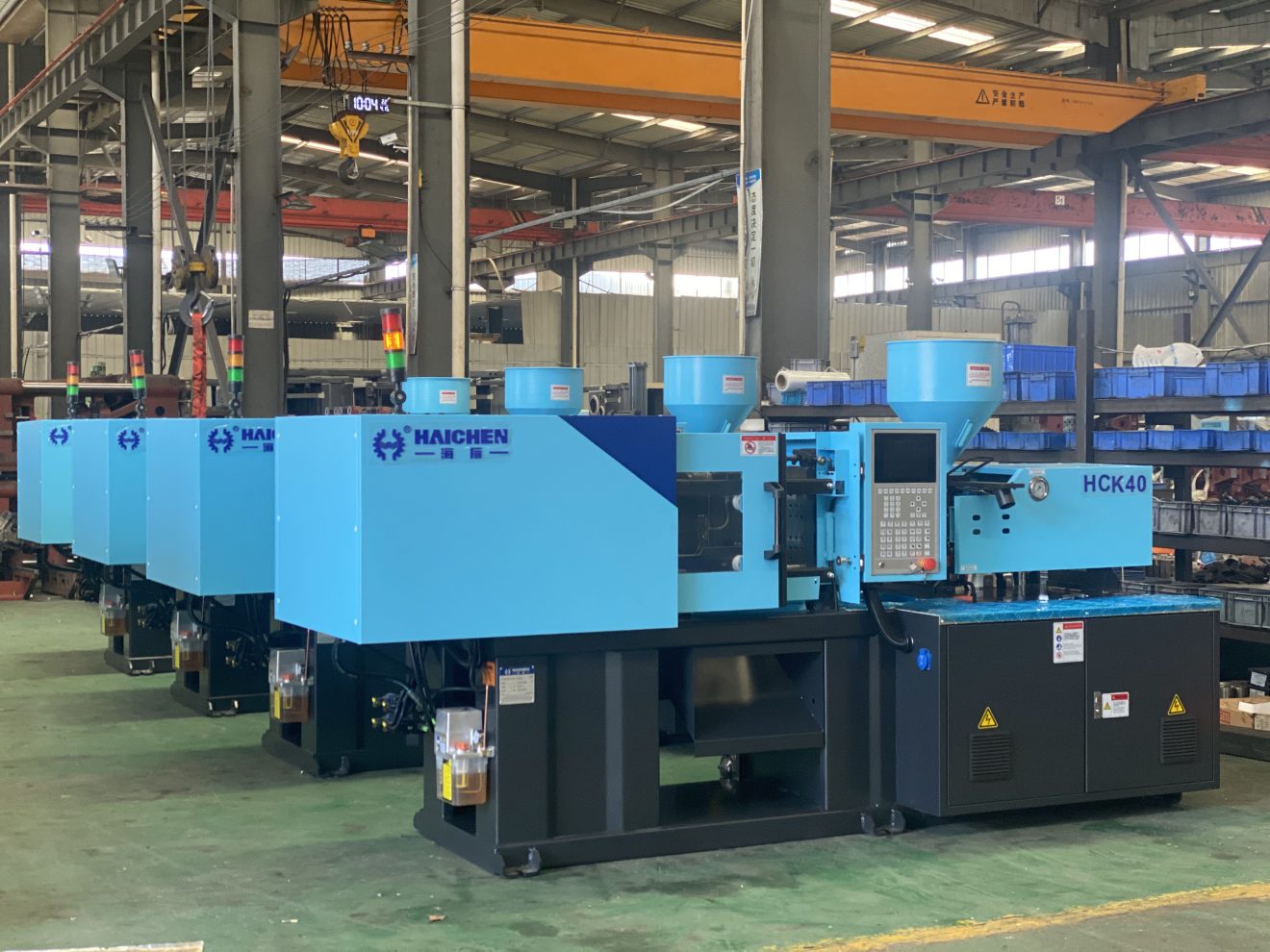
Wide range of applications
Small injection molding machines are able to process a wide range of materials, including thermoplastics, engineering plastics, and elastomers. They are suitable for manufacturing a variety of small plastic parts, such as toys, mobile phone accessories, automotive interior parts, and precision components in medical devices.
Electronics Industry
- Manufacturing small precision parts such as connectors, switches, and battery covers to meet the lightweight and complex structure requirements of electronic products.
- Micro injection molding technology can produce microelectronic parts such as sensors and optical components.
Automotive Industry
Manufacturing small components such as buttons, knobs, and interior trims, taking into account both lightweight and high strength.
Consumer goods and toys
Manufacture of toy parts (e.g. miniature models, puzzles), daily necessities (containers, lids) and customized products
Compact design and space optimization
Small injection molding machines are usually compact in design and have a small footprint, making them suitable for efficient operation in limited spaces.
This feature makes them particularly suitable for small factories or laboratory environments that require flexible layouts.
Small plastic injection molding machines are favored for their versatility, high precision, energy-saving and high efficiency, high degree of automation, material saving and wide range of applications. These features make them an ideal choice for manufacturing small and complex parts in many industries such as medical, electronics, and automobiles.