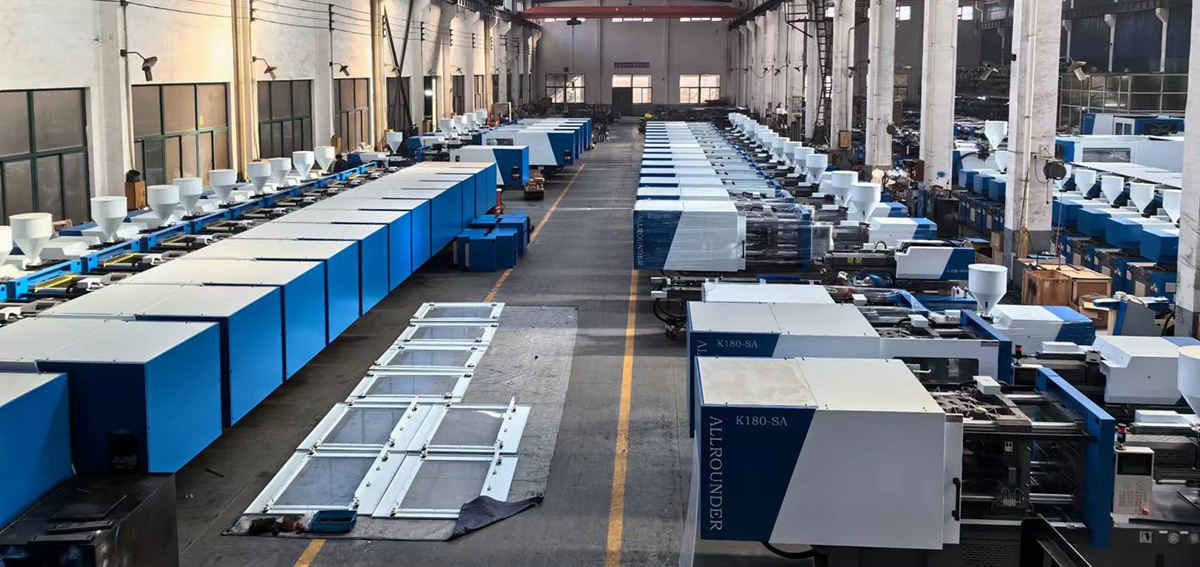
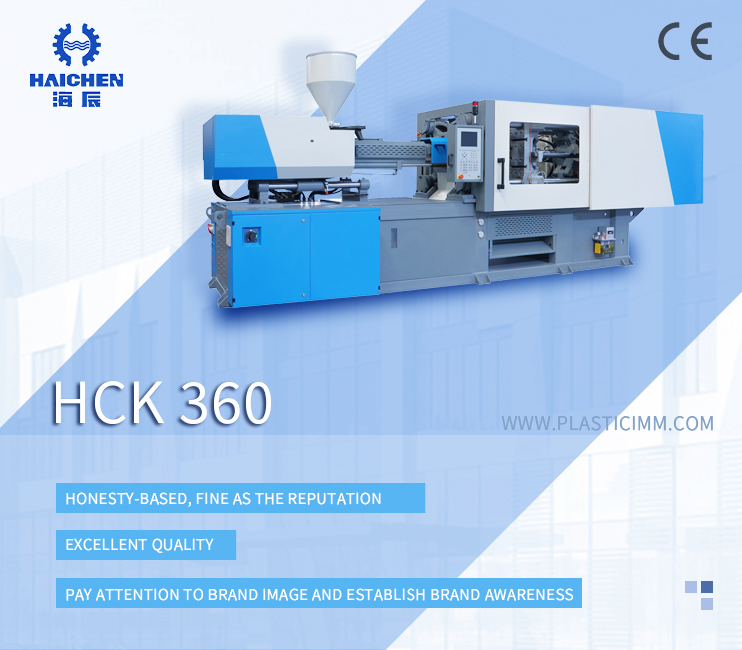
Cutting costs with tonnage calculation of injection molding machine,the reasonable selection and optimization of the tonnage of the injection molding machine is the key link to reduce the production cost.
Injection molding is a complex, dynamic system with multiple, interacting factors—all of which impact performance, cost, and quality.
One of these factors is the injection molding machine tonnage calculation, also known as the clamping force.
Cutting Costs with Tonnage Calculation
A tonnage calculation is often presented as a range for example, from 550 tons to 750 tons for a single-cavity tool.
An injection molder can certainly save money by purchasing a smaller machine that can deliver the lowest clamping force in the range and claiming it will do the job just fine.
However, if the optimum tonnage calculation is actually in the mid-to-upper part of the range, this increases the risk to you, the manufacturer, that your plastic parts will have flash.
Flash is when the tool opens slightly during injection because the machine lacks sufficient clamping force to produce a flash-free part.
Instead of using an injection molding machine tonnage calculator, many molders often estimate tonnage by using a “rule of thumb” equation that involves the area of the part, type of plastic, viscosity, and a “clamp factor” that ranges from 2 to 8.
Depending on the part and type of material, some molders simply go with an “average” clamping factor of 5 to calculate the tonnage.
This approach can result in an inaccurate tonnage calculation that is too small resulting in quality problems and delays or is too large (resulting in increased mold costs and premature deterioration).
A more accurate way to determine the injection molding machine tonnage calculation is through mold filling analysis.
Which removes much of the guesswork from the calculation.
It’s been our experience that using mold filling analysis to determine the tonnage factor, and then adding a “safety factor” of about 15 percent, results in a highly accurate clamping force and flash-free parts.
The direct impact of tonnage on cost
Tonnage is linearly related to power: the rated power of the 1000T injection molding machine is about 160kW, and the 3300T model is up to 420kW.
Running for 1 hour, the electricity cost of 1000T machine (according to 0.8 yuan/kWh) is about 128 yuan, and the 3300T model reaches 336 yuan.
Energy-saving technology selection
The energy consumption of electric injection molding machine is only 1/3-1/4 of that of hydraulic press, but the price is 2-3 times higher.
For long-term production of small tonnage equipment (<500T), electrification can save 25%-60% of electricity costs.
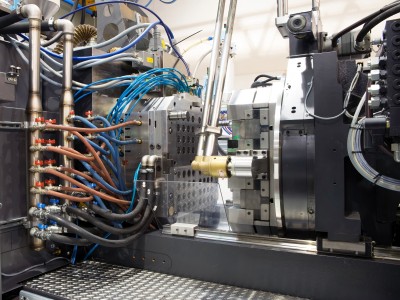
Tonnage premium
For every 100 tons of clamping force, equipment costs increase by 8%-12%.
For example, the price of a 120T injection molding machine is about 250,000 yuan, and the price of a 240T model is 400,000 yuan.
Maintenance cost difference
The annual maintenance cost of 450T hydraulic press is about 30,000 yuan (labor spare parts), while the 1300T model needs 6-80,000 yuan.
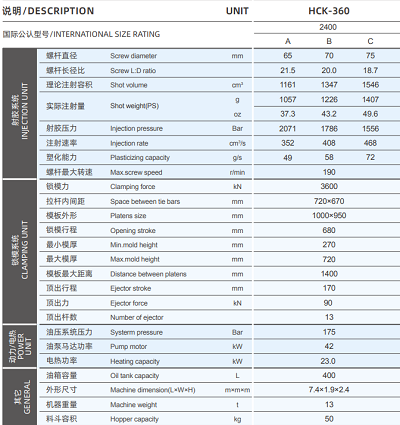
Cutting Costs with Tonnage Calculation
Product classification management
Orders are divided into small (<500g), medium (500-2000g), and large (>2000g) according to size, corresponding to 80-200T, 200-800T, and 800T equipment.
Dynamic adjustment strategy
When seasonal orders fluctuate, large-tonnage products can be processed through outsourcing to avoid idle self-owned equipment.
Material Utilization Optimization
Insufficient clamping force will lead to flash and increase scrap rate.
For example, for the production of PP parts with a projection area of 200cm².
If a 100T machine (theoretical clamping force of 98.1kN) is selected, a 120T machine is actually needed to avoid 5%-8% material waste.
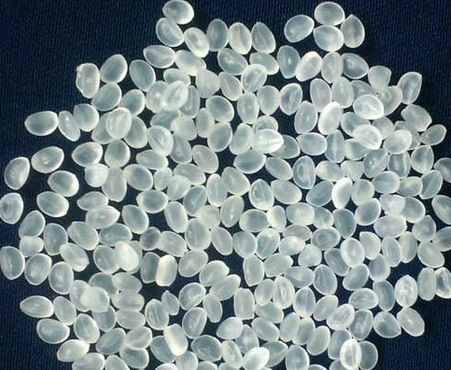
Gate design tonnage
Optimizing the gate position can reduce the clamping force of the printer paper guide assembly from 800T to 650T, and reduce the energy consumption of a single piece by 22%.
Multi-cavity mold application
The use of stacked molds can reduce the clamping force demand to 15% of conventional molds, and increase the production capacity by 90%.
Servo system transformation
Upgrading the traditional hydraulic press to servo control can save 30%-80% of electricity.
For example, after transforming the PET preform injection molding machine, the energy consumption per ton decreases from 0.55 kW·h/kg to 0.31 kW·h/kg.
Second-hand equipment utilization
The price of second-hand 120T injection molding machine is about 60% of that of new machine, which is suitable for small and medium-sized batch production.
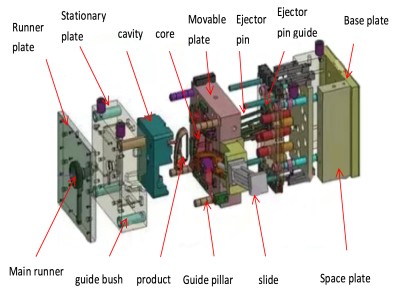
Optimization Strategies to Reduce Tonnage-Related Costs
Accurately match equipment and product requirements
Reduce the projection area of a single piece by increasing the number of cavities, and reduce the required tonnage.
For example, after changing a mold that requires 450 tons of a single cavity to a double cavity.
The projection area of a single cavity halves, and the manufacturer can use smaller tonnage equipment.
Material substitution
Use high-flow materials (such as PA instead of PC) to reduce the need for clamping force.
For example, after a certain auto parts were converted to PA.
The tonnage demand was reduced from 500T to 380T, and the annual electricity cost was saved by 120,000 yuan.
Optimization of process parameters
Reduces the need for clamping force by reducing the injection pressure (e.g. with gas-assisted molding).
After adopting this technology in the production of a home appliance shell.
The tonnage requirement reduced by 15%, and the molding cycle shortened by 10%.
Dynamic clamping force control
Sensors are used to adjust the clamping force in real time to avoid wasting energy caused by constant high pressure.
In one case, the technology increased tonnage efficiency by 20%.
Servo motor application
The all-electric injection molding machine is 40%-60% more energy-efficient than the hydraulic model.
Especially suitable for small and medium-tonnage scenarios.
After a company replaced an 80-ton hydraulic press with a servo model, the annual electricity cost was reduced by 80,000 yuan.
Regular lubrication and calibration
Reduced frictional losses can improve clamping efficiency.
A factory was able to reduce the energy consumption of its equipment by 5% through a monthly maintenance plan.
Haichen‘s Experience
By scientifically calculating tonnage and matching equipment capacity with product needs.
Companies can systematically reduce energy consumption, scrap rates and mold losses.
Combined with process innovations (e.g., low-pressure molding, dynamic control) and equipment upgrades (e.g., servo motors).
The potential for cost savings can further increase by 15 to 30 percent.
It is recommended to introduce CAE simulation software (such as Moldflow) to optimize the design.
And regularly review the matching degree between tonnage and actual production to achieve continuous improvement.