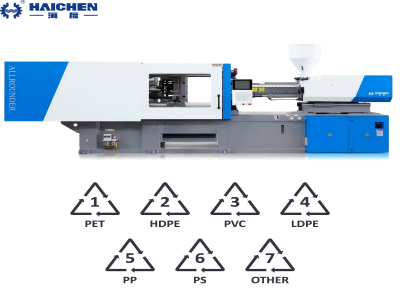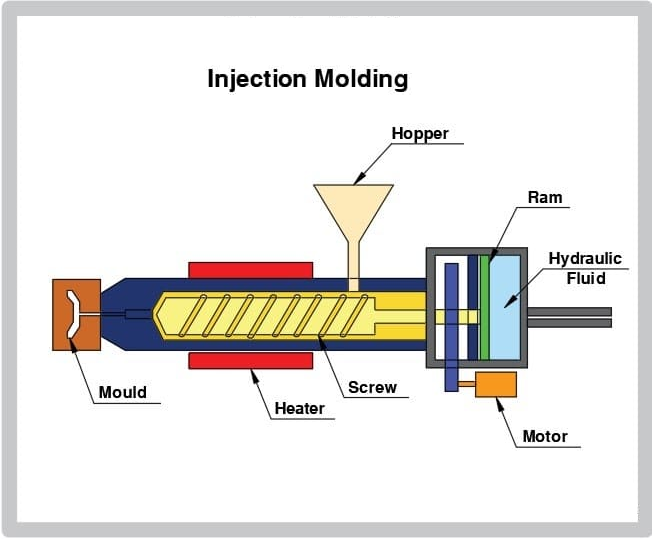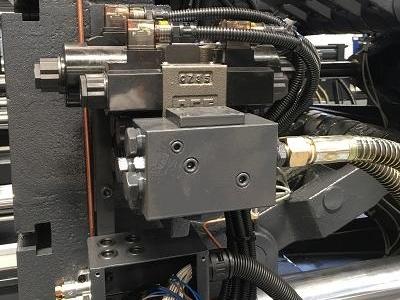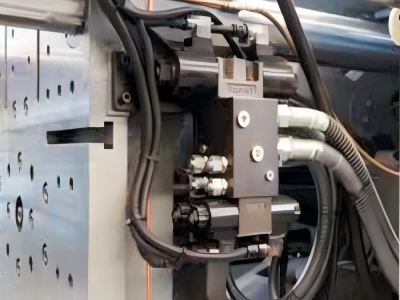
A PLC (Programmable Logic Controller) controller in injection molding is an electronic device that automates and monitors the injection molding process, ensuring precise control over machine operations, cycle times, and part quality.
In contemporary models of injection molding machines, a PLC (Programmable Logic Controller) is one of the most important elements due to its ability to precisely automate and control the injection molding process.
Part quality and production efficacy depend greatly on the consistency of these parts, while control over the machine is improved which uplifts its reliability.
In this article, we will learn about what a PLC controller is, its role functions during injection molding, and its overall impact on the quality and efficiency of the process.
Furthermore, we will explain what PLC controllers do in the processes of manufacturing which requires a volumetric high machine control of the processes.
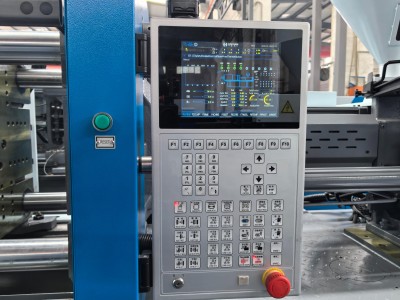
Key Functions of a PLC in Injection Molding
The PLC controls all of the functions of the injection molding machine, including the clamping of the mold, injection, cooling, and ejection of the mold and acts as its brain.
- Process Control
- Parameter Monitoring
- Automation
- Safety and Alarms
- Data Logging and Reporting
Process Control
- The PLC controls the injection molding cycle for the closing of the mold, cooling of the injection, and ejection of the final part. It determines the conditions of each stage for optimal timing and placement.
Parameter Monitoring
- The PLC controls the temperature, pressure, injection speed, and cycle time and ensures these parameters are best suited for maintaining product quality.
Automation
- The entire injection molding process as performed by the PLC requires minimal to no human controls which also reduces the possibility of human errors. Production lines with robots or convsyors for the complete process are streamlined with the PLC for its other systems.
Safety and Alarms
- The PLC sets off alarms and/or turns off the machine once it detects overheating, pressure spikes, or other faults, which ensures the safety of the operators and the machine.
Data Logging and Reporting
- The cycle times, the amount of energy used and the defect rates are some of the production data available for logging for modern PLCs, which helps in process optimization for enhanced quality control.
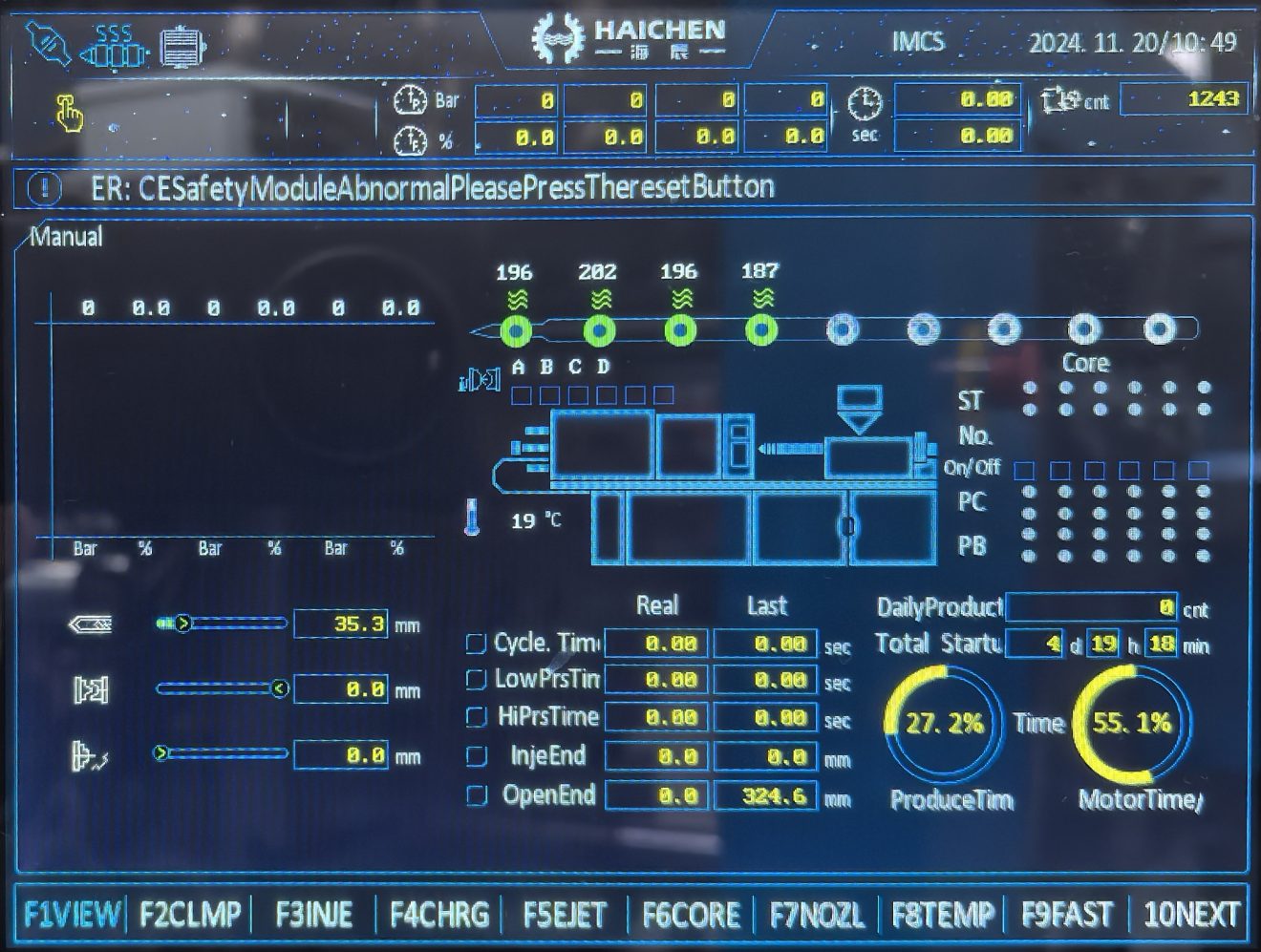
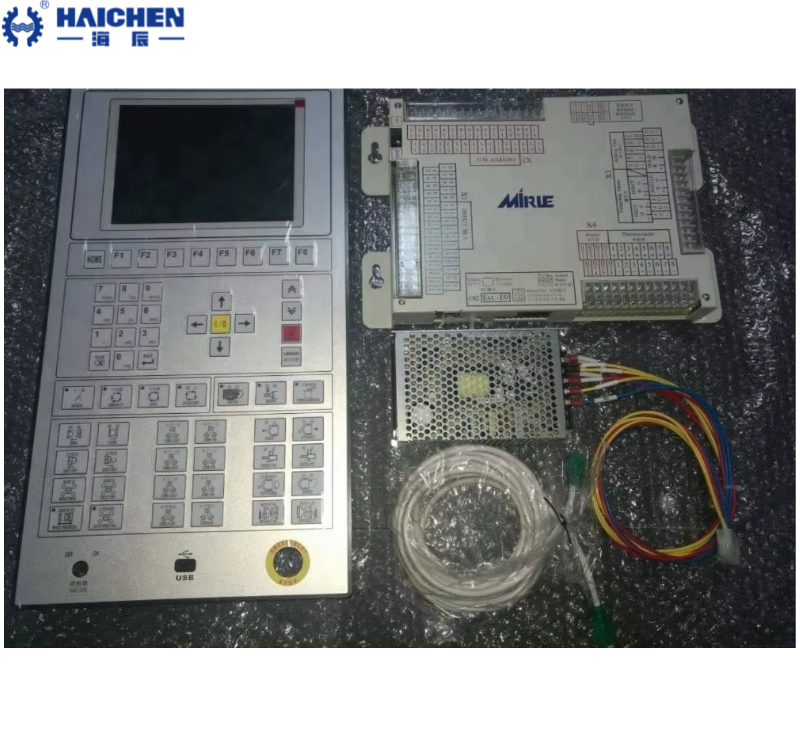
Components of a PLC System in Injection Molding
Input/Output (I/O) Modules:
- These modules form the link between the PLC and other devices mounted on the injection molding machine.
- Inputs in the form of temperature and pressure sensors and other limit switches, while outputs control the motors, heaters, and ejectors of the hydraulic system.
Central Processing Unit (CPU):
- The CPU is the brain of the system which controls the entire system. It processes data and is responsible for making key decisions based on the program logic and, therefore, controlling the machine.
Human-Machine Interface (HMI):
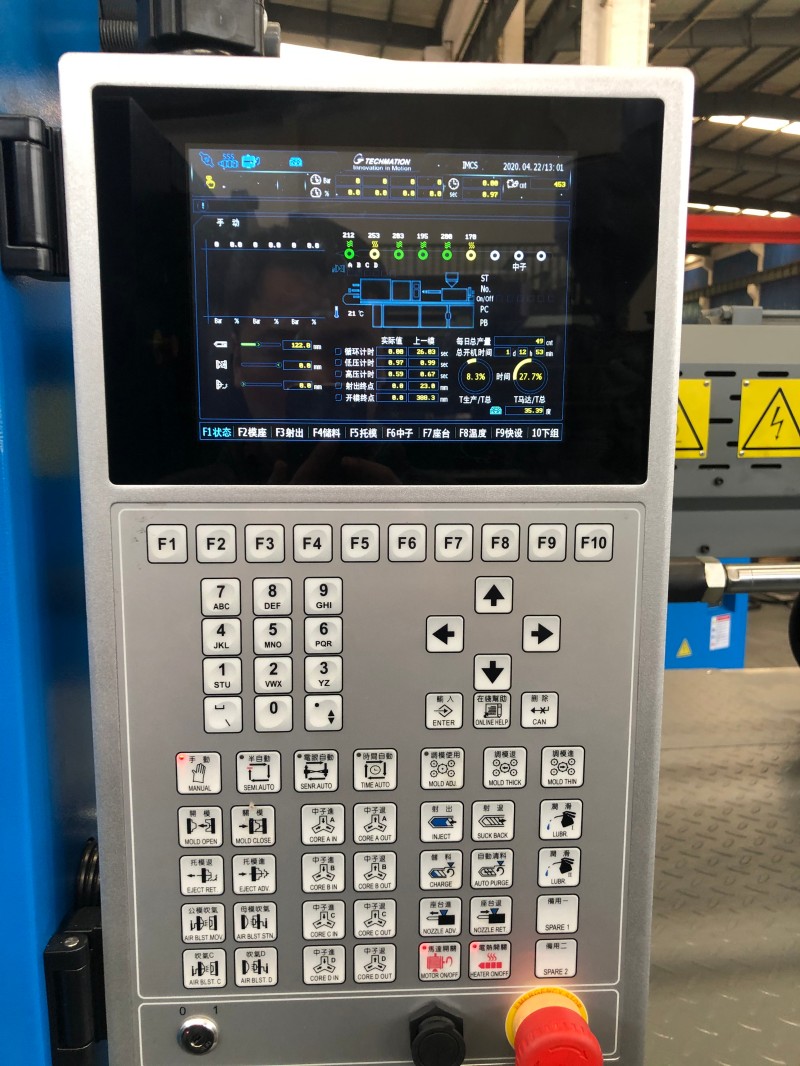
- The machine also possesses a control or a touch panel that gives the operator the ability to access the PLC, adjust values, and check the machine’s condition
Programming Software:
- Engineers usually work with software that enables the PLC with the necessary order logics for injection molding. Some of the discussed languages includes ladder logic and structured text.
Advantages of Using a PLC in Injection Molding
- Accuracy: With the PLC in charge, it ensures each cycle is performed to exact requested specifications, so part quality will be the same every time.
- Modification: With the PLC, different molds, materials, and order of production instructions can be set and the machine will accommodate as needed.
- Effectiveness: With automation, cycle time is decreased and waste is decreased, so production as a whole is improved.
- Dependability: PLCs are sturdy, designed for industrial uses, and can withstand harsh conditions for long periods of time.
- Expansion: PLCs can be added onto or adjusted to allow for additional features or to accommodate longer assembly lines.
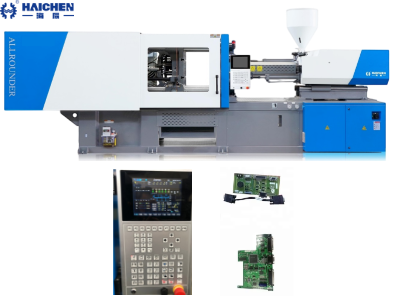
Key Features of Haichen PLC Controller
Established as a leading injection molding machinery maker company, Haichen integrates PLC technology in all of their PLC molding machinery to achieve excellent operational reliability, simplification of handling, and streamlined functionality.
High Precision Control:
- The controller module of a Haichen PLC controls injection molding processes in a way that all the mechanical parameters, that is, the temperature, pressure, injection speed and cycle time, as well as the repetition of molding, is kept at a set value.
- It takes control of the injection molding process, molding processes, and post-run processes to maintain the perpendicularity of the components.
Advanced Automation:
- Makino PLC uses an advanced automated process to adjust the temperature, cycle, and speed of injection.
- The PLC manages the entire injection blending process and adjusts the speed of actuators based on peripheral devices such as robots, conveyers, and granulators in the production line.
Flexibility and Scalability:
- The PLC can be advance for complex molding processes that require different molds and different materials. The devices can be updated for secondary production and still be useful.
- The PLC is useful for smaller production outs as well as larger scale uses.
Common Faults and Maintenance Strategies
Typical Fault Types
| Fault Source | Percentage | Symptoms | Solution |
| I/O Module Failure | 40% | Signal Drift/No Response | Check terminal wiring, replace isolation barrier |
| Power Supply Interference | 25% | PLC Crash/Program Loss | Install a filter, independent grounding (resistance <4Ω) |
| Sensor Failure | 20% | Abnormal Temperature/Pressure Data | Regular Calibration, shielded cable for interference prevention |
Preventive Maintenance Recommendations
- Daily: Clean the ventilations holes and remove accumulated dust to prevent overheating.
- Monthly: Perform a program backup to external storage and check the status of the I/O ports.
- Annually: Upgrade the firmware of the control algorithms and change the backup CPU battery.
In injection molding, a PLC controller plays a critical role. It ensures automatic control, monitoring, and precision of the molding process. Knowing the functions and advantages of PLC controllers, helps manufacturers fine-tune their processes, increase part quality and boost overall productivity.