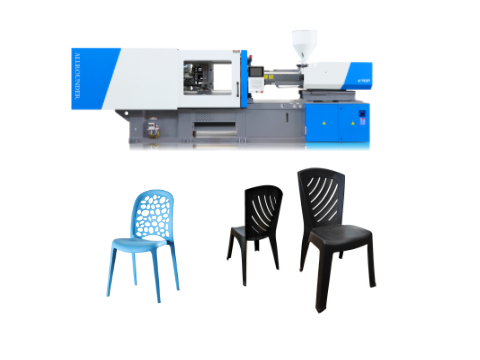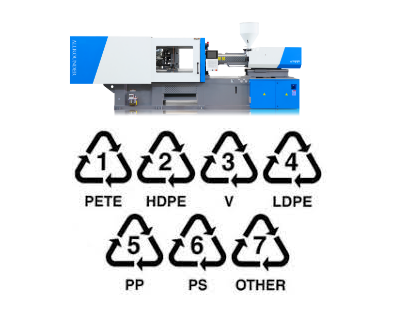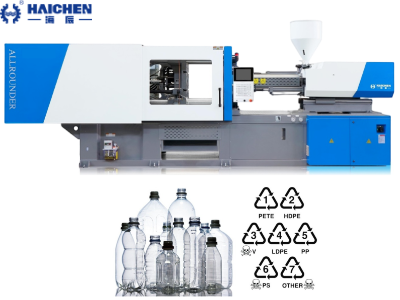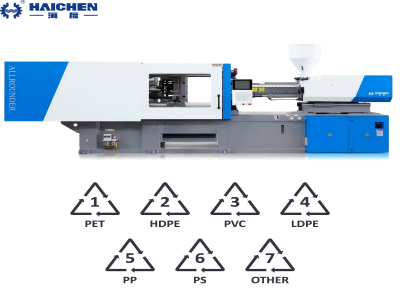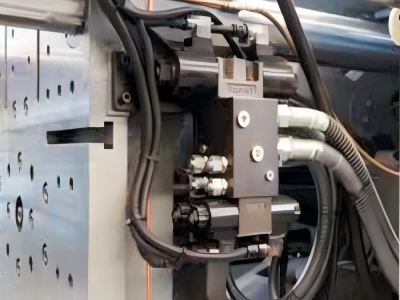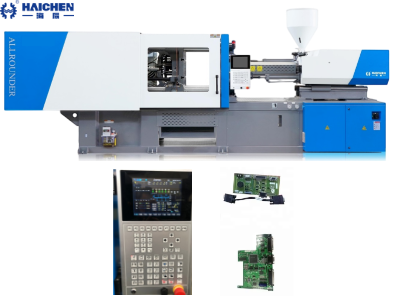
Plastic chair making machine is a kind of mechanical equipment used to produce plastic chairs.
Plastic chair making machine usually belongings to a kind of plastic molding machinery. This machinery mainly includes injection molding machine, extruder and blow molding machine, etc.
Injection molding machine is one of the most commonly uses equipment of plastic chairs. This machines inject molten plastic into a mold and form the various components of the chair. Such as the seat, back, and legs, after cooling. This process can mass-produce high-quality and consistent products. That can withstand the pressure, shear, tension, and torque forces exerted by people sitting and moving.
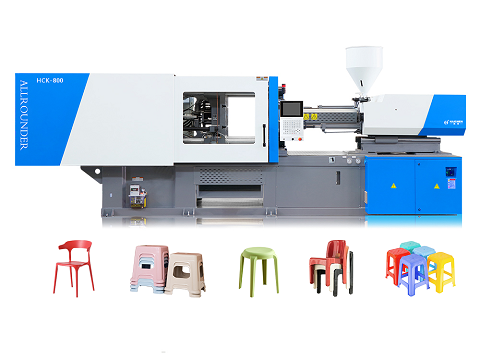
Plastic chair making machine composition
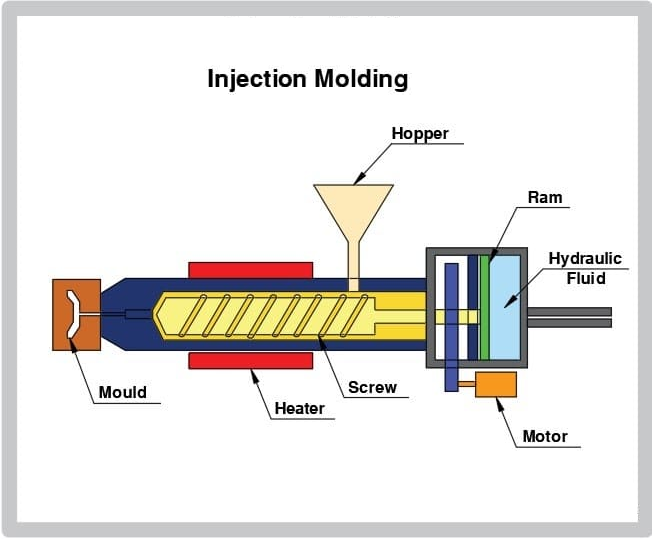
Plastic chair making machine, here we refer to plastic chair injection molding machine. The core components of the plastic chair injection molding machine can mainly divided into four parts: injection unit, mold clamping unit, mold system, and auxiliary system.
Injection unit
It mainly means to melting and injection system
- Hopper: The entrance of plastic particles is used to transport raw materials to the material cylinder through a funnel-shaped structure. After pre drying, the raw materials enter the heating stage.
- Barrel: A metal outer cylinder that accommodates screws, wrapped with heater bands, capable of reaching temperatures of 200-300 ° C, used for melting plastics. Connect the nozzle at the front end of the barrel to ensure that the molten material is injected into the mold.
- Recruiting Screw: Key components with both rotational and axial movement functions. Push plastics forward by melting raw materials through shear heat and external heating.
- Heating devices (Heaters): The electric heating coil wraps around the material cylinder, providing precise temperature control to ensure even melting of the plastic.
Clamping unit
- Clamping Unit: Using hydraulic or toggle/hydraulic mechanisms, providing 100-300 tons of locking force (for plastic chair models) to prevent the mold from opening under high-pressure injection. Including activity templates (Movable Platen) to drive mold opening and closing.
- Ejection System: The ejector pin or push plate mechanism pushes the cured plastic chair out of the mold cavity after opening the mold. Can be driven by pneumatic or hydraulic means to ensure non-destructive demolding of the products.
Mold
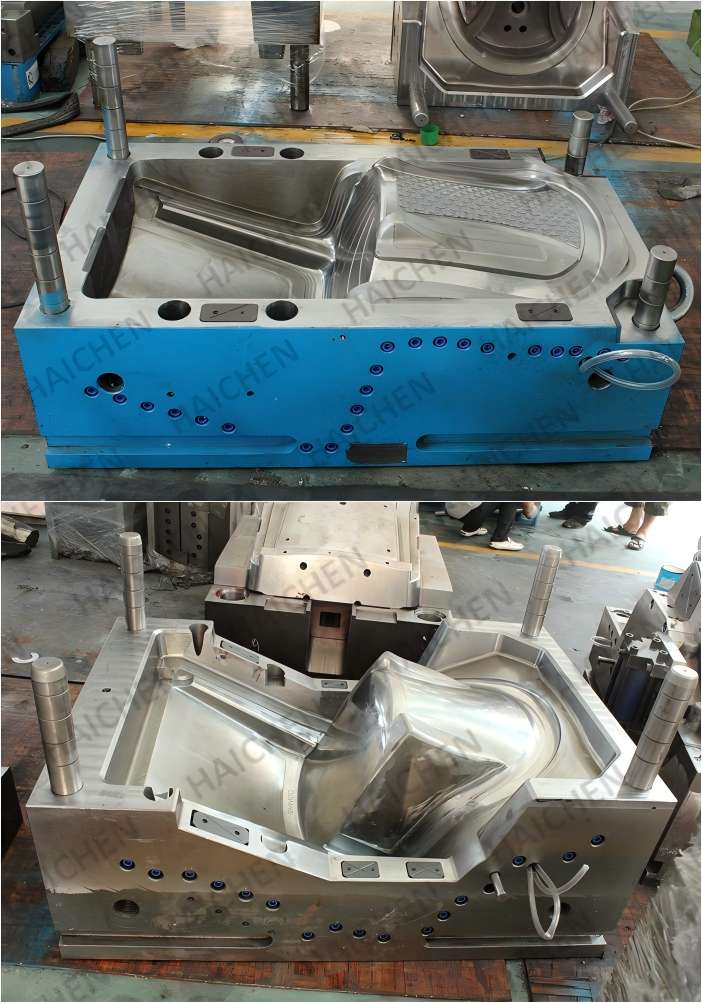
It consists of a fixed mold (Cavity Side) and a dynamic mold (Core Side). They made of high-strength steel/aluminum with an accuracy of ±0.025mm. Plastic chair molds usually have a multi-cavity design to improve efficiency.
- Cooling System: Built-in water channel circulates cooling medium (water/oil), shortens cycle time (6 seconds – 2 minutes) and reduces deformation.
- Venting structure: Exhaust gas from the mold cavity to avoid bubbles or material shortage.
- Side Core-Pulling: Used for chair structures with side holes or undercuts, pull out before mold opening.
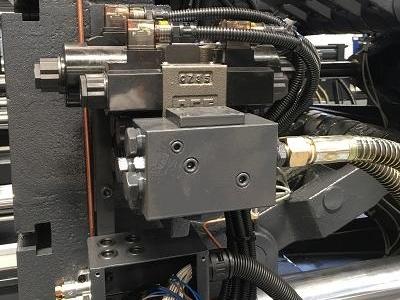
Hydraulic System
It provides high-pressure power for mold locking and injection to ensure smooth operation.
- Pneumatic System: Control the movement of mechanical components (such as mold opening and closing speed).
- Control System (PLC/Electronic Control): The core is PLC (Programmable Logic Controller), which integrates temperature, pressure, and time sensors to achieve fully automated production. The touch screen interface supports real-time parameter adjustment.
- Temperature control system (Cooling/Heating): Independently control mold temperature (7-15 kW heating power), affecting material flowability and crystallinity.
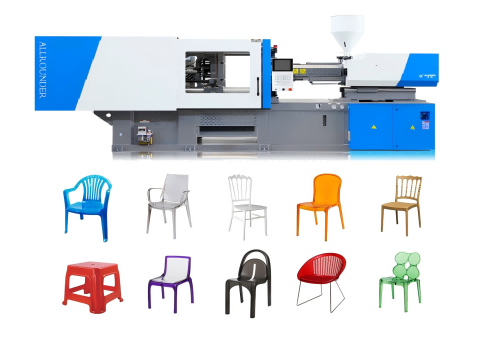
Plastic chair injection molding making process
Based on the information we have searched, the injection molding process of plastic chairs is an efficient and high-precision thermoplastic processing method, and its core process can summarized as the following steps:
Raw material preparation and plasticization
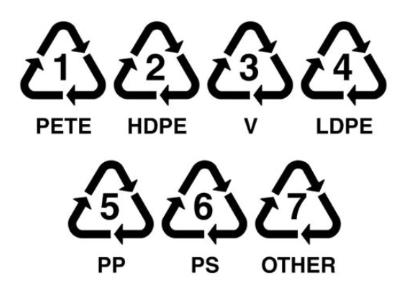
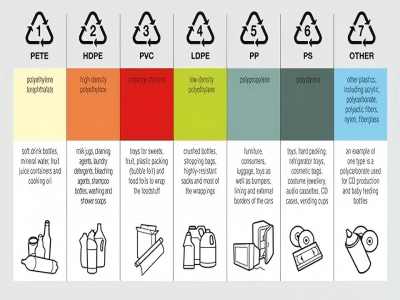
- Raw material type: Plastic chairs common materials include thermoplastic such as polypropylene (PP), polyethylene (PE), ABS, etc
These materials are added to the injection molding machine hopper in the form of particles. - Plasticization process: The particles in the injection molding machine barrel are melted by the shear heat generated by heating (segmented temperature control) and screw rotation, forming a uniform melt
The screw design (aspect ratio of 20-30:1, compression ratio of 2-3:1) is crucial for the mixing effect.
Mold closing
- Mold structure: The plastic chair mold consists of a fixed mold (fixed side) and a moving mold (moving side), which are precisely aligned through guide columns
Plastic chairs as thin-walled components.The mold needs to be designed with high-precision cavity (tolerance ± 0.025mm) and cooling system. - Clamping force: Hydraulic or mechanical locking mechanism applies high pressure (usually several hundred to several thousand tons) to prevent the molten high pressure (500-1500 bar) from spreading the mold.
Injection and pressure maintenance
- High speed injection: The melt is injected into the mold cavity through the nozzle, main channel, splitter channel, and gate, and the injection speed and pressure are controlled by the screw
Thin walled chairs require high pressure to ensure complete filling. - Pressure holding stage: maintain pressure compensation material shrinkage after injection
To prevent shrinkage marks (commonly found in thick walled areas such as chair surfaces).
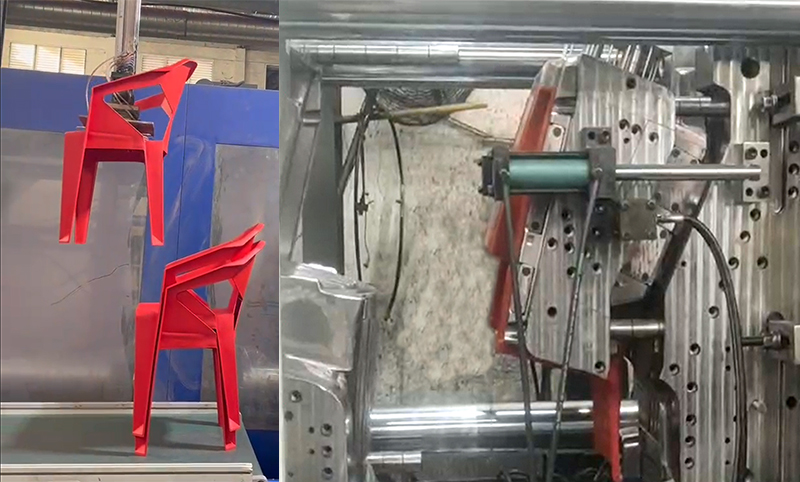
Cooling and shaping
- Cooling system: The mold is cooled by a cooling medium (water/oil) to accelerate solidification. Plastic chairs have a large volume, and the cooling time accounts for over 60% of the cycle.
Optimizing the design of cooling pipelines (such as conformal cooling) can shorten the cycle and reduce deformation. - Crystallization effect: Crystalline materials such as PP/PE have a higher shrinkage rate (0.8-2.5%) and require precise control of mold temperature.
Mold opening and ejection
- Mold opening action: After cooling, the mold moves backwards and the mold parting surface opens.
- Top out mechanism: ejector pins or pneumatic systems are used to push out products, and large items such as chairs require multiple ejector pin layouts to prevent deformation
The demolding slope design is easy to remove.
Post processing
Trimming and inspection: Remove residual material from the sprue.
Conduct size and strength testing. The chair requires additional impact testing.
Plastic chair injection molding machine advantages
Large-scale production and high efficiency
Injection molding machines can produce a large number of plastic chairs of the same specifications in a short time (usually 20-60 seconds/cycle), which is particularly suitable for large-volume orders.
The multi-cavity mold design allows multiple chair parts to be manufactured simultaneously in a single cycle, significantly improving production efficiency.
Significant cost-effectiveness
After the initial mold investment, the production cost per piece is extremely low, and the larger the output, the lower the unit price.
Automated production reduces manpower requirements and reduces long-term labor costs.
Design flexibility and precision
Chairs with complex structures (such as curved surfaces, hollows) and precise dimensions can be produced to meet diverse design needs.
The high precision of the mold ensures the consistency of chair parts and is suitable for standardized production (such as chair legs and armrests).
Material utilization and environmental protection
Low scrap rate: scraps (such as gates and runners) can be recycled and reused to reduce raw material waste.
Compared with traditional processing (such as CNC), injection molding has lower material loss.
Product quality and durability
The chair has a sturdy structure that can withstand daily use and heavy loads and has a long life.
Fine surface treatment, no additional polishing process required.
Automation and stability
Servo motor technology achieves precise control, reduces energy consumption and noise, and improves production stability.Fully automated processes reduce human errors and ensure quality consistency.
Therefore, plastic chair making machine is a highly efficient and automated equipment that can process plastic materials into chairs of various shapes and is widely used in furniture manufacturing and other related industries.