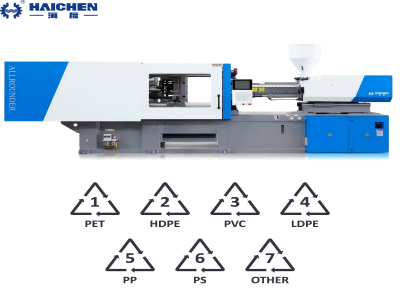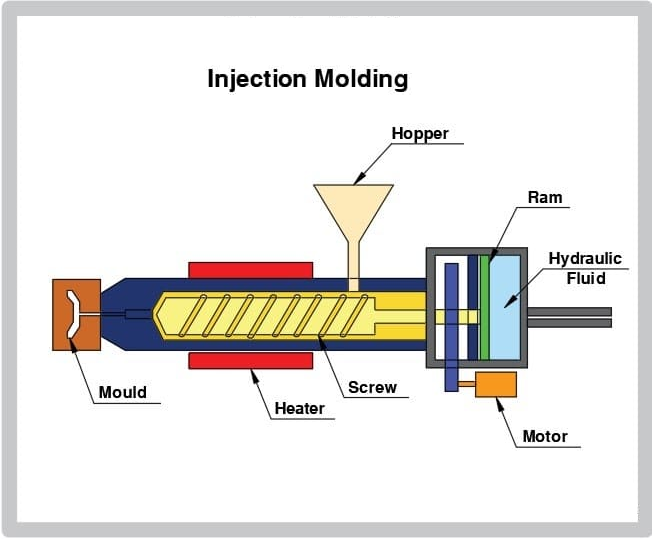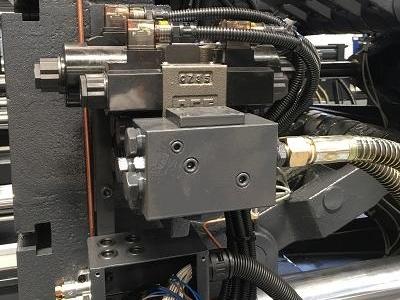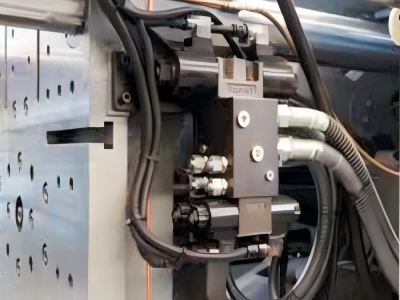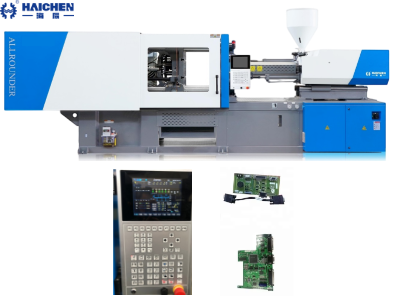
Injection machine Cooling System is the a key component In injection molding progress.They have a number of specialised type distinctions for different applications.
The injection moulding cooling system plays a vital role in the injection moulding process, directly affecting product quality and production efficiency. The cooling phase accounts for about 60-70% of the injection moulding cycle. Reducing cooling time and improving cooling efficiency will increase injection moulding productivity. In order to achieve this, two key elements are required: the correct design of the injection mould cooling system and the ideal cooling method.
In this article, we will take a closer look at the key role of the injection moulding cooling system and guide you through the process of selecting the best solution for your project.
There are various types of cooling systems for injection molding machines with different uses.
Common categories of injection molding cooling technology
Its types mainly include the following:
- Water cooling system
- Air Cooling System
- Thermal Conduction System
- Conformal cooling system
- High thermal conductivity material systems
- Compressed gas cooling system
- Mechanical cooling system
Water cooling system
This is the most common type of cooling, where heat is absorbed by circulating cooling water through cooling channels within the mould.
Water-cooling systems are widely using due to their high efficiency and good heat removal capability.
Air Cooling System
Air-cooling systems use fans or blowers to dissipate heat away from the mould surface.
This type of system is usually using in when rapid cooling is required or when there is insufficient space within the mould for effective water cooling.
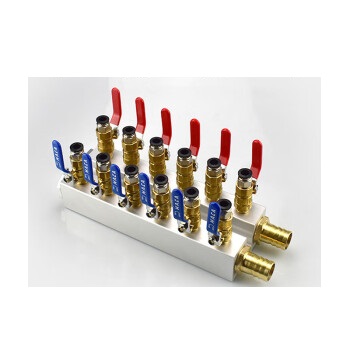
Thermal Conduction System
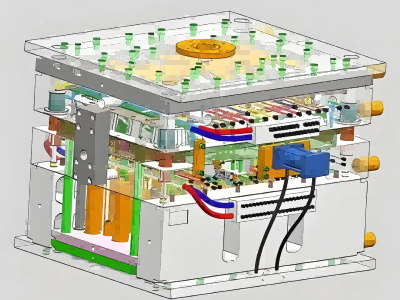
Thermal conductivity systems transfer heat from the mould to the cooling medium through direct contact.
This system relies on close contact between the cooling channels and the mould for efficient heat exchange.
Conformal cooling system
This system is designed with cooling channels that match the geometry of the mould to distribute heat more evenly.
This reduces cooling time and improves product quality. Conformal cooling systems are particularly suitable for mould designs with complex shapes.
High thermal conductivity material systems
The cooling effect is enhanced by the use of materials with high thermal conductivity (e.g. copper).
This method can significantly improve the cooling efficiency of the mould, but the cost is higher.
Compressed gas cooling system
The use of compressed gas as a cooling medium, through the forced convection to reduce the temperature of the mould.
This method is suitable for some special applications.
Mechanical cooling system
Includes the use of equipment such as compressors or air compressors to provide a cooling medium for efficient heat transfer.
Each type of cooling system has different advantages, disadvantages and applicable scenarios. Selecting the right cooling system is essential to optimise the injection molding process.
Types of water cooling systems for injection molding machines
Injection molding machine water-cooling system is a common cooling system, depending on the linkage varies.
There are mainly the following five common types:
- Air-cooling chiller
- Water-cooling chiller
- Water-cooling box-type chiller
- Open-type chiller
- Combined cooling system
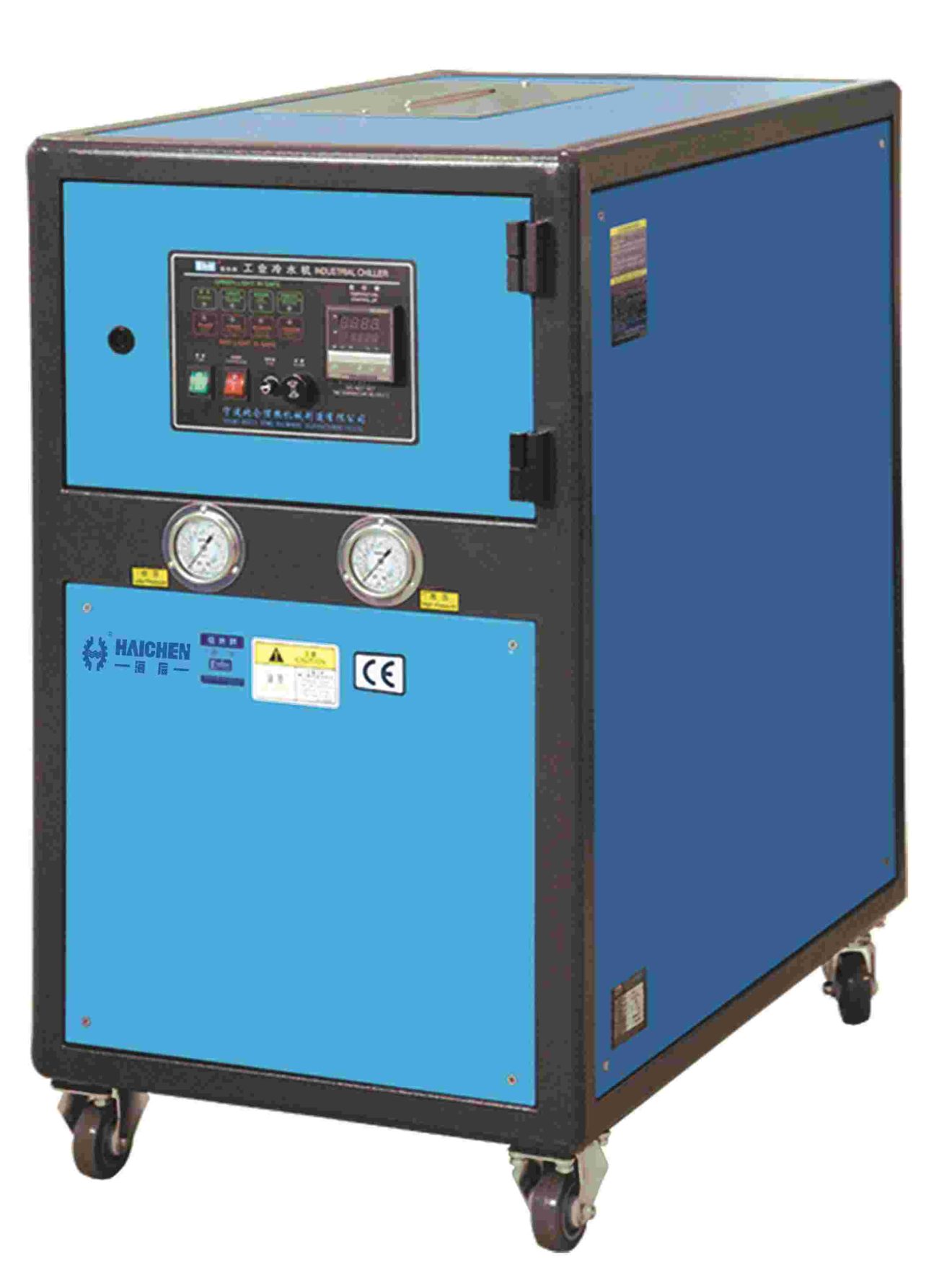
Air-cooling chiller
This type of chiller does not need an additional cooling water tower.
It is equipped with an insulated water tank and water pump inside, which is easy to install and move, but requires high ventilation of the working environment.
If used in a clean room with humidity requirements, it may produce more water vapour.
Water-cooling chiller
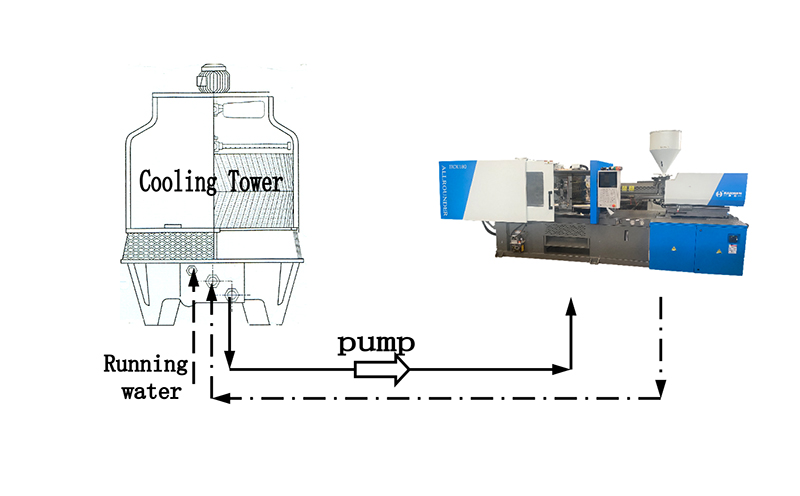
This type of chiller requires additional cooling water tower to achieve good cooling effect.
Water-cooling chillers are usually used in occasions where large cooling capacity is required.
Its cooling capacity is related to the clamping force of the injection moulding machine and the injection volume.
Like a 1HP water-cooling chiller can correspond to an injection molding machine with a clamping force of 80 tons.
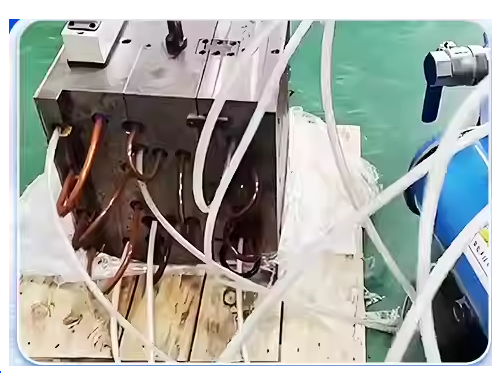
Water-cooling box-type chiller
This type of chiller is suitable for peripheral and centralised cooling of the molding machine.
There is no need for additional water tanks and pumps.
But need to configure cooling water tower cooling.
Water-cooling box chillers are usually used for large-scale centralised cooling systems.
Open-type chiller
Also known as water-cooling open type, suitable for larger centralised cooling.
Need to add insulation tanks and pumps, and configure the cooling water tower for heat dissipation.
Combined cooling system
This type of system includes cooling devices for both fixed and moving moulds.
Through the multi-dimensional cooling pipe design (such as spiral, plane vortex, arc and jet pipe, etc.) to achieve the hierarchical cooling of plastic parts.
to improve moulding quality and productivity.
Each type of water cooling system has its own specific application scenario and advantages and disadvantages.
We will decide to choose the right type of water cooler based on specific injection molding machine production requirements, environmental conditions and cost considerations.
Types of air cooling systems for injection molding machines
The main heat-conducting medium of the air cooling system of the injection moulding machine is air.
It cools all parts of the injection molding production by accelerating the circulation of air.
We list five main types of air cooling:
- Air-cooling chiller
- Finned Air Chiller (Air Chiller)
- Air-cooling servo drive
- Air-cooling equipment combined with air-conditioning systems
- Natural air cooling
Air-cooling chiller
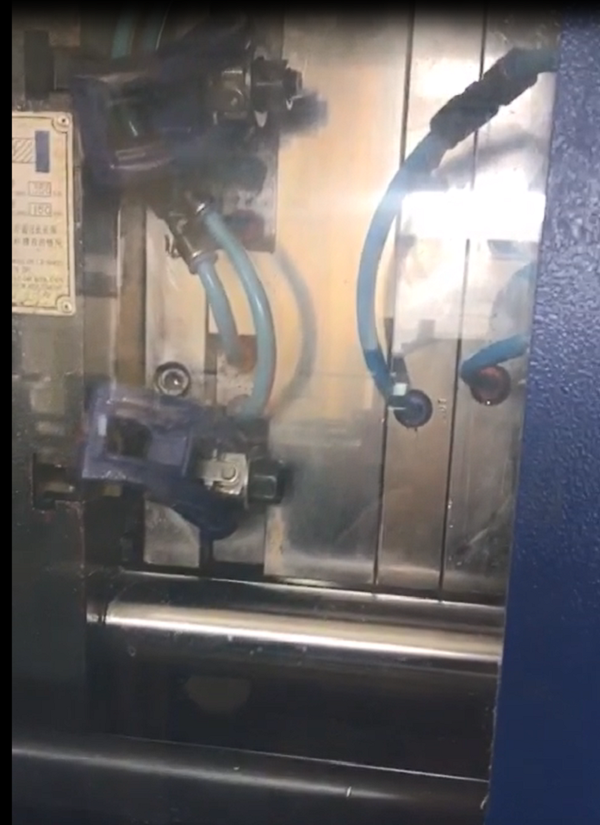
This type of system cools the mould by circulating air through a fan or blower.
Air-cooling chillers do not require additional cooling water towers and are easy to install and move.
However, it requires high ventilation of the working environment to ensure good cooling effect.
Finned Air Chiller (Air Chiller)
This system uses a finned condenser.
It is characterised by fast heat conduction and good heat dissipation without cooling water.
It is suitable for occasions that require precise temperature control.
Air-cooling servo drive
In some high-end injection moulding machines, air-cooling servo drives are used to achieve fast response and precise control.
This type of device is activated when movement is required and pressure is built up, while maintaining low energy consumption during non-operating conditions.
Air-cooling equipment combined with air-conditioning systems
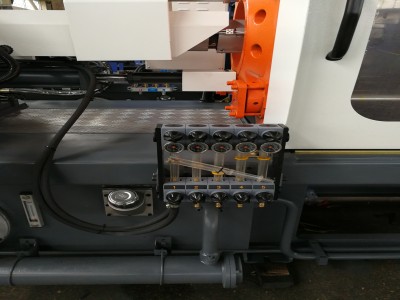
In some injection molding plants, air-cooling equipment is used in combination with air-conditioning systems.
The temperature of the workshop is lowered through the circulation of indoor fans and outdoor freezers to ensure that there is no condensation on the surface of the moulds.
This improves production efficiency.
Natural air cooling
Some small or process-specific injection molding machines may use natural air cooling.
Cooling is carried out through the fan that comes with the mould or the air cooling device that comes with the equipment.
These injection moulding machine air cooling systems have their own advantages and disadvantages.
Choose the right type according to the specific injection moulding machine model, production scale and the requirements of the working environment.
Injection Molding Machine Conformal Cooling System
The injection moulding machine follow-shape cooling system is an advanced mould cooling technology designed to improve injection molding efficiency and product quality.
Conformal cooling is achieved by designing cooling channels in the mould to match the shape of the part.
This results in more uniform temperature distribution and faster cooling rates.
This offers significant advantages over traditional linear cooling channels.
- Advantages of the shape-matching cooling system
- Design and Manufacturing of Conformal Cooling System
- Application Examples
Advantages of the shape-matching cooling system
Improve cooling efficiency:
Conformal cooling systems can take heat away from the mould more efficiently, shortening the molding cycle.
For example, in an automotive dashboard injection mould, the mould reaches demoulding time in 29 seconds with the use of a follower cooling channel, a reduction of 317 seconds compared to traditional cooling methods.
This rapid cooling not only improves productivity, but also reduces energy consumption.
Improve product quality:
The follow-through cooling system enables a more uniform temperature on the surface of the mould cavity, which reduces warpage deformation and internal stresses.
For example, in one study, the Conformal Cooling Pipeline solution improved mould cavity surface temperature uniformity by 24.54% and reduced warpage.
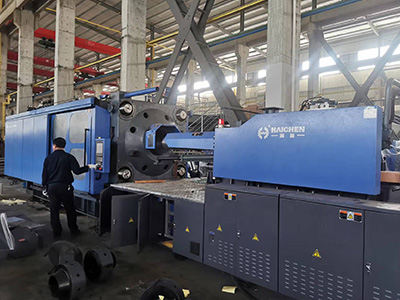
Reduction of defects:
Conventional cooling methods are prone to cause warping, cracking, flying edges and other defects in moulded parts.
The Conformal Cooling System can significantly reduce the occurrence of these defects due to its uniform cooling effect.
For example, in the study of headlight housing, the follow-shape cooling design makes the temperature field distribution of the mould more uniform and reduces the warping and deformation of the products.
Design and Manufacturing of Conformal Cooling System
Design method:
The design of follow-through cooling channels needs to take into account the complex shape of the mould and the cooling requirements.
Commonly used methods include finite element analysis (FEA) and computational fluid dynamics (CFD) simulations.
For example, mould flow analysis using Moldflow software can optimise the design of cooling waterways for optimum cooling.
Manufacturing techniques:
Conformal cooling waterways are typically go through additive manufacturing techniques such as selective laser melting (SLS).
This technique allows complex cooling channel structures to be manufactured quickly and accurately.
For example, the use of SLS technology to manufacture follow-on cooling channels not only improves productivity, but also ensures the mechanical properties of the mould.
Optimised design:
Despite the many advantages of follow-through cooling systems, there are still challenges in their design and manufacture.
For example, the optimal design of follow-on cooling channels requires consideration of cooling efficiency, mould life and manufacturing costs.
Research has shown that the performance of follow-through cooling systems can be further improved through proper design optimisation.
Application Examples
Automotive parts:
In the production of components such as automotive dashboards and mirror housings, follow-through cooling systems have significantly shortened molding cycles and improved product quality.
For example, one study showed that automotive mirror housings were moulded in nearly two-thirds shorter time using follow-through cooling channels.
Medical devices:
In the production of precision parts such as medical nebuliser nozzles, the Conformal Cooling System solves the problems of large temperature differences and low cooling efficiency brought about by traditional cooling methods.
The study shows that the follow-shape cooling waterway solution shortens the ejection time by 29.1% and reduces the surface temperature difference by 49.3%.
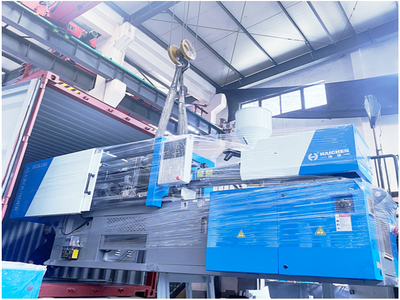
By optimising the mould cooling process, the Haichen injection moulding machine follow-the-shape cooling system significantly improves production efficiency and product quality.
With the development of additive manufacturing technology and the advancement of simulation and analysis tools, the application of the Conformal Cooling System is promising.
Haichen injection molding machine future research continues to explore more efficient optimisation of design methods and manufacturing processes.
This will further enhance the performance and application scope of the Conformal Cooling System.