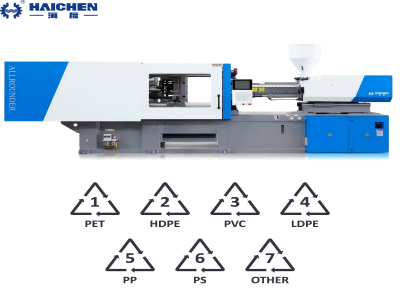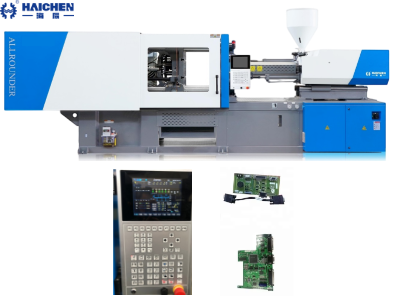
PVC injection molding machine is a special equipment used to process polyvinyl chloride (PVC) plastic raw materials.
Several technical parameters and process conditions must be considered when selecting and using a PVC injection molding machine.
When it comes to injection temperatures, the common range is 165-185°C. The mold temperature is generally controlled between 45-65°C.
The melt temperature should be kept between 160-185°C to ensure that the PVC material can be fully melted without decomposing. Injection pressure is also an important parameter, usually between 50-80MPa.
The back pressure is adjusted according to the specific needs but generally does not exceed 0.5MPa.
PVC plastic raw materials
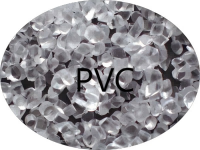
Since PVC is a heat-sensitive plastic raw material, too high a melting temperature or too long heating time can easily cause PVC to decompose, so controlling the melting temperature is key.
In addition, in the actual operation process, it is also necessary to pay attention to raw material handling, mold design, and mechanical factors to avoid molding defects such as short shots, dents, flashes, etc.
Normally, PVC plastic raw materials do not need to be dried. However, if the plastic raw material is wet, it needs to be dried below 70°C for 1 hour.
In addition, some more demanding products may need to be dried at a temperature of 90-100°C for 1-2.5 hours.
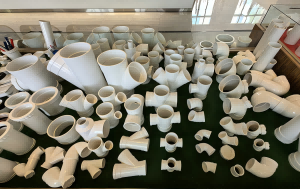
Advantages of PVC injection molding machine
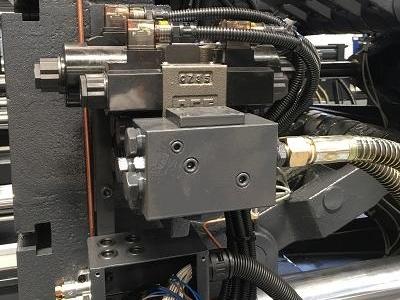
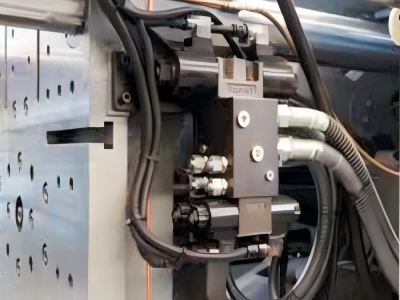
The specific advantages of PVC injection molding machines with servo motors and hydraulic systems are as follows:
High precision and repeatability
The servo motor adopts a closed-loop control system, which can achieve high-precision position control and meet the requirements of the injection molding machine for product dimensional accuracy.
This high precision and high repeatability ensures precise control and fast response of the injection process, which in turn improves the quality and production efficiency of the product.
Energy-efficient and efficient
The servo-motor-driven injection molding machine avoids the energy losses inherent in the hydraulic system, such as oil pressure loss, hydraulic valve resistance, etc., and significantly reduces energy consumption.
According to statistics, the energy consumption of an all-electric injection molding machine is only 30%-50% of that of a hydraulic injection molding machine.
In addition, the servo motor system can stop working during the cooling phase, further saving energy.
Responsive and efficient of PVC injection molding machine
The servo motor has a high response speed, which can complete the position adjustment in a short time, and improve the production efficiency of the injection molding machine.
For example, in some cases, the ramp-up and deceleration time of the servo motor is ≤ 0.1 seconds, and the pressure change can be as fast as 30ms, which greatly improves production efficiency.
Eco-friendly and clean
The all-electric injection molding machine does not require hydraulic oil, reducing the risk of oil leakage and contamination, while reducing noise emissions and meeting the environmental requirements of modern manufacturing.
The servo motor system can also reduce the hydraulic oil temperature, reduce the amount of cooling water by more than 30%, and even eliminate the need for water cooling in some cases.
Intelligent control system of PVC injection molding machine
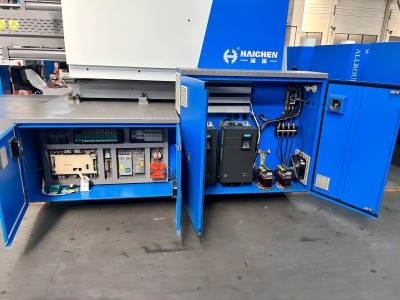
PVC injection moulding machines equipped with intelligent control systems simplify operation and facilitate parameter configuration and process monitoring.
These systems provide an intuitive interface that simplifies the monitoring and control of the molding process, increasing ease of operation and safety.
Structural Stability and Service Life
The combination of the servo motor and hydraulic system enhances the structural stability of the injection molding machine and prolongs the service life of the equipment.
For example, the torque overload multiple of the servo motor is ≥ 200%, the state transition is flexible, and the speed and torque control are smoothly switched.
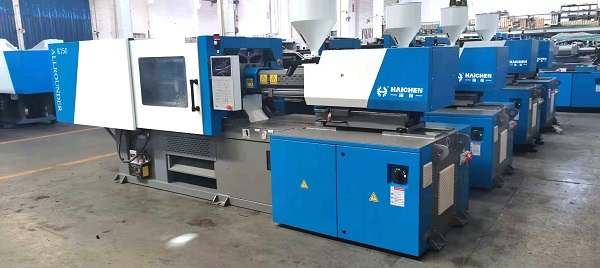
Haichen PVC injection molding machine
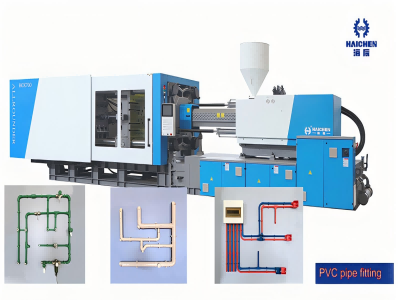
There are significant differences between Haichen PVC injection molding machines and Haichen ordinary injection molding machines in terms of design and function, which are mainly reflected in the following aspects:
Material properties: PVC is a heat-sensitive plastic raw material that is easy to decompose, so it requires special treatment.
Haichen Ordinary injection molding machines are often not optimally designed for this material.
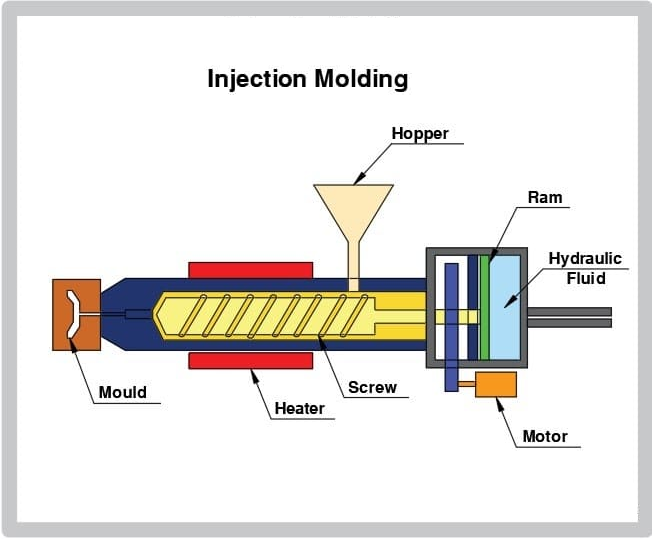
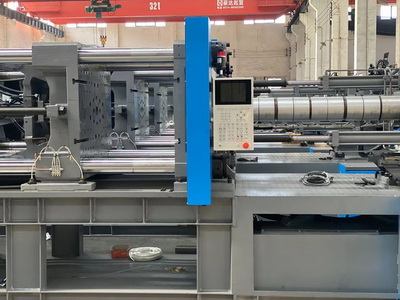
Screw and barrel: The screw and barrel of the Haichen PVC special injection molding machine are made of corrosion-resistant materials, and usually have a pointed screw and no check ring.

This is because PVC melt is viscous and easily decomposed, and the use of a non-reverse ring will cause the material to stay in the barrel for too long and scorch and carbonize.
Temperature control: Due to the poor thermal stability of PVC, the forming temperature is close to the dissolution temperature, and the circulation is not good, so the PVC injection molding machine needs to strictly control the process temperature to avoid the material staying at high temperature for a long time.
Cooling system: Haichen PVC injection molding machines are usually equipped with a multi-stage barrel air cooling device to precisely control the material temperature to meet the needs of various products.
Equipment performance: Haichen high-performance PVC injection molding machines are also equipped with advanced technologies such as servo motors, flow rates, and low-voltage double closed-loop control to improve product repeatability and production efficiency.
Application of PVC injection molding machine
Although there is no obvious difference between a PVC injection molding machine and an ordinary injection molding machine in basic structure, in practical application, a PVC injection molding machine is more suitable for processing PVC plastic raw materials, while an ordinary injection molding machine can be used for processing a variety of plastic materials.
In summary, the design and function of the Haichen PVC injection molding machine are specially optimized to meet the special requirements of PVC materials, such as corrosion resistance, precise temperature control, and rapid cooling.