Precautions of Injection Mould installation include cleaning the mold and machine, inspecting for damage, aligning properly, testing,etc.
Installing a plastic injection mould properly is something that really matters—it directly impacts product quality, keeps production running smoothly, and protects operators’ safety.
When you get this step right, you’ll avoid damaging both the mould and the machine, while also cutting down on costly downtime and maintenance.
At HAICHEN, we’ve spent years installing moulds for our injection molding machines, and we’ve learned what works. Here are practical tips to guide your team through the process.
In this article, we will explore the key precautions to take when installing a plastic injection mould.
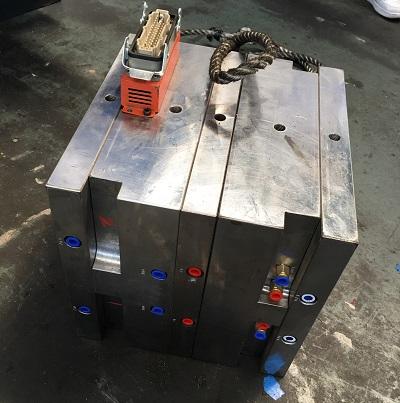
Precautions of Injection Mould installation
- Clean the Mold and Machine
- Inspect the Mold for Damage
- Align the Mold Properly
- Secure the Mold
- Test the Mold
- Lubricate Moving Parts
- Follow Safety Protocols
Clean the Mold and Machine
Before installing the mold, remember to clean the mold and the injection molding machine thoroughly. Clean off any dust, debris or residue on them, as these things will affect the normal operation of the mold. This step is particularly important and must not be sloppy. Do not let the dirt dirty the product or affect the product quality. At the same time, it also ensures that the mold can be installed tightly and firmly.
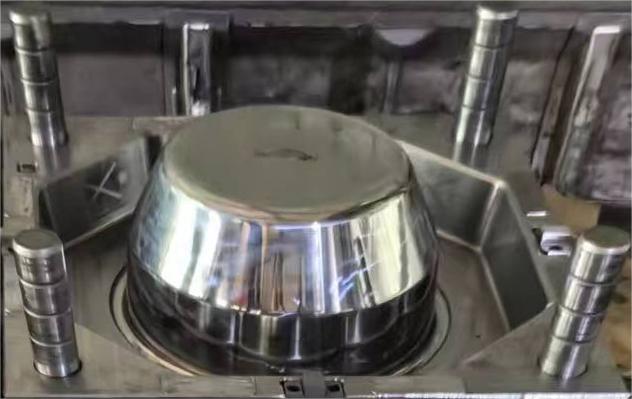
Inspect the Mold for Damage
Before installation, be sure to fully check the mold status:
- Damage inspection: Carefully check whether there are cracks, wear or deformation marks on the mold surface. If damage is found, the installation must be suspended. Such problems will directly lead to defective parts and production line interruption.
- Lifting safety:
- Confirm that the lifting screws use the specified specifications and check for cracks or deformation
- The wire rope must be free of rust and broken strands, and the size must meet safety standards
- During operation, personnel are strictly prohibited from being directly under the mold
- Installation surface treatment:
- Remove dust, oil and other foreign matter from the installation surface
- Ensure that the injection molding machine table is flat and has no bumps
- Fastenance specifications:
- Preferentially use designated bolts for direct installation
- Molds above 1 ton require at least 8 bolts on each side, and molds below 1 ton require 4
- When using a pressure plate, the support strength must be matched according to the weight of the mold
Align the Mold Properly
When installing the mold, be sure to ensure that it is accurately aligned with the injection unit and clamping unit of the injection molding machine. If there is a positioning deviation, it may cause uneven filling of the mold cavity, which in turn causes product defects (such as sink marks or flash). The following steps should be performed during operation:
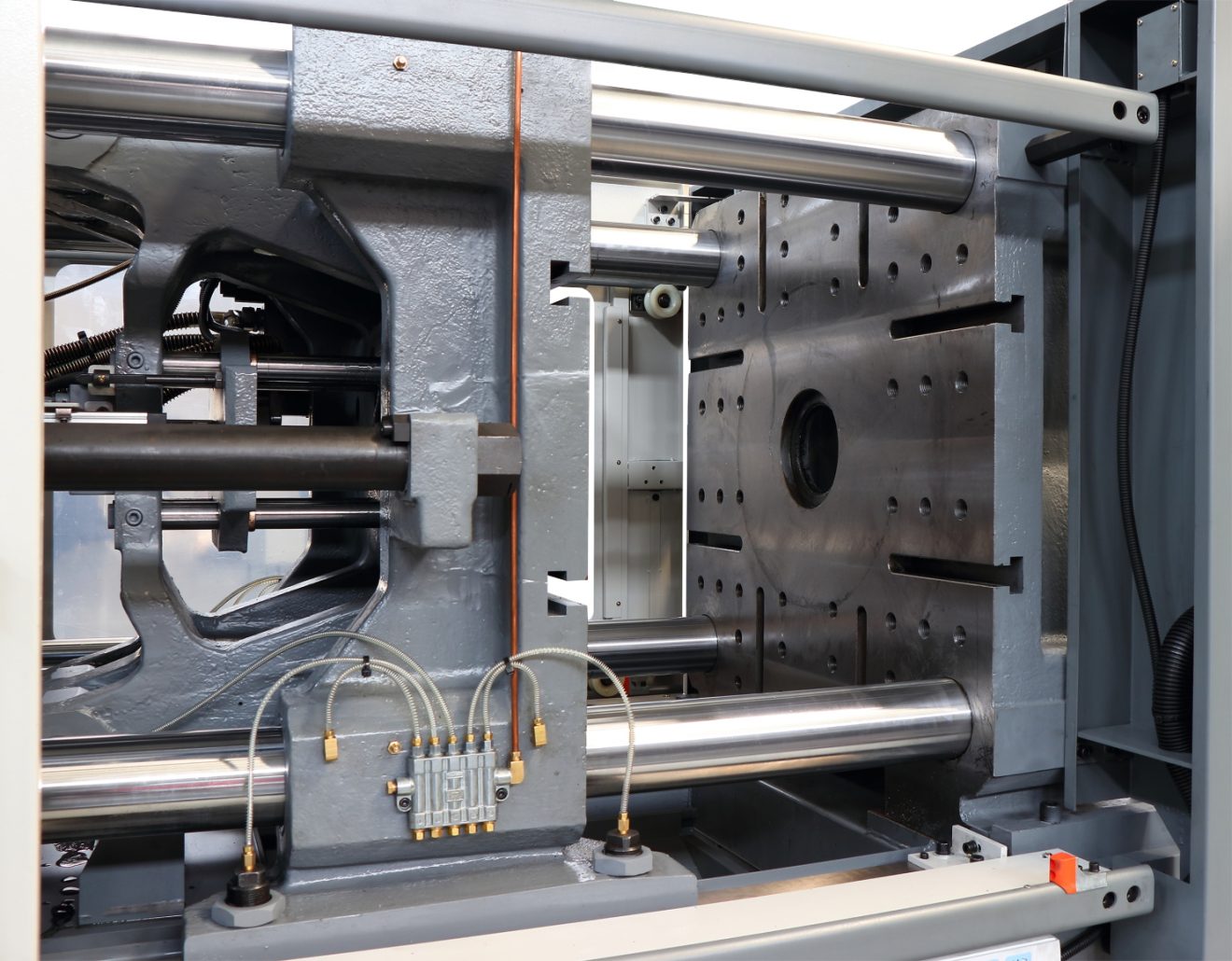
- Location ring calibration: Align the mold’s locating ring with the locating hole of the injection molding machine template to ensure that the center axes of the two are completely overlapped.
- Press plate fixation: Use the press plate to firmly fix the mold on the movable template and the fixed template. The bolts must be tightened evenly to avoid tilting the mold due to uneven force.
- Bolt specification: Select the number of bolts according to the weight of the mold (4 bolts per side for molds ≤1 ton, 8 bolts per side for molds >1 ton), and give priority to the direct connection bolts specified by the injection molding machine. Use the press plate fixation only when space is limited.
- Cleaning inspection: Before installation, it is necessary to confirm that there is no dust, foreign matter or unevenness on the mold installation surface, otherwise it may affect the positioning accuracy.
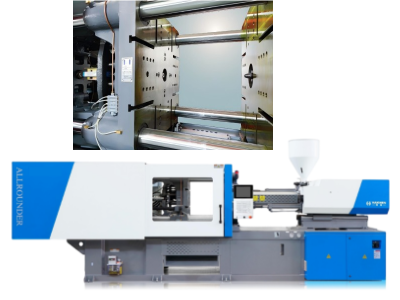
Secure the Mold
After the mold is aligned with the injection molding machine, it is necessary to tighten it immediately. Select bolts or clamps that match the mold specifications and tighten all fixing points evenly in stages. During the installation process, the fit between the mold and the workbench should be checked repeatedly to ensure that there is no shaking gap. If the tightening is not sufficient, the mold may move during the injection process, which directly affects the dimensional accuracy and surface quality of the molded part.
Test the Mold
After installation, please immediately perform the following test process:
- Test run the mold
- Start the equipment idling test to observe whether the opening and closing of the mold is smooth, and focus on checking whether the ejection system such as the ejector and the inclined ejector can be reset normally. If there is a jam or abnormal noise, it is necessary to suspend debugging (reference).
- Inspect the seal and finished product
- After the first injection molding:
- Check whether there is overflow (leakage) on the mold parting surface
- Measure the weight difference of the first 5 products (required ≤2%)
- Confirm whether the ejection mechanism can be completely demolded to avoid deformation of parts
- Parameter tuning
- Adjust according to the test mold results:
- Injection pressure/speed → Solve the problem of insufficient filling or flash
- Cooling time → Ensure the stability of product size (retest 15 minutes after cooling)
- Pressure holding time → Eliminate shrinkage marks
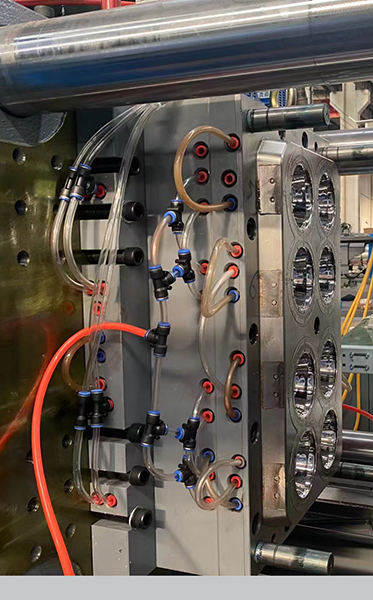
Lubricate Moving Parts
Remember to oil all the moving parts of the mold and injection molding machine, such as the key positions of the ejector pin, slider, and guide pin. With proper lubrication, the equipment will run more smoothly and can effectively prevent premature wear of parts.
Note during operation:
- Lubricant selection: Be sure to use the special grease specified by the manufacturer, ordinary engine oil may corrode the seal ring;
- Lubrication frequency: Refill oil every 8 hours of production, and shorten to 4 hours in high temperature environment;
- Safety details: Stop the machine before refilling, and use a brush to clean the plastic debris on the track to prevent impurities from mixing into the oil circuit;
- Key parts: Guide pins and inclined guide grooves should be maintained, as wear in these places will directly affect product accuracy.
Follow Safety Protocols
When installing the mold, please be sure to follow the safety regulations throughout the process. Remember to turn off the power of the equipment and lock it before operation to prevent others from accidentally starting the machine. At the same time, wear protective gloves, goggles and other equipment. These measures can directly protect your safety.
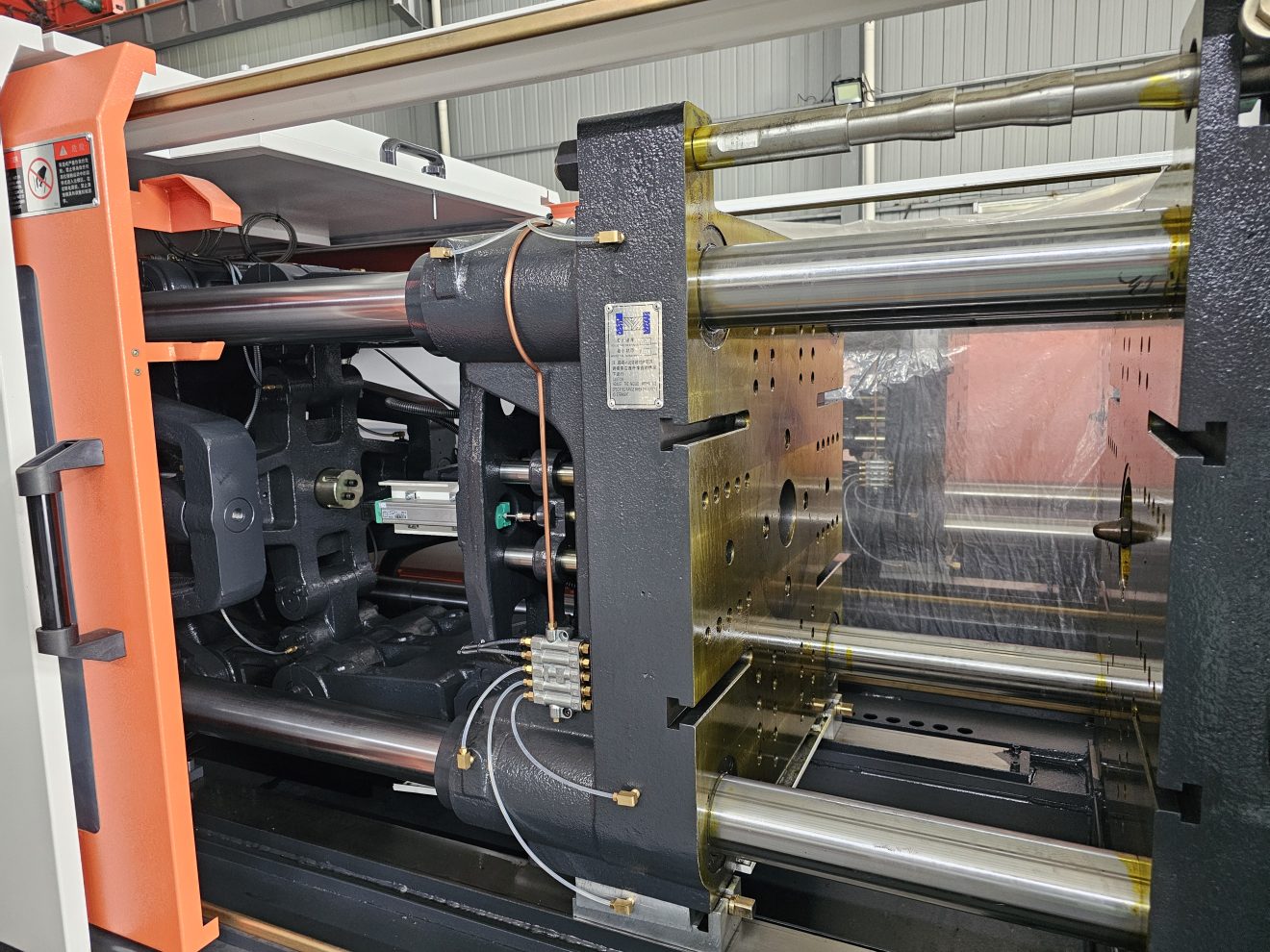
Installation troubleshooting plan
| Fault type | Cause analysis | Solution |
| Mold is not tight. | Positioning ring is offset/template is not flat. | Recalibrate the center line and polish the template. |
| Cooling pipeline leaks. | Sealing ring is aged/thread is not tightened. | Replace the fluororubber sealing ring and increase the torque to 30Nm. |
| Ejector mechanism is stuck. | Guide pin is not lubricated enough or deformed. | Apply high-temperature grease and correct the straightness of the guide pin. |
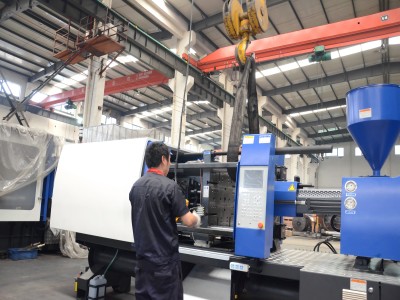
HAICHEN: Injection Molding Machine Manufacturer
As an injection molding machine manufacturer, we are well aware of the stringent requirements of industrial production. Therefore, each of HAICHEN‘s equipment is built with cutting-edge technology to ensure stability and reliability in long-term high-intensity operation. We provide a variety of injection molding machines, whether it is the installation of precision molds or the operation of complex processes, which can accurately match your production needs.
After purchase, you will enjoy comprehensive service support: the technical team will respond to equipment problems at any time, quickly supply original spare parts, and customize operation training programs for you. Our goal is to maximize the value of your investment-the equipment operates efficiently and production is worry-free.
In Thailand, the demand for efficient and reliable injection molding solutions is growing. Thai manufacturers are increasingly looking for machines that can produce high-quality parts at a competitive cost.
Only by taking every step of the injection mold installation seriously can the mold and the injection molding machine work smoothly and last for a long time. As long as the cleaning inspection, alignment, firm fixation, startup test, and timely refueling are done well, and the safe operation specifications are remembered, there will be fewer problems and less delays in production.