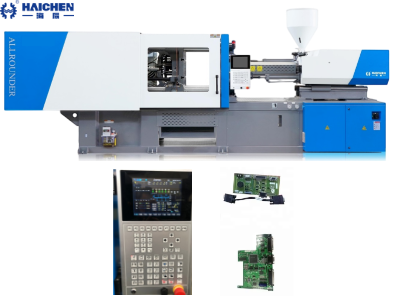
The CE standard is a requisite certification from the European Union. It also serves to demonstrate compliance with the Union’s safety, health, and environmental regulations.
The CE mark indicates that your product is in compliance with European product legislation. It is mandatory for all manufacturers whose products fall within the applicable CE directives and regulations. Then to get CE certification before they can access the European market. lf an importer markets the product under its own name. It will regard as the legal manufacturer and bear the same responsibility as the original equipment manufacturer (OEM). And it must apply the CE marking itself.
As CE mark of plastic injection molding machines is important for the European Union(27 countries) and Turkey markets. Only CE marking for plastic injection molding machines can export to these countries.New CE EN standard for plastic injection molding machine mainly from below 5 aspects:
- CE Specific technical requirements
- Core CE EN standard for injection molding machines
- New CE standard implementation schedule
- Haichen New CE Certification
- CE mark for injection molding machine
CE specific technical requirements
In the EN standard released on September 3, 2024, the specific technical requirements for plastic injection molding machines mainly focus on safety and functionality. According to the requirements of EN 201 standard (usually related to EN ISO 20430:2020), the design and manufacturing of plastic injection molding machines must meet the following key points:
Mechanical structure safety
The mechanical structure of injection molding machines must ensure strength, stability, and reliability of protective devices to prevent mechanical failure or structural damage under normal working conditions.
Control system safety
The control system should have a fail safe mode. To ensure that the injection molding machine can safely shut down in the event of a control system failure. In addition, an emergency stop button should install and ensure that it can effectively operated at all times.
Electrical safety
Electrical systems must comply with relevant electrical safety standards to prevent safety risks such as electric shock and fire.
Injection molding process safety
Standards may include safety requirements for the injection molding process, such as temperature control, pressure control, etc., to ensure stability and safety during the injection molding process.
Human machine interface design
The operating interface should design to easily understand and operate, prevent misoperation. And it should equip with dual hand control devices or other control methods to ensure operator safety.
Protective devices
Injection molding machines must equip with protective devices. To prevent personnel from coming into contact with hazardous areas such as moving parts and high-temperature zones. This includes fixed protective covers, movable protective covers, and interlocking devices.
List of Major Hazards
The EN 201 standard covers the hazardous areas of plastic injection molding machines, such as the mold clamping device area, injection nozzle area, and feed inlet area, which may cause mechanical or heat source injuries to on-site personnel. The new national standard requires the use of electric protective devices and light curtains to ensure personnel safety.
Safety performance level
Adopting the safety performance level specified in GB/T16855 to ensure that the injection molding machine can provide sufficient safety protection under various operating conditions.
Interlock protection device
In the mold closure mechanism area, an interlock protection device should use to prevent personnel from entering the hazardous area.
Light curtain protection
In the mold closure mechanism area, a light curtain protection should install to cover the entire area to prevent personnel from entering the danger zone.
These requirements aim to ensure the safety of operators and the surrounding environment during the design, manufacturing, use, and maintenance of plastic injection molding machines.
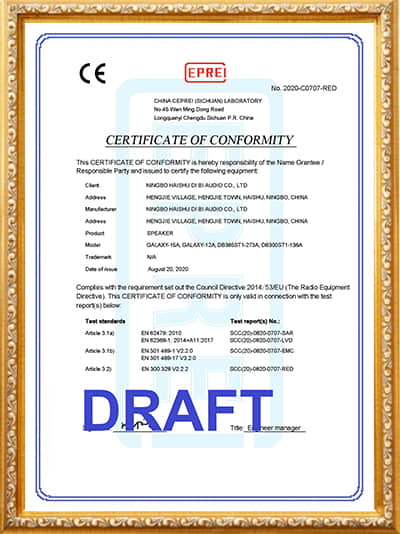
Core CE EN standard for plastic injection molding machines
The CE certification of plastic injection molding machines is actually based on EN ISO 20430:2020 (commonly referred to as EN 201 standard). This standard is the current EU and internationally recognized safety standard for injection molding machines, with core requirements including:
- Mechanical structural safety:Ensure equipment strength, stability, and protective devices (such as fixed/movable protective covers) to prevent accidental damage to mechanical components during operation.
- Control system security:
Fail safe mode must be adopted to ensure automatic shutdown of equipment in case of system failure.
The emergency stop button must be activated immediately in any situation. - Electrical safety: comply with relevant electrical standards to prevent risks such as electric shock and fire.
- Injection molding process safety:
Install protective devices for high temperature (nozzle area) and high pressure (mold clamping area) areas.
If the movement of the screw/plunger is accidentally interrupted, a visual or auditory alarm should be triggered. - Interface:
The operation interface needs to prevent misoperation, and high-risk areas (such as mold closure areas) need to be equipped with dual hand control devices or light curtain protection (PLr=d level).
Reference note: EN ISO 20430:2020 is explicitly referred to as the “only reference standard for CE model design”, and the Chinese standard GB/T 22530-2022 is equivalent to this international standard.
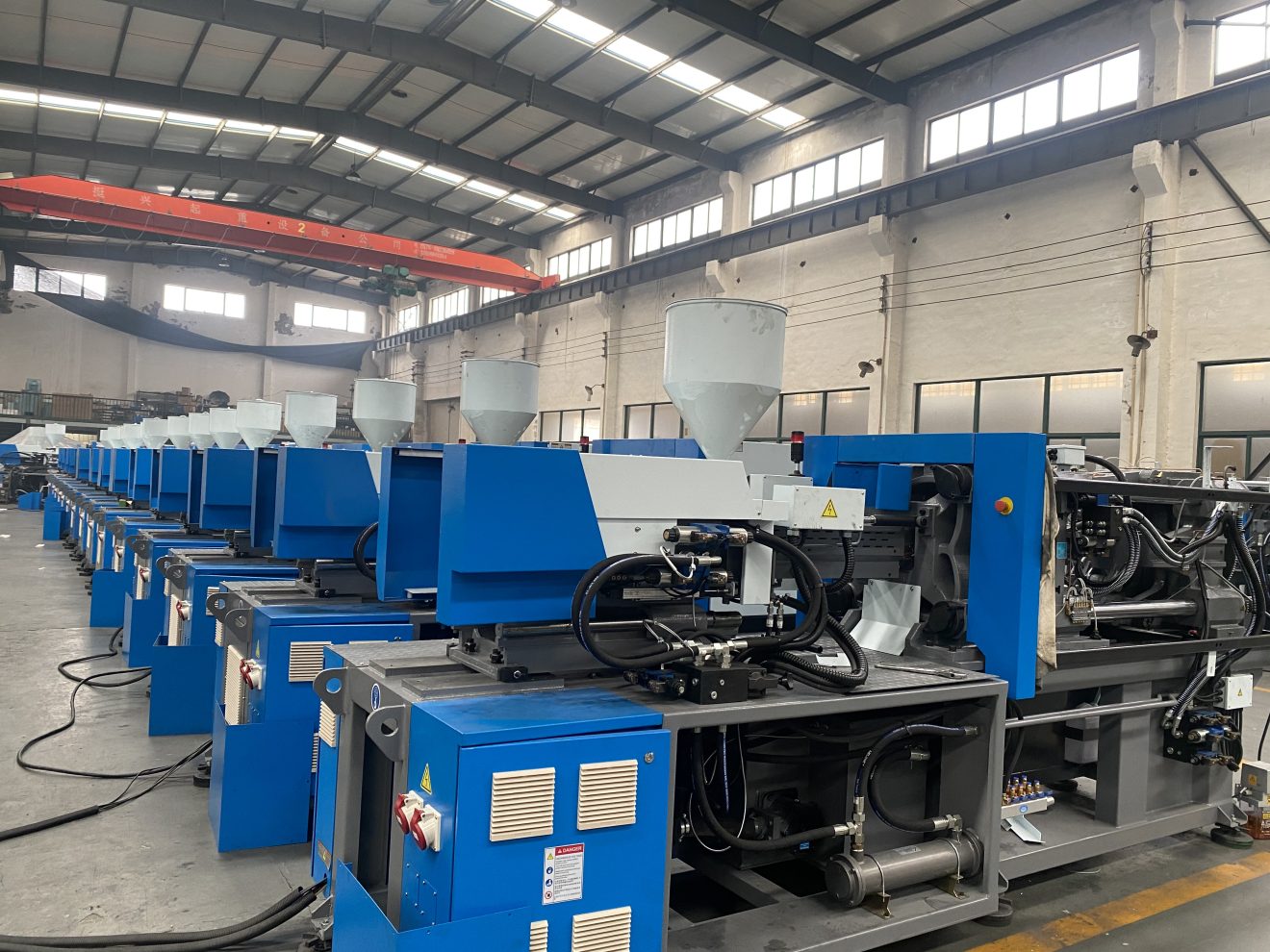
New CE standard Implementation Schedule
For Newly Released Standards in 2024 (Referring to Similar Standards)
Although the plastic injection molding machine standard was not updated on September 3, 2024, the implementation process of similar standards (such as EN ISO 18497-1:2024) released during the same period can be used as a reference:
Release date: August 28, 2024 (using EN ISO 18497-1 as an example).
>Mandatory implementation date: November 30, 2024.
>Old version expiration date: February 28, 2025 (products that meet the old version standards are allowed to circulate during the transition period).
>Compliance reminder: After the implementation of the new standard, injection molding machines entering the EU market need to pass the CE certification of the notified body, including risk assessment documents (technical documents), EC conformity declaration, and CE marking.
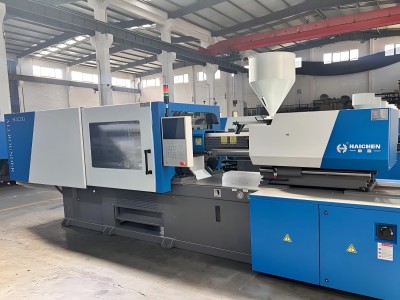
Haichen New CE Certification
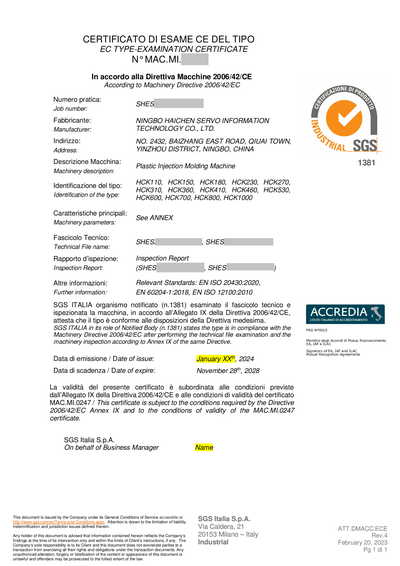
Haichen is one Chinese injection molding machine manufacturer. Our Haichen machinery gets New CE certification from SGS. According to new EN standard-EN ISO 20430:2020, EN 60204-1:2018, and EN ISO 12100:2010. Please see the attached document.
CE market
The plastic injection molding machine has the CE logo that can be freely circulated in the European Economic Zone (EEA).CE market includes the European Union(27 countries) and Turkey markets.
- CE authentication is a pass for plastic injection molding machines to enter the national market of the European Union and the European Trade Free Zone.
- CE authentication indicates that the plastic injection molding machine has reached the security requirements stipulated by the EU instructions.
- CE authentication is a commitment to consumers by enterprises, increasing consumers’ trust in plastic injection molding machines.
CE marking for plastic
The CE marking is a mandatory mark for the European market, used to indicate that the product complies with the requirements of relevant EU regulations and standards. For plastic products, the applicability and specific requirements of the CE mark are as follows:
Plastic injection molding machine
According to the CE mark for plastic. Plastic injection molding machines need to comply with the EU’s CE mark requirements. So that to ensure their legality and safety in the European market. Manufacturers must ensure that the injection moulding standards complies with all relevant EU directives and regulations and affix the CE mark to the product. The use of the CE mark indicates that the product meets the EU’s safety, health and environmental protection requirements.
CE mark for injection molding machine
The CE mark for injection molding machines is a comprehensive compliance mark. That indicates that the product meets the essential requirements of all relevant EU directives and regulations, thus ensuring its legality and safety in the EU market.
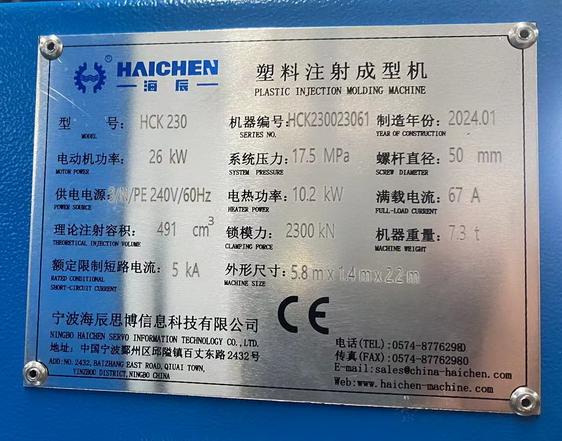
Haichen CE mark nameplate
Affixing the CE mark to a machine
To mark the CE to a machine requires following: a series of steps and requirements.
- Firstly, You need to determine whether your machine is subject to one or more EU directives (such as Machinery Directive 2006/42/EC, Low Voltage Directive, etc.). These directives set out the basic safety and health requirements that machines must meet.
- Secondly, Carry out a comprehensive conformity assessment of the machine according to the applicable directives. This may include steps such as risk assessment, design review, testing, and verification. Conformity assessment should be carried out by the manufacturer himself or through an authorized body.
- Thirdly, The CE mark consists of the initials “CE” and the graphic shown in Annex III. The individual components must have approximately the same vertical dimension and must not be less than 5 mm. The CE mark must be clearly and legibly affixed to the machine, close to the name of the manufacturer or his authorized representative, using the same technical.
CE Certification Service includes a part of the conformity assessment procedure regulated by the Machine Directive for Machinery listed in Annex IV by a notified body. New CE EN standard for plastic injection molding machine. To fulfill European regulations the manufacturer has to undertake a conformity assessment procedure. For the machinery listed in Annex IV in most cases, an EU Type Examination has to be done by a notified body with the right scope of notification. If clients want to import plastic injection molding machines to the European market, welcome to buy our Haichen machine.
Therefore to ensure that the product complies with the relevant directives and standards of the European Union.