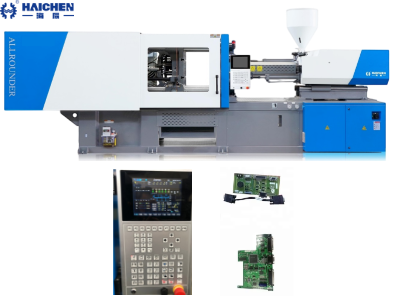
Injection rate in injection molding is the amount of molten material ejected from the nozzle per unit of time.
The unit of injection rate is cm³/s.
The injection rate has a significant impact on the product quality and production efficiency during the injection molding process.
A higher injection rate can reduce injection time, shorten the molding cycle, and improve the surface glossiness and weld line strength of the product, thereby preventing defects such as cooling deformation.
However, if the injection speed is too fast, it may cause problems such as bubbles, burning, and discoloration in the product.
However, a slow injection speed may lead to insufficient molding of the product, resulting in defects such as weld lines.
Injection rate
In injection molding, the injection rate (also called injection speed) refers to the speed at which molten plastic is injected into the mold cavity. It is a critical process parameter that affects part quality, cycle time, and the appearance of the final product.
Importance of Injection Rate in Injection Molding
- Part Quality: A proper injection rate ensures complete filling of the mold cavity without defects like short shots, voids, or weld lines. It also influences surface finish, dimensional accuracy, and mechanical properties.
- Cycle Time: Faster injection rates can reduce cycle time, improving production efficiency.
- Material Behavior: Different plastics have varying flow characteristics. And the injection rate must be optimized for the specific material being used.
- Defect Prevention: Too slow: Can cause premature cooling, leading to incomplete filling (short shots) or visible flow lines. Too fast: Can cause jetting, air traps, or excessive shear stress, leading to part degradation or burn marks.
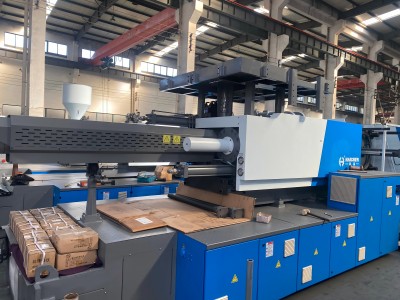
Factors affecting injection molding machine injection rate control
The influence of speed:
The advantages of low-speed mold filling are a stable flow rate, relatively stable part size, small fluctuation, low internal stress of the part, and good consistency of internal and external stress.
However, the disadvantage is that the part is prone to poor stratification and bonding, such as melting point marks and watermarks.
Control method:
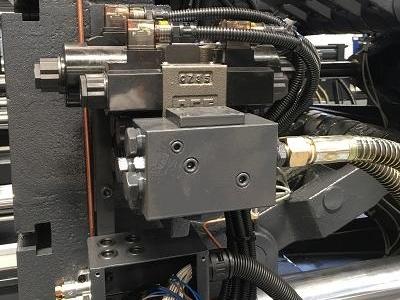
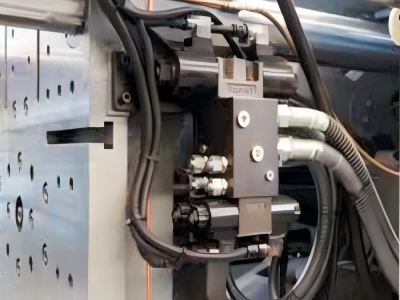
Adjusted by a variety of control methods, including conventional control valve control and servo motor control.
Conventional control valves adjust the injection speed by controlling the valve of oil flow, while servo motor control provides a more precise speed adjustment function.
Multi-stage control:
Injection molding machines usually have multi-stage injection pressure and multi-level injection speed control functions, which can better ensure the quality and precision of the products.
The injection pressure and injection speed can be set and adjusted on the control panel, and the use of multi-stage injection can better meet different production needs.
Mold design:
According to the mold’s geometric structure, exhaust conditions will set the injection speed.
In general, to ensure a good appearance, the injection speed should be increased as much as possible to shorten the filling time.
Material properties:
The viscosity and thermal stability of different plastic materials significantly impact the injection speed.
For example, pre-molding will use for materials with high viscosity and poor thermal stability.
Temperature control:
The melt temperature plays a major role in the flow properties of the melt.
The structure and composition of plastic molecular chains are different, and therefore the effect on their fluidity is also different.
Other process parameters:
Other process parameters in the injection molding process, such as injection pressure, holding time, and cooling time, will also affect the injection rate. Reasonable pressure control and time management help optimize the injection rate.
Principles of injection molding machine injection rate control
Cooperate with the flow of plastic in the mold cavity:
Adjusted according to the size of the cross-section formed when the plastic flows in the mold cavity, usually following the order of “slow → fast → slow”.
Multi-level control:
Modern injection molding machines usually adopt multi-level control, dividing the full injection stroke into 3 or 4 areas, and setting different appropriate injection speeds for each area. For example, low speed is used at the beginning of injection to ensure that the melt can enter the mold smoothly.
Optimization control:
To achieve high-quality injection molded products, injection speed control must be reliable and fast. Researchers have proposed a method based on the combination of control parameterization and particle swarm optimization to achieve optimal tracking control of injection speed.
Adapt to different conditions:
Adjusted according to the product’s structure, shape, size, runner system, plastic properties, and related rheological data.
Quickly confirm the appearance:
In actual operation, try to maintain a faster injection speed to confirm whether there are any defects in the appearance.
In summary, the principle of injection molding machine injection rate control is to ensure product quality and production efficiency through multi-level control, optimization control, and adjustment according to specific conditions.
Haichen injection molding machine technical data of injection rate
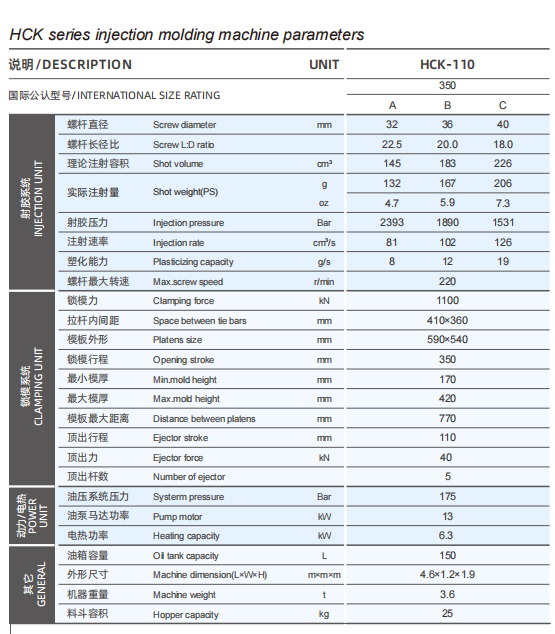
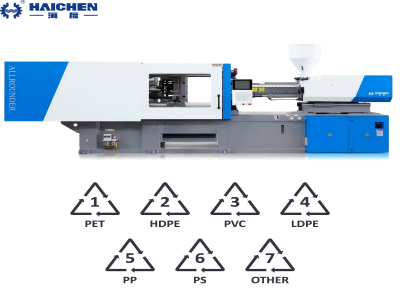
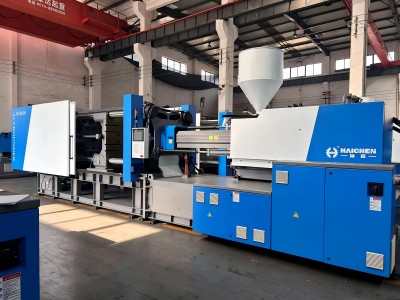
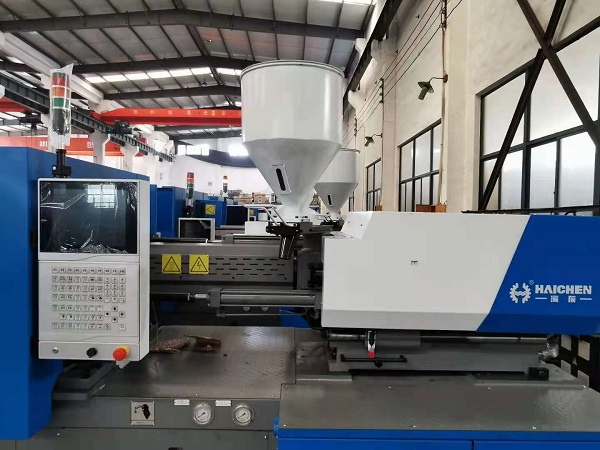
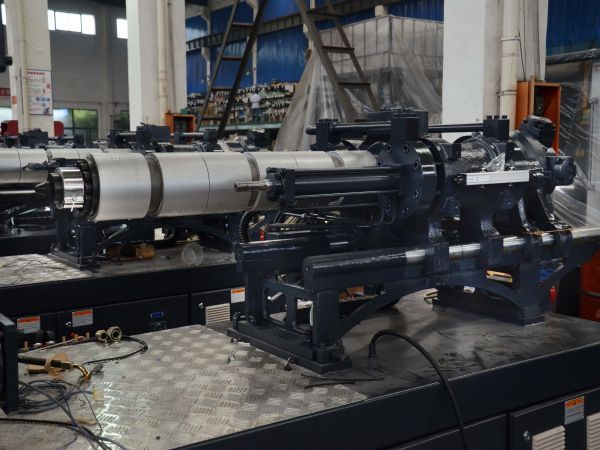
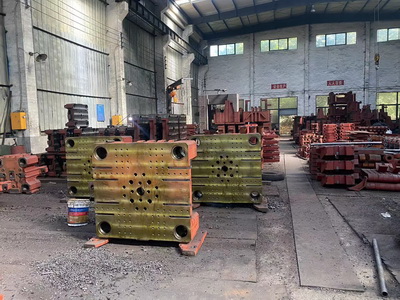
Machinery view of Haichen
Haichen machinery produces highly precise injection molding machines with a clamping force ranging from 50T to 3000T.
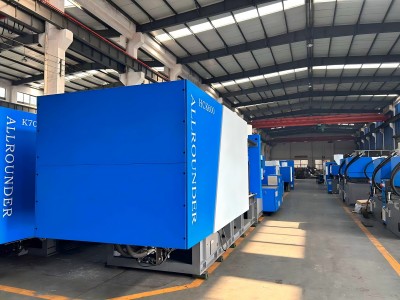
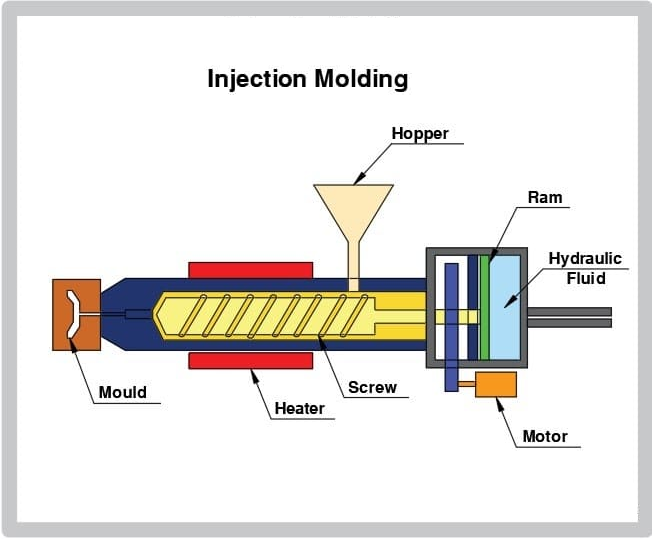
The injection rate control of injection molding machines includes mechanical structure, material properties, control technology process parameters, etc.