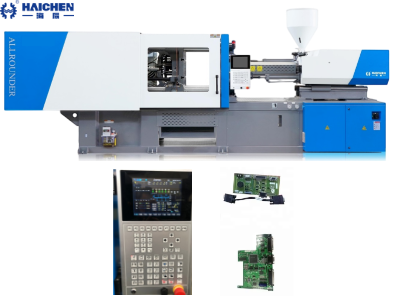
Choose injection molding machine nozzle includes select nozzle size, nozzle shape, nozzle material and so on.
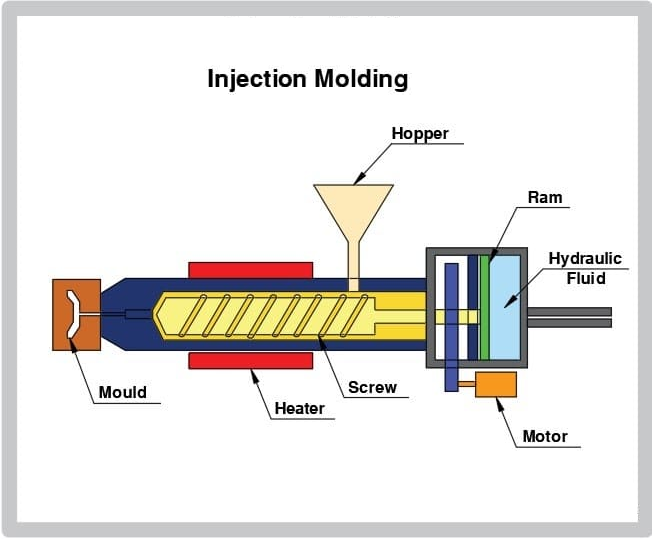
The nozzle is the component that connects the barrel of the injection molding machine to the mold, and is responsible for guiding the molten plastic from the barrel into the pouring system of the mold (such as the sprue bushing). It is a precision connection part between the injection molding machine and the mold. It ensures that the plastic is efficiently injected into the mold cavity by controlling the melt flow, maintaining sealing and temperature management. Its design needs to comprehensively consider rheology, thermodynamics and mechanical adaptability, which directly affects the molding quality and efficiency.
When selecting the material of the injection molding machine nozzle, it is necessary to comprehensively consider the processing material characteristics, machine parameters and mold structure.
- selection of nozzle size
- selection of nozzle shape
- nozzle material selection
- Nozzle matching with the mold
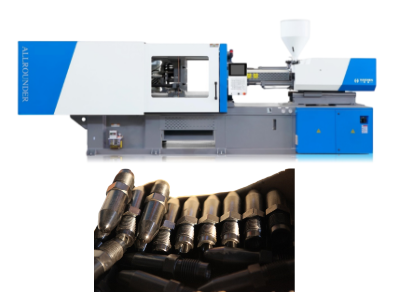
Choose injection molding machine nozzle: selection of nozzle size
Choosing the nozzle size for an injection molding machine requires a comprehensive consideration of machine specifications, material properties, product design, and mold structure.
Matching with the main channel bushing
The nozzle outlet diameter (d) must be less than or equal to the main channel bushing inlet diameter (D), and d ≥ 80% × D to prevent back-cutting and ensure smooth flow.
- The main channel bushing inlet diameter should be slightly larger than the nozzle diameter:
- General standard: 0.8mm larger (such as 5mm nozzle and at least 5.8mm bushing).
- Thin-walled products (2.5-4mm): nozzle 4mm → bushing 4.5mm;
- Thick-walled products (≥6mm): nozzle 7.5mm → bushing 8.5mm
The bushing spherical radius needs to be slightly larger than the nozzle spherical radius (such as 1-2mm larger) to prevent high-pressure melt leakage
Machine tonnage and size range
- Small machine (<130 tons): nozzle diameter 2.5-4mm, bushing diameter 12mm.
- Medium machine (130-350 tons): nozzle 6-8mm, bushing 14mm.
- Large machine (>350 tons): nozzle 8-10mm, bushing 23mm
Influence of material viscosity
- High viscosity materials (such as PC, PMMA): need to increase nozzle diameter by 20% to reduce shear heat.
- Easy-flowing materials (MVR>25 cm³/10min): avoid valve-controlled nozzles to prevent shear overheating and black spots.
- Containing additives (such as glass fiber): gate diameter needs to be increased by 20%.
Injection pressure limit
- Pressure <18,000 psi: general nozzles are applicable
- Pressure >18,000 psi: high-pressure special nozzles (such as 2900 series) are required
Nozzle length and taper
The nozzle usually has a tapered design to ensure smooth melt flow and reduce pressure loss. The taper is generally 2° to 5° for easy demolding.
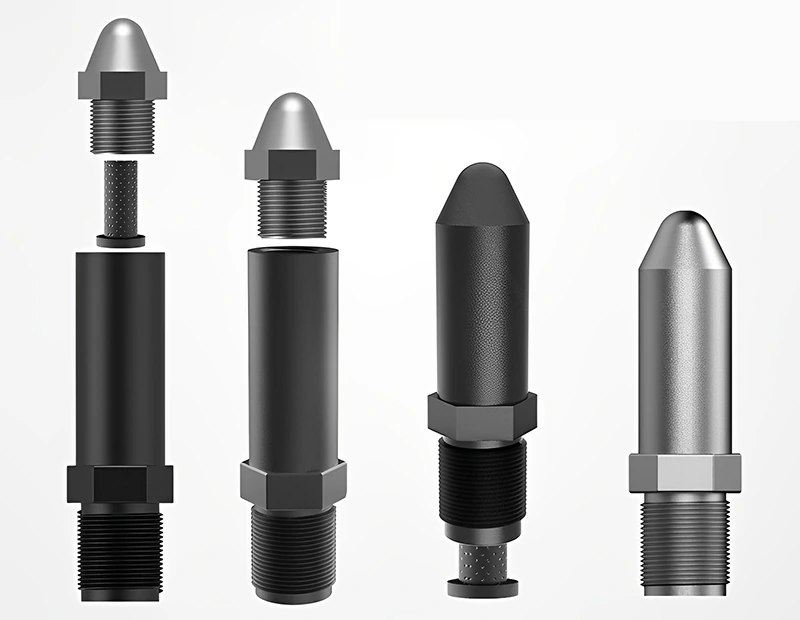
Choose injection molding machine nozzle: selection of nozzle shape
Material properties determine the basic shape
High viscosity materials (such as PC, PES)
Straight-through (open) nozzles are preferred because of their low pressure loss and difficulty in retaining materials to avoid decomposition.
Low viscosity materials (such as nylon)
Closed nozzles (such as needle valve type) can be used to prevent salivation. However, it should be noted that needle valve nozzles may cause material degradation due to frictional heating at high injection rates and are not suitable for heat-sensitive materials.
Transparent or high-gloss products
Open nozzles must be used to avoid black spots or decomposition caused by retention points.
Open nozzle and closed nozzle
- Open nozzle: require suitable for production scenarios where frequent color or material changes. Because of its simple structure and easy cleaning.
- Closed nozzle: suitable for occasions where residual melt needs to be quickly removed. Such as using a needle valve or spring-closed nozzle. That can effectively prevent melt dripping.
- Special design: Some nozzles may equip with a non-return valve (check ring). To prevent melt reflux and maintain a constant melt buffer time.
Special Scenarios Notes
- High injection pressure (>18,000 psi): A reinforced nozzle (such as the 2900 series shut-off nozzle) must be used, otherwise it may cause structural failure.
- Long nozzle or extended structure: An independent heating ring must be equipped and extend to the nozzle tip to prevent cold material from being generated.
- Heat-sensitive materials: Avoid using needle valve nozzles, and prefer open + full cone inner cavity.
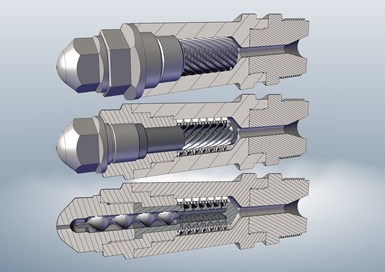
Choose injection molding machine nozzle: material selection
Nozzles usually made of high-temperature resistant metal materials. Such as stainless steel or alloys, to withstand high temperature and high pressure environments.
For medical-grade applications, materials that meet medical standards, such as polyamide (PI) can be selected.
Nozzle material must be consistent with the screw/barrel
As the connection between the plasticizing unit and the mold, the nozzle should be compatible with the screw and barrel materials to ensure matching of thermal expansion coefficients and avoid seal failure at high temperatures.
- “The nozzle material can be the same material as the screw and barrel” (such as tool steel or stainless steel).
- It is emphasized that the size and material of the nozzle must be compatible with the plastic properties, plasticizing unit and mold, otherwise it is easy to cause leakage or flow resistance problems.
Select materials according to the characteristics of the processed plastics
Different plastics have different requirements for the temperature resistance, wear resistance and corrosion resistance of the nozzle:
- High temperature materials (such as PES, LCP): High temperature resistant alloys (such as tool steel) need to be selected,
Point out that the nozzle needs to withstand 420°C high temperature when processing LCP. - Engineering plastics (such as PEEK, nylon): It is mentioned that such materials require high hardness and wear-resistant materials to avoid affecting the accuracy due to wear.
- Corrosive materials: It is recommended to choose corrosion-resistant stainless steel, especially for plastics containing halogen or acidic components.
Nozzle matching with the mold
Coaxial alignment
It is emphasized that the nozzle and the gate bushing must be strictly coaxial, otherwise it will cause seal failure or gate strain. Use a positioning ring (such as
3.990 inches outer diameter) to ensure that the mold and the injection molding machine template are aligned.
Advantages of tapered nozzles
It is pointed out that the tapered contact surface nozzle (gate bushing cone angle 120°, nozzle 119°) can be automatically centered to reduce the flow resistance caused by deviation.
Alignment of the nozzle and the gate
The nozzle should be precisely aligned with the gate of the mold to avoid leakage and pressure loss.
Spherical nozzle head
The nozzle head is usually spherical in design, and its radius should be consistent with the radius of the gate sleeve to ensure that the high-pressure melt does not overflow from the contact point.
Process parameter coordination
Injection volume matching
It is pointed out that the screw injection volume should be 1-3 times (1-3D) of the total cavity volume to avoid retention for more than 8 minutes and causing material degradation. If the mold size does not match the injection volume (such as small mold and large injection volume), the screw needs to be replaced to achieve “size matching”.
Temperature control
It is mentioned that the nozzle temperature affects the casting and cold material generation, and needs to be optimized to reduce waste.
Other considerations
Heating system
The nozzle usually equippes with a heating belt to maintain the melt in a flowing state. The temperature of the heating belt should be slightly lower than the maximum temperature of the barrel to avoid overheating of the melt.
Cooling system
For some special applications, such as ultra-heat-resistant materials. A well-designed cooling system requires to prevent the melt from solidifying in the nozzle.
Maintenance and cleaning
Choose a nozzle design that is easy to disassemble and clean to reduce maintenance costs and downtime.
By following the above steps, you can ensure that the selected nozzle can meet your production needs and improve the efficiency of the injection molding process and product quality.