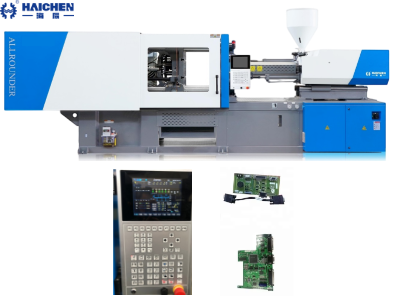
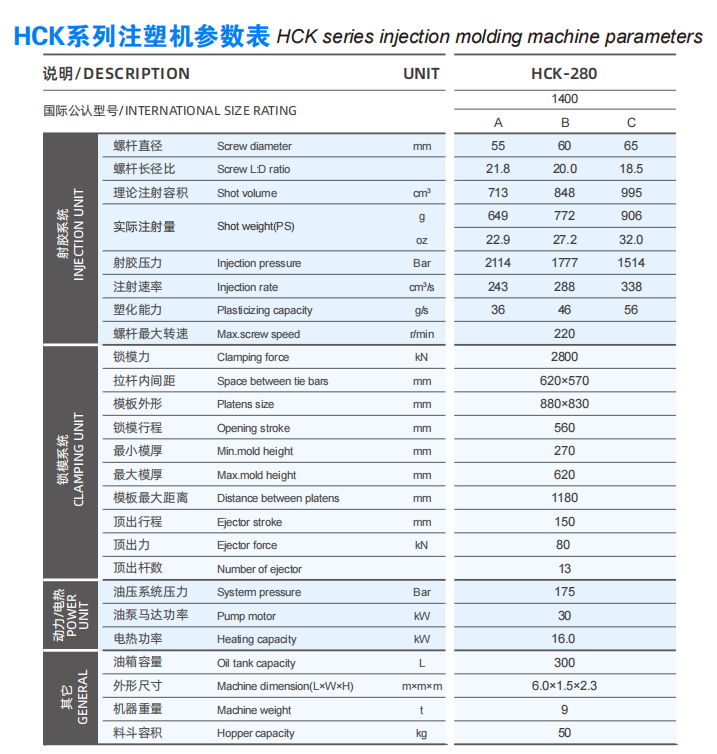
Ejector stroke of machine is the maximum distance the ejector moves forward to eject the plastic part, usually from 110mm-450mm.
The ejector stroke is the distance that the ejector in the injection molding machine pushes the molded part out of the mold. Its main function is to ensure that the molded part can be smoothly demolded from the mold while avoiding damage to the part. If the ejector stroke is too long, it may cause damage to the part. If it is too short, it may cause the part to not be fully demolded.
The main function of the ejector stroke of the injection molding machine is to ensure smooth demolding of the product, protect the mold and the product, adapt to the needs of different products, improve production efficiency, and extend the service life of the mold.It is to ensure that the molded product can smoothly separate from the mold so that the next mold action can continue. Only effective ejection force and ejector stroke can make the molded product finally smoothly separate from the mold.
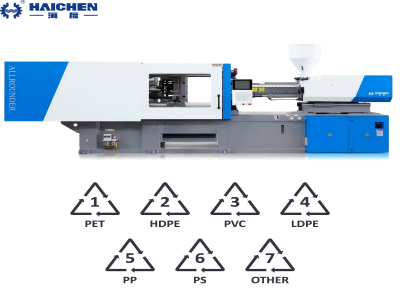
When selecting an injection molding machine, the ejector stroke should reasonably select according to the appearance of the product and the design structure of the mold. Generally, the maximum ejector stroke of the machine is fixed, and the user can adjust it according to the specific product when using it. When ordering a machine, the ejector stroke should be large so as to be suitable for the molding of more products. For example, the ejector stroke of the Haichen HCK110 injection molding machine is 110mm.
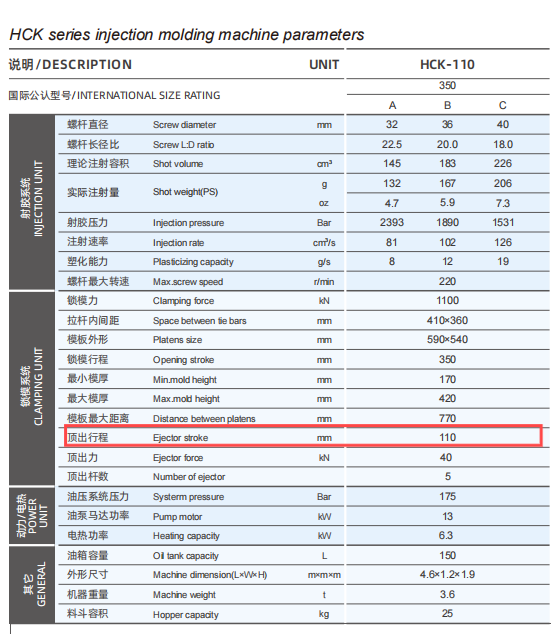
Specifically, the ejector stroke determines whether the plastic part can be de-molded smoothly. For example, a long plastic part requires a longer ejector stroke, while a short plastic part can use a shorter ejector stroke. When purchasing an injection molding machine, it usually recommends to choose a larger ejector stroke to accommodate a wider variety of products.
In addition, the ejector stroke is closely related to other technical parameters such as ejector force and ejector speed. The ejector force refers to the maximum thrust of the ejector device, while the ejector speed refers to the speed at which the ejector device moves. These parameters work together to ensure that the plastic part can remove from the mold safely and effectively.
Also the ejection is not just by hydraulic. The injection molding machine also has air ejection and core puller ejection.
How to calculate ejector stroke?
Basic ejector stroke calculation
Ejector stroke H is usually equal to the product height L plus a safety margin (5~10mm). That is, H=L+(5~10mm). Here L is the distance from the highest point to the lowest point of the product in the mold opening direction.
Lift stroke calculation
For inclined roof structures, the calculation of the ejection stroke H needs to take into account the angle of the inclined roof and the horizontal stroke.
H=S1*cos(Y)+tan(X)S
S is the horizontal stroke of the inclined top,
S1 is the downward stroke of the inclined top,
X is the angle of the inclined top,
Y is the downward angle of the inclined top
Ejection stroke of plastic mold products
According to the ejection stroke of a plastic mold is usually equal to the depth or height of the plastic product.
Confirmation of ejection stroke in mold design
According to the mold, the ejection stroke will determine according to the ejection stroke required by the product. Usually, there is a certain safety margin more than the ejection stroke required by the product. That to ensure that the product can remove smoothly.
Stroke calculation of double-action flange ejector
According to the calculation of the stroke of the double-action flange ejector, the stroke distribution of the vertical flange and the side flange need consider to ensure smooth ejection.
Calculation of mold slider stroke
According to the calculation of the mold slider stroke, the undercut distance and safety distance need consider to ensure that the product will not interfere with the slider when ejected.
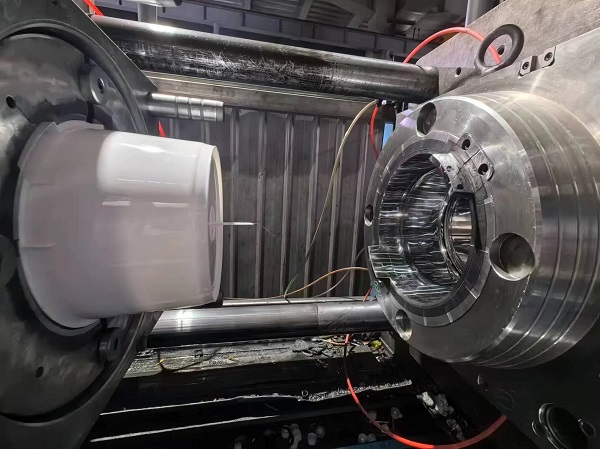
How many types of ejectors of injection molding machines?
Definition
Ejector Stroke Injection Molding is an advanced plastic molding technology. That widely uses to manufacture complex and high-quality plastic parts. The core of this technology is to use an ejector to push the molded plastic parts out of the mold to achieve efficient production.
There are 10 types of ejectors.
- Mechanical ejection
- Hydraulic ejection
- Pneumatic ejection
- Round ejector pin ejection
- Ejector pin ejection with support
- Flat ejector pin ejection
- Sleeve pin ejection
- Straight ejector ejection
- Inclined ejector ejection
- Push plate ejection
Mechanical ejection
This is the most common ejection method, which uses mechanical devices (such as ejector pins, ejector pins, etc.) to push the molded plastic parts out of the mold. The ejector rod is fixed on the frame and does not move. When the mold is opened, the movable template moves back. The ejector rod passes through the center hole of the movable template and acts on the top plate of the mold, pushing the top plate to eject the product out of the mold. The length of the ejector rod is determined by the thickness of the mold and can be adjusted by the thread.
Hydraulic ejection
The ejection mechanism pushes by the hydraulic system. It is suitable for situations where a large thrust is required.
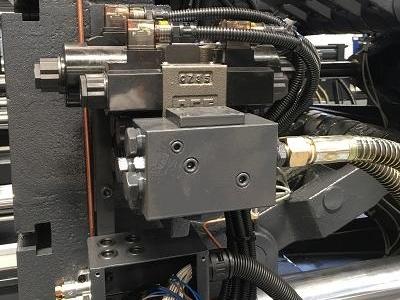
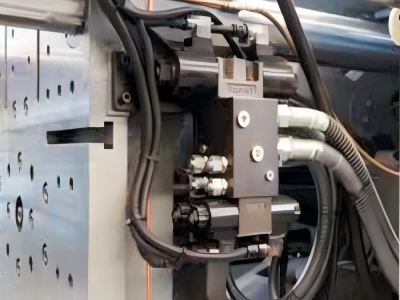
There is an ejector cylinder installed behind the movable template, which pushes the piston, that is, the ejector rod, to work. There are bolts on the piston to adjust the length of the ejector rod. When the mold is opened, the template moves backward and the ejector cylinder pushes the ejector rod to extend. The ejection force, speed, time, and stroke are adjusted by the hydraulic system, which can be reset automatically and can eject the product during or after the mold opening process, which is conducive to shortening the injection molding cycle.
Air ejection/Pneumatic ejection
Compressed air is used as the power source to push the ejection mechanism to move. Pneumatic ejection is accomplished by compressed air, which blows the plastic product directly out through many tiny holes in the molding mold. This ejection method does not leave any ejection marks on the surface of the product but requires the addition of pneumatic auxiliary equipment.
Air Ejection is a demoulding technique used in the injection molding process. Its main purpose is to easily remove the molded part from the mold by compressed air while avoiding ejection marks. This technology is particularly suitable for products with thin walls or large aspect ratios, because traditional ejection methods may leave obvious marks on the surface of the product.
- Round ejector pin ejection
- A round ejector pin is used for ejection.
- Ejector pin ejection with support
- A support plate is added to the ejector pin to improve the ejection stability.
- Flat ejector pin ejection
- A flat ejector pin is used for ejection.
- Sleeve pin ejection
- An ejector pin with a guide sleeve is used for ejection.
- Straight ejector ejection
- The ejector pin or ejector block is used directly for ejection.
- Inclined ejector ejection
- An inclined ejector pin or ejector block is used for ejection, which is often used for products with complex shapes.
- Push plate ejection
- The molded plastic parts are pushed out of the mold by the push plate.
Adjusting the ejector stroke of the injection molding machine can improve the demolding efficiency
Ensure that the plastic parts are completely de-molded
If the ejection device stroke is insufficient, the plastic parts will not be able to completely detach from the mold, thus affecting production efficiency and product quality. By increasing the ejector stroke, it can ensure that the plastic parts can be completely detached from the mold after the mold is opened. Avoiding product defects or manual intervention caused by insufficient ejection.
Reduce the cost of changing the internal structure of the mold
Extending the ejector stroke does not require changing the internal structure of the mold, which reduces the production cost, and the extended ejection stroke can be accurately controlled by setting a scale, thereby improving the demolding efficiency.
Adapt to complex product structures
For some plastic parts with complex structures, such as products with deep depressions in the middle. It may require a longer ejector stroke to achieve smooth demolding. By optimizing the ejection stroke, the mold design can be simplified, the product appearance can be protected, and the requirements for the injection molding machine stroke can be reduced.
Improve the level of automated production
The application of the secondary ejection mechanism shows that by reasonably setting the ejection stroke, the overall structure of the mold can be simpler, safer, and more reliable to use, and meet the automation needs of mass production.
Prevent product deformation and damage
In some cases, a short ejector stroke may cause the product to warp or deform during demolding. By adjusting the ejector stroke, it can better control the demolding speed and force of the product. Thereby reducing the risk of product damage.
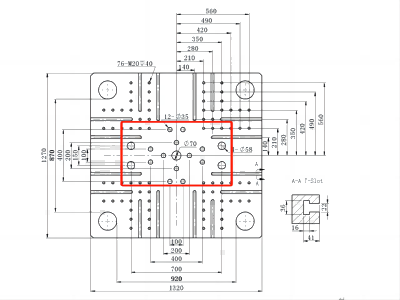
The ejector stroke also has the function of limit protection. It uses to limit the distance of the ejector forward and backward to ensure smooth de-moulding of the product and accurate reset of the ejector. For some specially designed molds, such as molds with secondary ejection mechanisms, the total ejector stroke must be greater than the first ejector stroke. That to ensure that the inclined ejector completely separates from the undercut part and the core pulling action is completed.